



Singapore proposes raising maximum haze penalty from S$2 million to S$20 million
Companies linked to haze may also face financial and commercial repercussions separate from criminal liability.
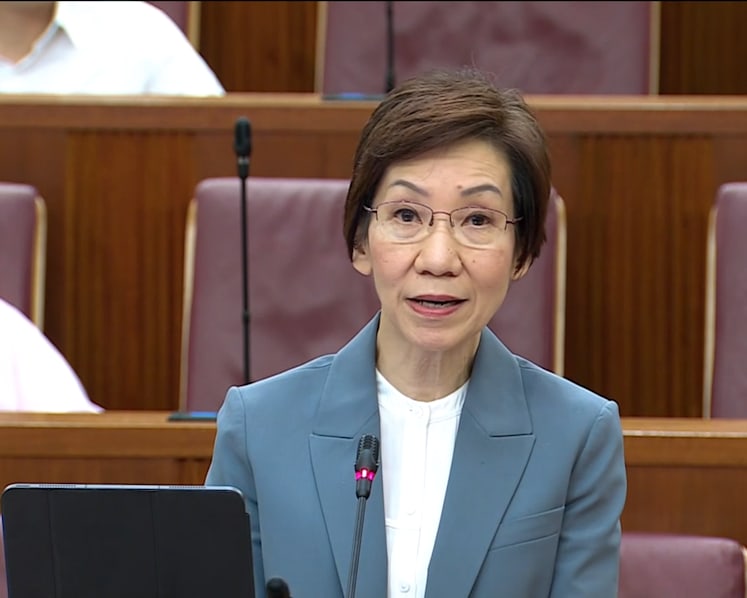
Minister for Sustainability and the Environment Grace Fu speaking in parliament on Nov 4, 2026.

This audio is generated by an AI tool.


SINGAPORE: Companies linked to transboundary haze could face fines of up to S$20 million (US$16 million) and curbs on business dealings under amendments to Singapore’s haze law proposed on Wednesday (Nov 4).
The Transboundary Haze Pollution (Amendment) Bill was introduced and read a second time under a rare Certificate of Urgency signed by the president, following Singapore's worst haze episode in more than a decade.
The certificate allows a Bill to be introduced, debated and passed through all three readings in a single parliamentary sitting.
The last Bill passed this way was the Insurance (Amendment) Bill in 2024, which blocked German insurer Allianz from taking a stake in Singapore’s Income Insurance.
In a press release on Wednesday, the National Environment Agency (NEA) said amendments to the Transboundary Haze Pollution Act (THPA) – which was enacted in 2014 – would give authorities more tools to investigate commercial links and hold entities accountable. They would also allow earlier intervention and make enforcement easier.
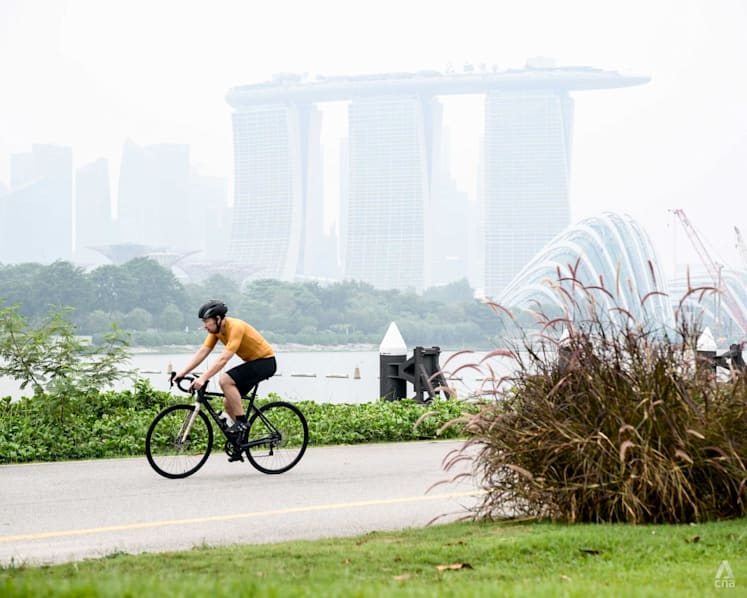
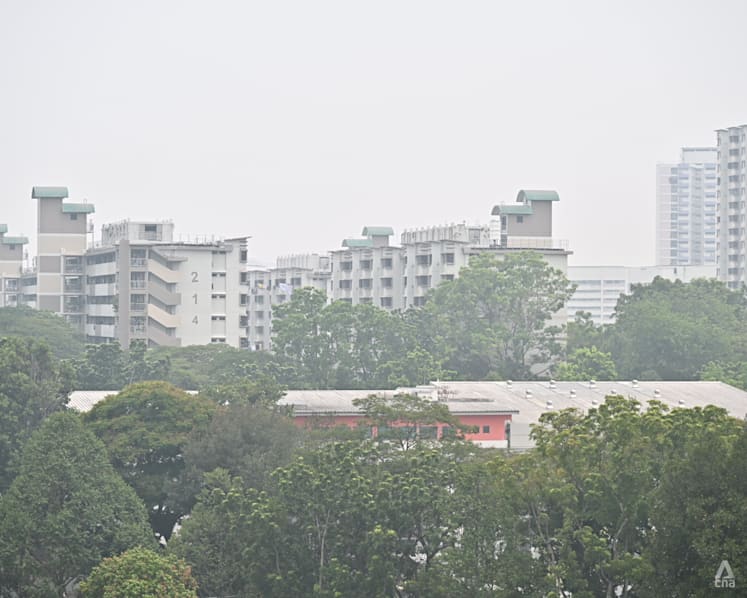
Singapore experienced haze from Sep 4 to Oct 25, with air quality reaching the unhealthy range on 33 days and very unhealthy range on five days.
Senior Minister K Shanmugam and Minister for Sustainability and the Environment Grace Fu had said earlier that the government would strengthen legislation where necessary to tackle companies linked to the haze.
Ms Fu told parliament that enforcing laws against overseas activities was complex.
“We need effective powers to protect Singaporeans and hold errant entities accountable, while respecting the sovereignty of other countries, upholding international law, and avoiding extraterritorial overreach,” she said.
The recent haze episode showed the status quo was “not tenable”, she added.
Singapore needed better ways to obtain and verify information, trace complex corporate relationships and impose meaningful consequences on errant entities, even where criminal prosecution proved difficult. The government also needed to intervene before haze reached Singapore, she added.
Last month, the NEA issued Preventive Measure Notices under Section 9 of the THPA to 10 Indonesian companies, requiring them to extinguish or prevent fires, stop burning and submit action plans.
It also issued Section 10 notices to 10 Singapore-registered companies, the first time it has done so under the Act. The notices sought information on their linked companies, Indonesian land concessions and fire prevention measures.
Some of the companies said earlier this week that they had submitted a first tranche of information.
PRIVATE SECTOR ASSESSORS
To establish who is responsible and how different parties are connected to the burning, the director-general of environmental protection would be able to require entities with suspected links to haze in Singapore to appoint expert private sector assessors.
The director-general would specify the assessors and the terms of assessment in a direction, and the entity must engage the assessors at its own expense. The assessors would submit reports to NEA to help it establish facts and decide on further action, if any.
“To be clear, a direction to appoint an assessor does not necessarily mean that the entity has committed or is suspected of having committed an offence. It is meant to establish the relevant facts,” Ms Fu said.
NEA said decisions on enforcement remain with the relevant authorities, and courts will still determine liability.





ENHANCED PENALTIES
Under Section 5 of the current Act, an entity convicted of causing or contributing to haze pollution in Singapore, whether locally or overseas, can be fined up to S$100,000 a day, capped at S$2 million.
The proposed amendments would raise this to up to S$1 million a day with an overall cap of S$20 million.
Ms Fu said the original penalties were comparable to those for domestic pollution offences, but the serious harm of transboundary haze “needs to be deterred by stronger penalties, to underscore the gravity of such offences”.
She said the increase was calibrated with reference to existing legislation and the financial scale of the companies involved.
The amendments would also let the court assess the profit gained or loss avoided because of an offence and impose that amount as an additional penalty on the convicted entity.
A civil penalty route would be introduced as well. With the public prosecutor’s consent, NEA could start civil action in court for a maximum penalty of S$10 million.
“To ensure entities are not penalised twice, an entity cannot be subject to both civil and criminal penalties for the same case,” the agency said.
DESIGNATION OF ENTITIES
The government is also proposing financial and commercial consequences for entities or individuals linked to offences under the Act, whether or not criminal proceedings follow.
The minister for sustainability and the environment would be empowered to designate entities or individuals who have committed or are suspected of committing offences, failed to comply with notices or directions, or received an adverse assessment report. A criminal conviction is not necessary for an entity to be designated.
“Designation will enable the government to impose orders restricting business dealings with the designated entity or individual,” Ms Fu said.
Companies could be restricted from buying, selling or engaging in other dealings with designated entities, such as providing loans or other financial support.
Where restrictions concern services provided by financial institutions, the minister-in-charge of the Monetary Authority of Singapore would determine and administer the orders, she said.
“The power to designate and impose restrictions is meant to impose economic consequences on those responsible for irresponsible burning or with established links to irresponsible burning.
“At the same time, the prohibitions ensure that others do not deal with such designated entities, including through complex business arrangements or corporate structures,” Ms Fu said.
But Ms Fu also noted that designation alone is insufficient as it may not be practical for the government to identify every entity involved in burning or every firm in its supply chains.
“Instead, we may want to take action against the larger corporate entities above these individual entities directly,” she said.
The amendments would therefore also allow authorities to put certain entities, particularly those in the forestry and agricultural sectors, on notice. They would have to ensure their business arrangements and supply chains do not involve those that cause or contribute to fires posing a haze risk to Singapore.
“These obligations are intended to strengthen due diligence and responsible business conduct across the supply chain,” Ms Fu said.
“The objective is not to impose an impossible guarantee that no risk will ever arise, but to ensure that companies do not turn a blind eye to irresponsible forestry and agriculture practices.”
Failure to comply with designation restrictions or such notices can attract a maximum fine of S$1 million for each breach, and up to S$100,000 for each day the breach continues.
NEA would also be empowered to publish lists of entities who have not complied with notices or directions.
“Together with the restriction on business dealings that may be imposed on designated entities, these changes significantly strengthen deterrence under the THPA,” NEA said.