Trump insists China trip will go on as planned; analysts say leaders' summit crucial to manage risks
United States President Donald Trump says his upcoming visit will be an “amazing event”, while Chinese observers say both sides need to prioritise risk management in the face of rising uncertainty worldwide.

This audio is generated by an AI tool.


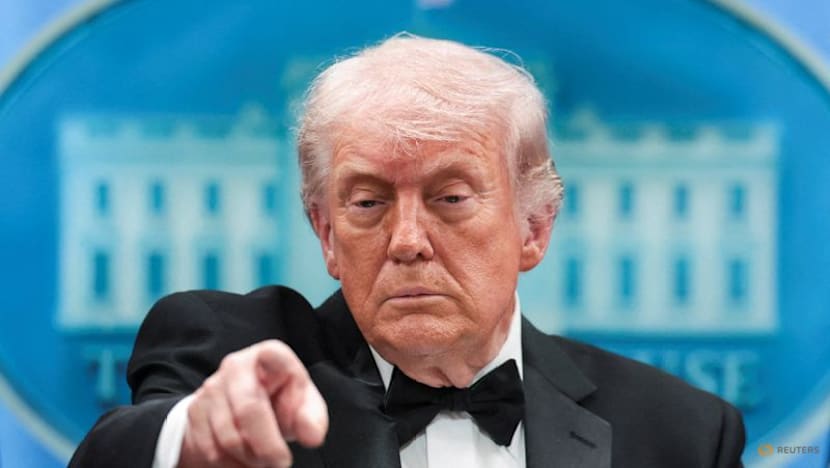
HONG KONG: United States President Donald Trump said he is still planning to travel to China as scheduled this month despite the stalemate in the negotiations with Iran.
When asked about the trip to Beijing, Trump told reporters on Friday (May 1): “It is going to be amazing. The visit with China and Chairman Xi [Jinping] – that’s going to be great.
“We have the trip with China coming up. And I think it will be an amazing event.”
Trump had initially planned to visit Beijing in late March, but put the trip back to May 14 and 15 after starting the war against Iran.





Chinese analysts said the trip would be crucial for the two countries to manage risks in the face of rising uncertainty worldwide.
Iran has passed a new proposal for a second round of peace talks with the US to Pakistani mediators, according to the official Islamic Republic News Agency, which did not give details of the plan.
However, Trump said he was “not satisfied” with the offer, without specifying its shortcomings.
“We’ll see what happens. Iran wants to make a deal because they have no military left, essentially,” he said.
Meanwhile, Trump also expanded sanctions on Cuba to target foreign companies and financial institutions deemed to support the government in Havana, and risked further straining relations with Europe by announcing that he would withdraw 5,000 US troops from Germany.
The latter decision followed Chancellor Friedrich Merz’s comments that the US was being “humiliated” by the Iranian leadership and that Washington lacked a strategy.
WHAT ANALYSTS SAY
Shen Dingli, a Shanghai-based professor of international affairs, said Trump’s visit to Beijing was mainly about risk management.
“Washington wants to avoid complete decoupling from strategic supply chains – such as rare earths – for now, and also wants China not to arm Iran. For China, the focus is on the Taiwan issue,” Shen said.
Ma Bo, an associate professor at the school of international studies at Nanjing University, said that the primary consideration for Trump was to stabilise relations with China.
“With no clear off-ramp from the Russia-Ukraine conflict or the war in Iran, Washington cannot afford to open new fronts of instability in the Taiwan Strait or South China Sea,” Ma said.
Trade and technology frictions between the two powers had settled into a “normalised status”, with US supply chain adjustments not targeting China alone, Ma added.
“What is more sensitive are security issues in China’s periphery: the Taiwan Strait, South China Sea, and to some extent the issue of North Korea,” he said.
“These areas carry far greater spillover risks and may become the focus of bilateral communication.”
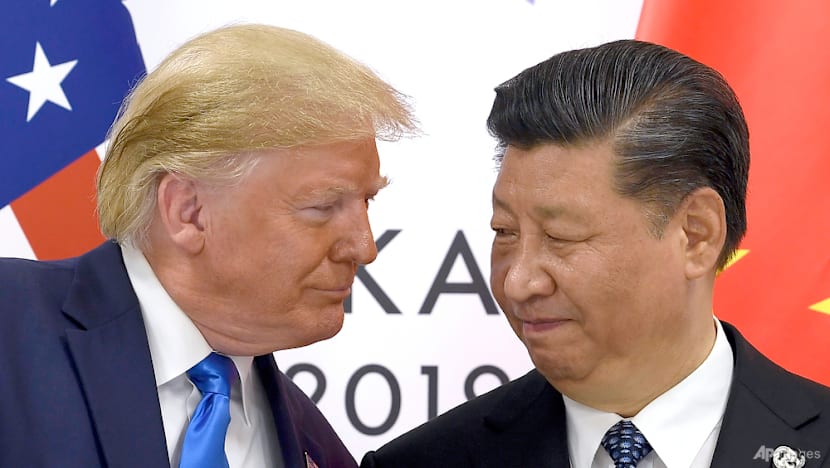
Zhao Minghao, deputy director of the Centre for American Studies at Fudan University, said Trump was facing increased domestic pressure over the Iran war and wanted to claim a diplomatic win from the visit to China.
He was also seeking tangible economic gains from the trip, such as boosting exports of US goods like agricultural products, energy and aircraft, Zhao added.
“Both sides aim to prove that they are willing to make efforts to explore ‘strategic stability’. Of course, it is impossible to achieve substantive breakthroughs through just one visit, especially on issues like Taiwan. It is more about managing risks – seeking greater understanding of each other’s red lines,” Zhao said.
Beijing regards Taiwan as part of China and has never renounced the use of force to reunify it with the mainland.
The US, in common with most countries, does not recognise Taiwan as independent but opposes any attempt to seize the island by force and is legally bound to supply it with arms.
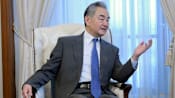
This week saw a series of talks between senior US and Chinese officials, where they aired a range of concerns in the run-up to the Trump-Xi summit.
Chinese Foreign Minister Wang Yi told his US counterpart Marco Rubio that Taiwan was “the biggest risk factor in China-US relations”, while Vice-Premier He Lifeng warned Treasury Secretary Scott Bessent and Trade Representative Jamieson Greer of Beijing’s “solemn concerns over recent US restrictive measures against China”.
However, these talks were quickly followed by the announcement of fresh US sanctions targeting Qingdao Haiye Oil Terminal for allegedly importing “tens of millions of barrels of sanctioned Iranian crude oil” and Li Xinchun, a Chinese national accused of trading Iranian petroleum.
Fu Cong, China’s UN ambassador, criticised the measures, saying: “We don’t believe it’s fair to sanction Chinese ships or companies.”
On Saturday, China’s Ministry of Commerce also issued a ban prohibiting any recognition, enforcement or compliance with US sanctions imposed in April on five Chinese companies on the grounds of their alleged involvement in Iranian petroleum transactions.
The ministry named the five as Hengli Petrochemical (Dalian) Refinery, and “teapot” refineries Shandong Jincheng Petrochemical Group, Hebei Xinhai Chemical Group, Shouguang Luqing Petrochemical and Shandong Shengxing Chemical.
Sun Chenghao, a fellow at the Centre for International Security and Strategy at Tsinghua University, said the US and Chinese officials had “discussed the situation in the Middle East, but they did not specify any coordination mechanisms”.
He added: “This suggests that both countries are guided mainly by their respective strategic considerations, rather than moving towards substantive collaboration.”
He said the sanctions would also increase US leverage during negotiations, and send a signal domestically in the face of pressure from Congress and the security apparatus.
Diao Daming, a professor at Renmin University’s school of international studies, downplayed the prospect of a breakthrough, saying: “[Trump’s visit] represents a gradual, methodical process: stabilising the bilateral relationship, expanding communication and cooperation across sectors, and mitigating destabilising factors.”
This article was first published on SCMP.