exclusive Asia
'We simply want to help people': Indonesia army chief on why it is building thousands of bridges, wells
General Maruli Simanjuntak tells CNA in an exclusive interview why the building of bridges and digging of wells by the military is consistent with Indonesia’s defence philosophy.
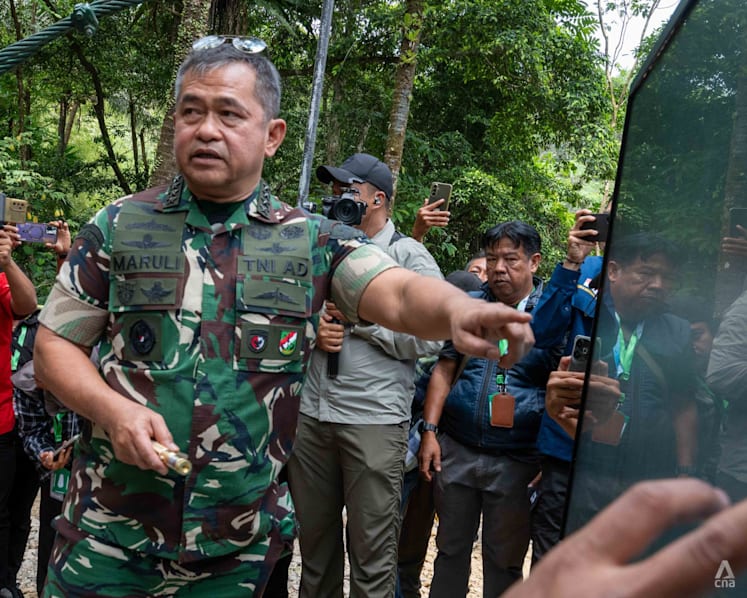
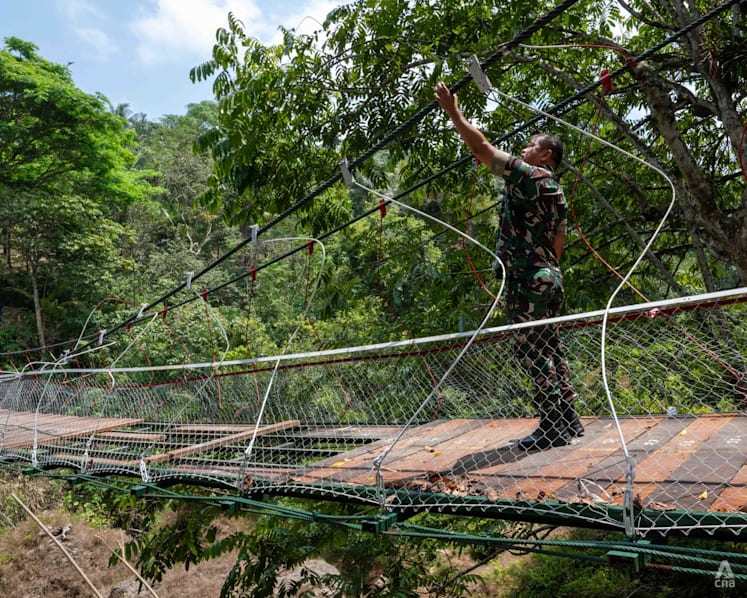
Indonesian Army Chief of Staff General Maruli Simanjuntak during an inspection of a suspension bridge in Pangandaran, West Java, Indonesia, on Sep 14, 2026. The collapsed bridge is being repaired. (Photo: CNA/Ridhwan Siregar)

This audio is generated by an AI tool.


PANGANDARAN, West Java: General Maruli Simanjuntak carefully steps onto a suspension bridge that had collapsed two weeks ago on the day of its ribbon-cutting ceremony with about 50 people on it.
The Indonesian Army chief-of-staff - who is the de facto army chief - was inspecting the damaged bridge and listening to a briefing on its reconstruction.
Videos of the Pongpet suspension bridge’s collapse on Aug 30 went viral on social media but the Indonesian army reported no deaths, with several locals suffering minor injuries and abrasions.
The army now wants to rebuild the 60m bridge, which hangs about 3m above a river in Margacinta village in West Java’s Pangandaran regency. It will cost an estimated 400 million rupiah (US$22,622).





“I apologise, but there are indeed technical matters where we may have been negligent, in supervising the rules for bridge use or perhaps the quality of bridges we have built,” Maruli told CNA in an exclusive interview on Monday (Sep 14) in Pangandaran.
The army, he said, would evaluate the nearly 3,400 bridges that are being built nationwide by both the army and the police “so that, hopefully, things will be better going forward”.
These bridges, as well as 3,000 clean water facilities built by the army, were inaugurated last month by Indonesian President Prabowo Subianto via video conference from the State Palace.
Prabowo said the projects were proof that the army was “truly the people’s military and the National Police (was) truly the people’s police”.
Maruli, a former commander of the presidential security force who was appointed army chief of staff in 2023, said it completed 2,700 bridges - called Garuda bridges - across Indonesia in less than a year.
About 800 of these bridges are in disaster-hit areas while suspension bridges account for around 30 per cent of the total. For areas with heavy traffic, the army opts for concrete bridges, he said, and there are also prefabricated bridges to reduce costs.
Asked about the army’s bridge-building expertise, Maruli said it has an engineering corps.
“One of its duties is to build bridges under wartime conditions. If they can do that in war, then in peacetime the work should certainly be better. We can also bring in experts to help; that is not a problem,” Maruli said.
INVOLVING LOCAL COMMUNITIES
Are the bridge and clean-water projects by the army and the police a sign that they are expanding their role in civilian affairs?
Some non-governmental groups say that instead of diverting military and police personnel towards non-military duties, such work should fall to civilian agencies and ministries.
Maruli said there was “no need to worry too much about where the military is heading”.
“We simply want to help people who are struggling,” he said.
“Some people assume this will make the military less professional. Yet 21 countries want to conduct joint exercises with us. We consistently perform very well in shooting competitions. They even tell me they want to take part in our civic mission programmes.”
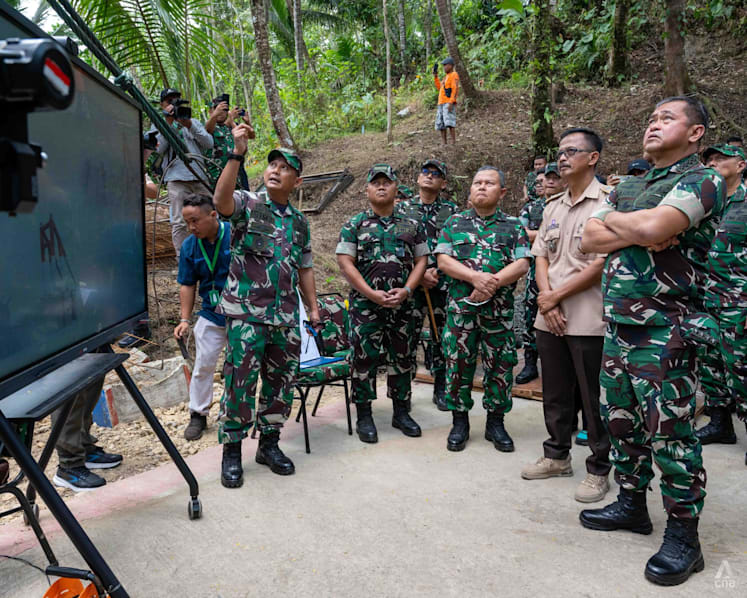
Maruli added that under the army’s bridge-building programme, it gathers representatives from all regions, trains them for several weeks on how to build bridges, and carries out practical exercises.
Such an approach allows the work to be labour-intensive and involve the local community, he said.
“When we go there with a self-managed, labour-intensive approach, we gain three advantages. First, the cost is clearly much lower,” he said.
“Second, we revive the spirit of mutual cooperation, gotong royong, within the community. Third, the money circulates directly in the local area instead of going to a contractor from far away.”
Gotong royong means community spirit in Indonesian.
What the army is doing is “truly for the benefit of the people, and it is actually consistent with our defence system”, said Maruli.
“In an emergency, we will fight alongside the people,” he said.
To local residents, the bridges are a means to get to school, healthcare facilities and other places.
Margacinta villager Ibrahim Firdaus, 16, who is in the 10th grade, said: “I need it to go to school. Because otherwise, I would have to make a U-turn (that takes about an hour with a motorbike), and also for our parents to go to work.”
TACKLING HAZE: DRILLING WELLS TO FIGHT FOREST FIRES
On the army’s clean-water projects, Maruli said he noticed some communities still lacking clean water when he was Commander of Kodam IX/Udayana - which oversees Bali, West Nusa Tenggara, and East Nusa Tenggara - from November 2020 to January 2022.
At the time, he said, he had to look for donors himself. So in one year, the army could not build more than 50 water points.
“More recently, we received the president's full support … and he will continue supporting us,” said Maruli.
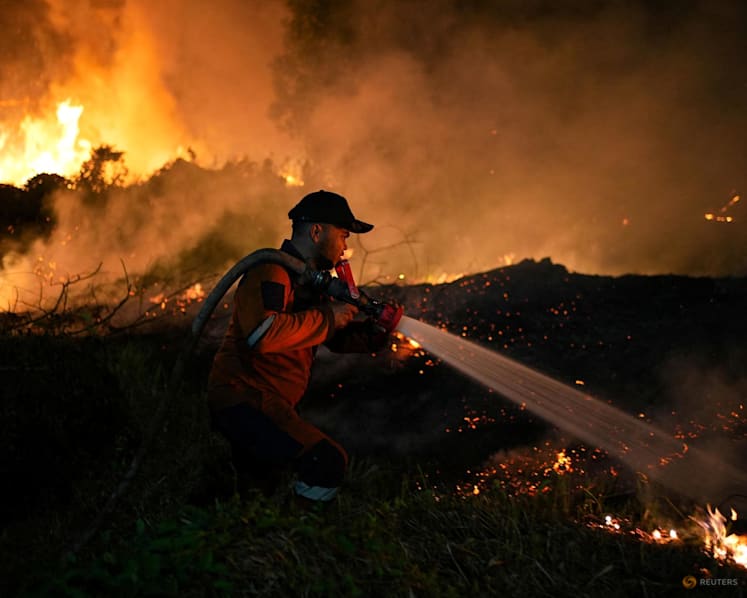
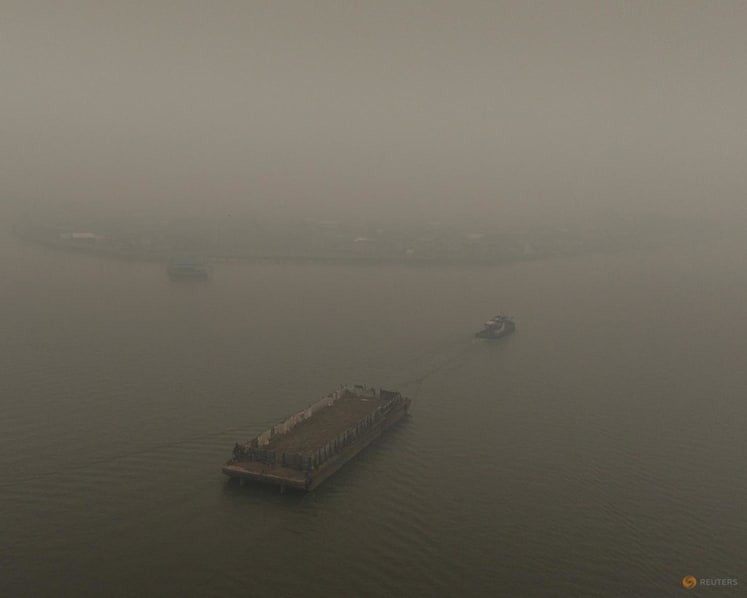
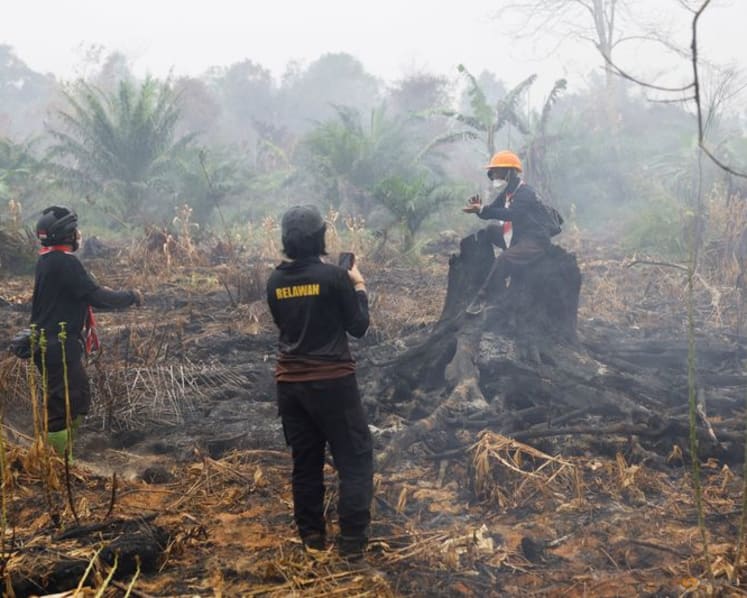
The programme also aims to help tackle forest and land fires currently raging in parts of Kalimantan and Sumatra, which have caused haze in the region, including Singapore and parts of Malaysia.
“The president has repeatedly led efforts on this directly, asking how we can all move more effectively to address the haze and ensure irrigation and water supplies are available,” said Maruli.
“We are drilling wells. In those areas, we have already built more than 400 drilled water points specifically for forest and land fires.”
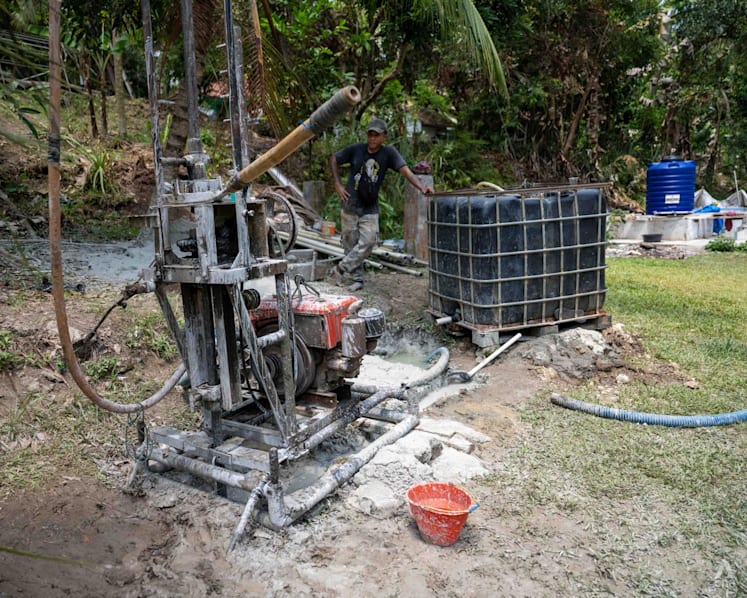
Maruli said Prabowo has instructed the military to use its helicopters more effectively and to carry out weather modification. “So we are truly deploying all available resources to deal with this situation,” he said.
Prabowo on Sep 7 also ordered the development of a comprehensive disaster mitigation masterplan, as Indonesia grapples with several disasters including the aftermath of a deadly earthquake, heightened volcanic activity and forest fires.
Thousands of soldiers have been deployed to fire-affected regions to remind communities not to set fires to clear land or plantations, said Maruli.
“This has actually been done for a long time, but it was not very effective. Hopefully, deploying thousands of soldiers to reach villages and provide guidance will yield better results. The president has also said that enforcement against people who start fires will be firm,” Maruli said.

Other Indonesian agencies are also stepping up efforts.
The Indonesian National Disaster Mitigation Agency (BNPB) said on Tuesday that it is expanding firefighting efforts for wildfire management beyond the current six priority provinces - Riau, Jambi, South Sumatra, West Kalimantan, South Kalimantan and Central Kalimantan, state news agency Antara reported.
Operations would now cover high-risk areas such as Bromo Tengger Semeru National Park and Mount Butak in East Java, where water bombing helicopters have been deployed.
Joint firefighting teams are also carrying out intensive operations in North Maluku, Central Java, North Kalimantan, Central Sulawesi, Lampung and Southeast Sulawesi.