Yemen government accuses Houthis of planning fees for Red Sea transit
Iranian experts and advisers are “directly involved” in designing the framework of the project, says a Yemeni minister.
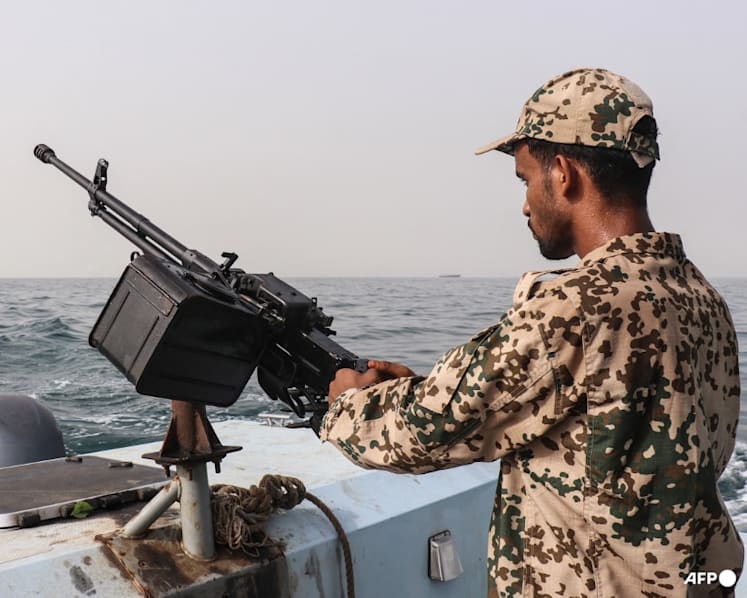
A sailor from the navy of Yemen's Aden-based internationally recognised government stands at a machine-gun position aboard a vessel patrolling a shipping lane off Hanish Island in the Red Sea on Jul 27, 2026. (Photo: AFP/Khaled Ziad)
RIYADH: A minister in Yemen's internationally recognised government told AFP on Wednesday (Jul 29) that Houthi rebels were working with Iran to charge ships to transit the Red Sea, threatening another waterway after Tehran's blockade of the Strait of Hormuz.
The Red Sea's narrow maritime artery has been a critical route for delivering Saudi crude to the international market after Iranian attacks and threats choked off Gulf energy exports via Hormuz.
Information minister Moammar al-Eryani told AFP that the move was "a dangerous escalation aimed at transforming one of the world's most strategic maritime corridors into a permanent source of funding for the militia's military and terrorist activities".
Eryani said the assessment was provided by recently obtained "confirmed intelligence" indicating that Iran's Revolutionary Guards were helping manage the effort.
"The intelligence indicates that IRGC experts and advisers are directly involved in designing the technical and administrative framework of the project," Eryani added in comments exclusive to AFP.
He said this would include "the establishment of a dedicated entity responsible for collecting payments from shipping companies and commercial vessels".
The fate of Hormuz continues to be a sticking point between the United States and Iran.
Tehran insists on its right to collect tolls for ships to use the waterway, which previously carried one-fifth of the world's crude oil and liquefied natural gas.

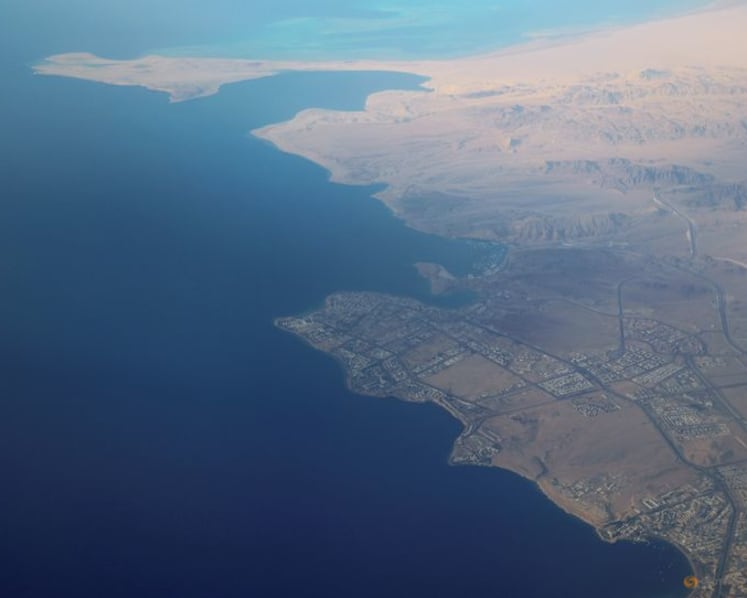
Anxieties are growing across the Gulf that the Houthis are hoping to copy Iran's playbook in Hormuz by monetising access to the Bab el-Mandeb Strait at the mouth of the Red Sea - a move likely to send world energy markets into further disarray.
Houthi attacks on Israel-linked vessels in the Red Sea and Gulf of Aden caused cargo volumes to plunge during the Gaza war, with ships forced into a lengthy detour around southern Africa.
Last week, the Houthis announced a maritime blockade of Saudi Arabia and have since claimed attacks targeting Saudi tankers and oil infrastructure.
The blockade has threatened Saudi Arabia's ability to export millions of barrels of crude a day, cutting off its only other maritime route following Iran's parallel stranglehold on the Strait of Hormuz.
Saudi Arabia has retaliated with strikes targeting Houthi positions.
The fighting marks the first time in years that Saudi Arabia and the Houthis have traded heavy fire, and threatens a 2022 truce.
A Saudi-led military coalition had been at war with the Houthis since 2015, after the rebels seized the capital Sanaa and forced out the internationally recognised government.
The renewed hostilities between Saudi Arabia and the Houthis are an example of how the war between the US and Iran has spread.
On Wednesday the US and Saudi launched strikes on members of a paramilitary alliance in Iraq that includes pro-Iran groups, killing at least 20 people, the alliance said.