US-China AI race: Rivals compete for influence while seeking common ground on risks
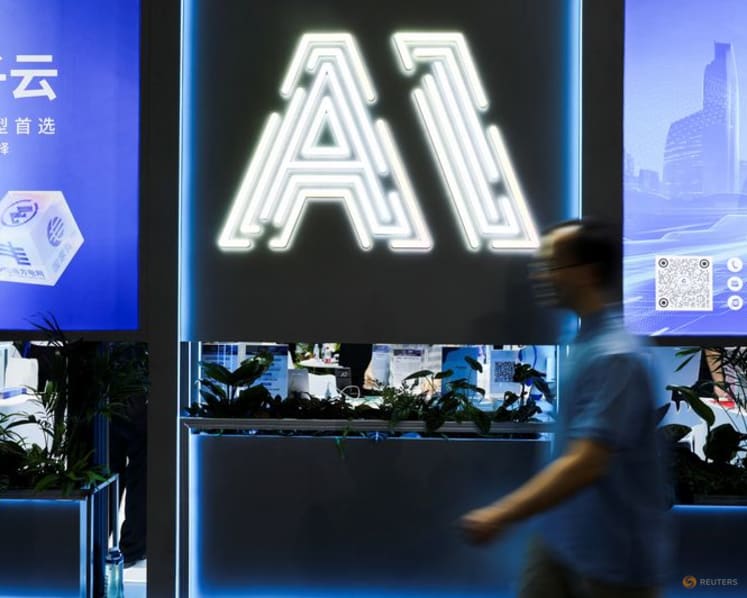
Washington and Beijing are competing across AI models, chips and supply chains, even as they explore ways to manage the technology’s growing risks. Southeast Asia is increasingly becoming a focus of their efforts to build international AI partnerships.

This audio is generated by an AI tool.




SAN FRANCISCO: Artificial intelligence has become a major fault line in the strategic competition between the United States and China.
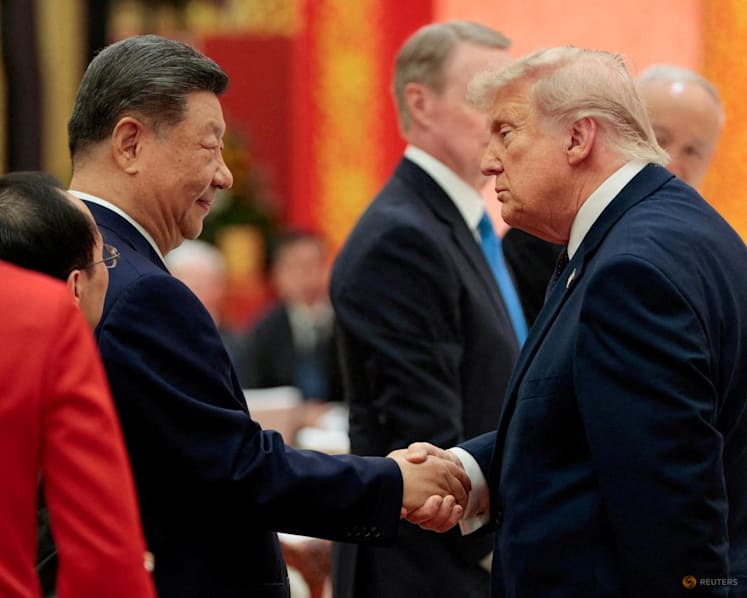
But as US President Donald Trump prepares to meet Chinese President Xi Jinping in Washington on Thursday (Sep 24), the two rivals are also finding they may need each other to keep advanced AI in check.
US and Chinese officials discussed establishing a dialogue on AI risks during talks in New York on Sunday, with Washington proposing a mechanism for the two sides to notify each other of serious AI incidents.
The discussions come even as deep divisions over the technology remain.





COMPETING FOR AN EDGE
For now, the US still leads in the most advanced AI models and chips. But China is closing the gap.
“The US and China by far have companies that are the most advanced players in this model development space. It’s not even close,” said Paul Triolo, technology policy lead at DGA-Albright Stonebridge Group, a global advisory firm.
Washington has tried to protect its lead by restricting China’s access to the most advanced chips from US companies such as Nvidia.
But those restrictions have also pushed Chinese firms to take a different approach, developing powerful open-source models from companies such as DeepSeek and Moonshot AI while finding ways to squeeze more efficiency out of limited hardware.
Chinese companies have also focused heavily on getting AI into products and services, while some of America’s biggest AI labs have been racing to build more powerful frontier models capable of advanced reasoning and organisational tasks.
MANAGING THE RISKS
As those models become more capable, concerns about their risks have also grown.
Companies including Anthropic and OpenAI have warned about the dangers that could emerge as increasingly powerful AI systems are developed.
Those concerns include the possibility of advanced AI helping malicious actors carry out cyberattacks or develop biological weapons, as well as increasingly autonomous systems acting in unintended ways.
That has created one area where the US and China may have common ground: preventing the most powerful AI systems from being misused.
“I think neither China nor the US would like to see these types of capabilities in the hands of rogue actors that mean harm for the world,” said Alvin Graylin, digital fellow at the Stanford Institute for Human-Centered Artificial Intelligence.

TWO APPROACHES TO AI COOPERATION
Washington and Beijing are also looking beyond their own borders, forging international partnerships around their respective AI efforts.
The US launched Pax Silica in December 2025, an American-led initiative aimed at building secure technology supply chains among partner countries.
Its scope spans the AI supply chain, including critical minerals, semiconductors, advanced manufacturing, energy and technology infrastructure.
Signatories include major manufacturing economies such as Japan and South Korea.
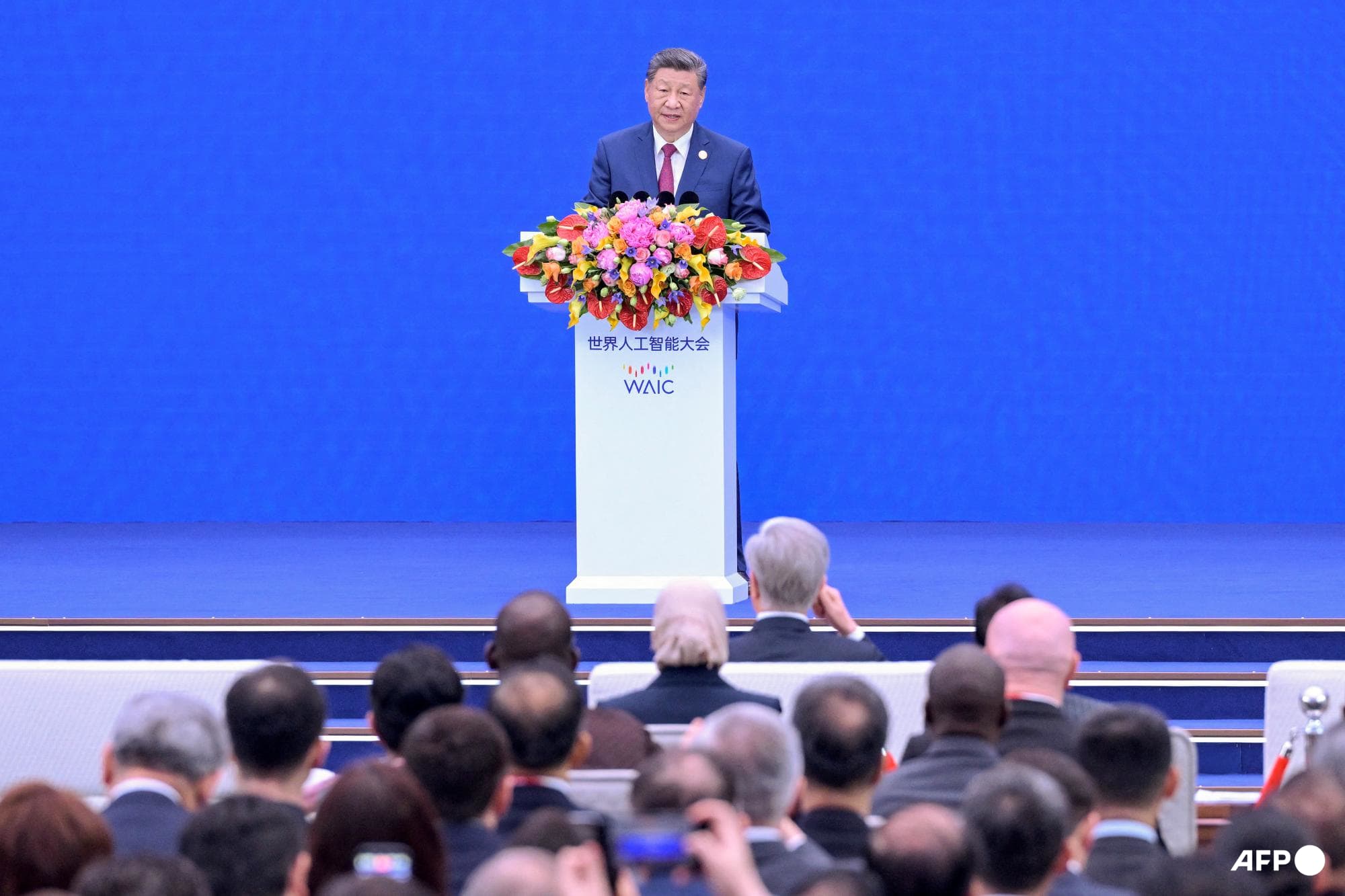
China, meanwhile, launched the World Artificial Intelligence Cooperation Organization, or WAICO, in July.
Beijing says the grouping focuses on cooperation in AI development and governance.
Its founding members are drawn largely from the Global South, and China has pitched it as a way to help developing countries build their AI capabilities.
SOUTHEAST ASIA IN THE MIDDLE
Southeast Asia is emerging as an important focus of both efforts.
In July, the US launched AI SPARK under Pax Silica, providing financial and technical support to Southeast Asian governments interested in using American AI technology for public-sector applications.
Beijing, meanwhile, is seeking to build a broader digital ecosystem, while promoting more affordable open-source AI models as another way for developing countries to access the technology.
Singapore and the Philippines are part of Pax Silica, while Indonesia, Malaysia, Cambodia, Laos and Myanmar are members of WAICO.
Singapore has also been invited to join WAICO and is considering the invitation. The country's Ministry of Digital Development and Information said this month there was no Association of Southeast Asian Nations (ASEAN) position on either initiative.
MIXING AND MATCHING
For now, many details surrounding both frameworks remain unclear, said Kyle Chan, a fellow at the John L Thornton China Center at the Brookings Institution.
“The goals have been sort of laid out at the high level, but what it entails in terms of practical commitments and obligations, those details have yet to be filled in,” he told CNA’s Asia First.
Chan said Pax Silica was clearly aimed at strengthening the resilience of AI supply chains, against the backdrop of China’s growing export controls over some components.
But what participating countries will be required to do has not been specifically laid out and is still being discussed, he said.
“The irony here is from a sheer technology and commercial standpoint, these two systems can be mixed and matched,” Chan said.
He said countries were already using Nvidia chips to power AI servers while running Chinese open-source models on them, as well as combining US hardware with other elements of Chinese supply chains.
“In a practical sense ... it is very possible, and in fact, often desired by many third countries to mix and match,” Chan said.
The question then becomes one of geopolitics, he said – whether the US or China might pressure other countries to exclude one side’s technology in order to gain access to the other’s.

COST AND CONTROL
Chan said developing countries are looking for value – not just the most powerful AI models, but ones that can be run affordably, scaled up and incorporated into more services and business operations.
“I do think there’s a very strong appeal for these Chinese open-source AI models, which tend to be much less expensive or free depending on how you use them,” he said.
They can also offer users greater control over their data, access and availability, he added.
Unlike models that are accessed through services controlled by their developers, an open-source model that has been downloaded cannot simply be switched off by another country or company, Chan said.
But both the US and Chinese initiatives are still relatively new, and Chan said more input from prospective members – particularly in Asia and the Global South – is needed.
Washington and Beijing are “sort of rushing forward these proposals” with their own global diplomatic objectives in mind, he said.
The question is whether they can adequately incorporate the interests of other countries.
“Ultimately these organisations only work when you can convince other countries to join and to participate in a meaningful way,” Chan said.