UN warns of ‘immediate shocks’ to Asia-Pacific as Middle East conflict pushes up living costs
Military escalation could wipe up to US$299 billion off the region’s GDP, a UN report found.

Riders with vehicles queue to fill up fuel at a gas station amid the US-Israeli conflict with Iran, in Bangkok, Thailand, Mar 26, 2026. (Photo: Reuters)

This audio is generated by an AI tool.


Asia-Pacific economies are facing “immediate shocks” from the Middle East conflict, with rising fuel, food and fertiliser prices hitting households across the region, a senior United Nations official warned on Thursday (Apr 16).
UN Assistant Secretary-General Kanni Wignaraja said cost pressures are escalating quickly for both consumers and businesses.
“We're seeing such a rapid transmission of the shocks carried mostly by fuel and freight charges into the region,” she told CNA’s Asia Now.
Her comments follow a new United Nations Development Programme (UNDP) report released on Tuesday, which found that the conflict is already creating ripple effects across Asia-Pacific despite a temporary ceasefire.





SHOCKWAVES ACROSS REGION
The report – which covered 36 countries – highlighted the region’s heavy reliance on imported energy and critical supply chains, which is amplifying pressure on households, small businesses and government budgets.
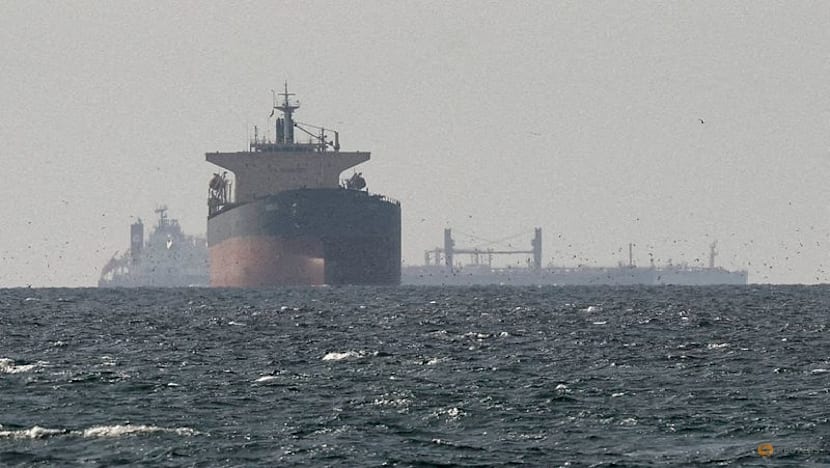
More than 80 per cent of crude oil and liquefied natural gas (LNG) passing through the Strait of Hormuz is bound for Asia.
With the critical shipping route at a near-standstill, supply concerns are driving up energy prices, quickly feeding into higher transport, electricity, food and fertiliser costs.
“All (countries), to varying degrees, are showing shocks, with some adapting faster – that's when you see a lesser simulated loss on the economy,” said Wignaraja, who is also UNDP’s regional director for Asia and the Pacific.
An estimated 8.8 million people across the region are at risk of falling into poverty, according to the UNDP assessment.
The report noted that the crisis is particularly severe in Iran, where more than 5 million people could be pushed into poverty while human development progress could slow.
It also warned the military escalation could wipe up to US$299 billion off Asia-Pacific’s gross domestic product, particularly in countries slower to adapt to the shocks.
SHORT-TERM FIXES
Governments across the region have moved quickly to cushion the impact through fuel price stabilisation, targeted subsidies and temporary measures to limit transport costs.
Some have also introduced energy-saving campaigns and adjusted public-sector work arrangements to reduce fuel consumption.
But if the shock persists, governments will face tougher trade-offs between stabilising prices, protecting households and businesses, and sustaining public spending on health, education, infrastructure and social protection, the report said.
Wignaraja cautioned that such measures are largely short-term fixes.
“When we look across the board, the shorter-term adjustments have to do with price stabilisation and emergency measures on tax relief, basic income support,” she noted.
“What’s more difficult, but absolutely key, is for countries in the region to be more energy secure,” she said, pointing to the need for a shift towards renewable energy and more diversified supply sources.
Wignaraja said similar vulnerabilities exist in food and fertiliser supply.
Looking ahead, Wignaraja said governments must also prioritise building reserves and strengthening regional supply chains.
She added that the UNDP will work with governments “to look at the cushioning effects, with changes in policy that will protect the most vulnerable households”.