Trump threatens Iran bridges, power as payback for Hormuz attacks
US President Donald Trump warned the US would strike Iranian bridges or power plants for any attack on shipping in the Strait of Hormuz.
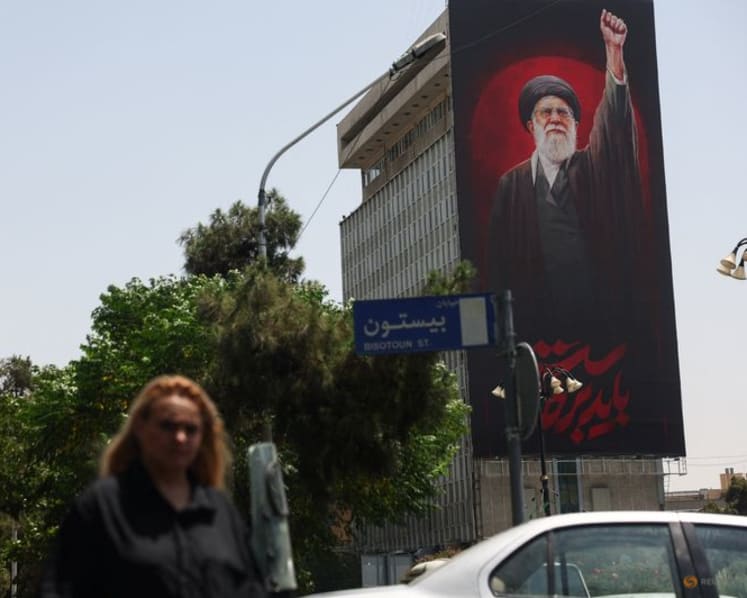
A woman walks by a billboard depicting Iran's late Supreme Leader Ayatollah Ali Khamenei on a street in Tehran, Iran, on Jul 21, 2026. (Photo: REUTERS/WANA (West Asia News Agency)/Majid Asgaripour)
Fighting over the strait led to the collapse of a preliminary deal between the United States and Iran, and Tehran has reimposed its blockade on the strategic conduit for oil and gas shipments, firing on vessels that seek to transit.
The blockade has rattled markets and sent oil prices climbing, adding to the pressure on Trump to find an off-ramp to a conflict that has hit Americans' pocketbooks heading into closely fought midterm elections.
"Any time the Islamic Republic of Iran shoots at a ship in the Strait of Hormuz, whether it be by Missile, Rocket, Drone, or any other device or weapon, the United States will bomb and destroy ONE BRIDGE OR POWER PLANT," Trump wrote on social media, reiterating his longstanding threat to go after Iranian infrastructure.
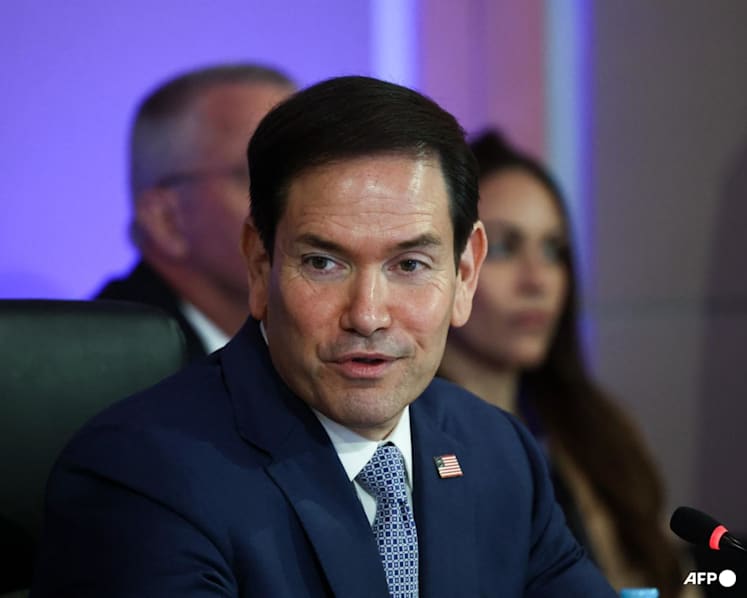
Top US diplomat Marco Rubio maintained Washington was still "open to working it out in a negotiated way" through diplomacy.
"But right now, they don't seem to be serious about that," he added.
Iranian foreign ministry spokesman Esmaeil Baqaei had previously said that diplomatic exchanges with Washington through mediators were continuing.
On Wednesday afternoon, a US missile hit Larak island in the strait, Iran's Tasnim news agency reported, saying the extent of the damage was being investigated.
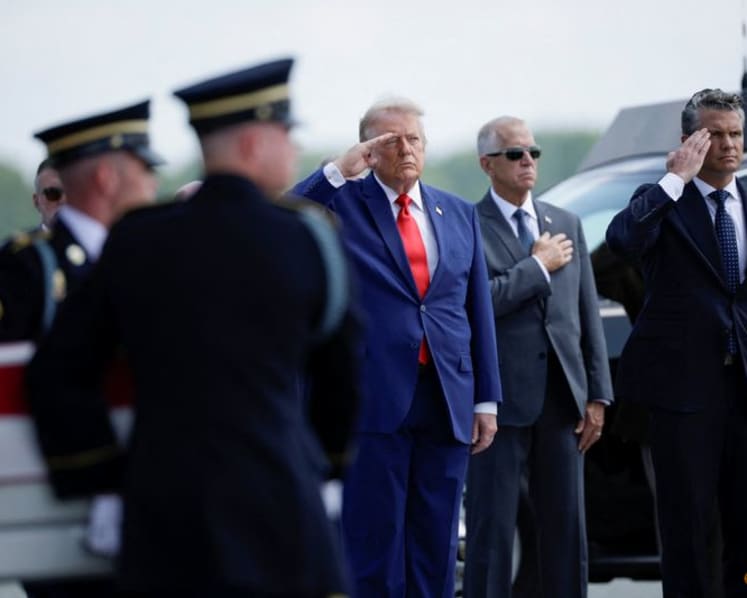

Trump has faced intense political pressure to end the conflict, and critics have pointed to the cost, which Pentagon chief Pete Hegseth said on Tuesday had soared to US$37.5 billion.
But Trump on Wednesday rejected polls showing the war was unpopular with voters as he headed to an airbase for the return of the remains of three US troops killed in recent Iranian attacks.
"Americans don't want high gasoline prices but they're not against the war," he said.
Brent Crude, the global oil benchmark, briefly topped US$95 a barrel for the first time in six weeks on Wednesday. Crude futures later shed some of the gains, but were still up about three per cent.
PICKAXE MOUNTAIN
Trump had said earlier that the next US target could be an underground complex known as Pickaxe Mountain, or Kolang in Persian, a site near Natanz where Western intelligence agencies suspect Iran is building an undeclared nuclear enrichment facility.
Iran threatened reprisals, with the Khatam Al-Anbiya military command saying it would strike "all the interests of America, the allies and supporters" if such an attack were carried out, the state broadcaster reported.
Foreign ministry spokesman Baqaei, meanwhile, insisted that "Washington's obsessive focus on Kolang Kouh where no nuclear activity is taking place is nothing more than a fabricated pretext for aggression".
The threats came as Tehran pressed its attacks on targets in US-allied Gulf states.
Kuwait's army said its air defences were engaging drones from Iran, while Jordan said it had shot down four missiles and four drones.
Air alert sirens also sounded in Bahrain, with an AFP correspondent in Manama hearing an explosion.
The Iranian military and its powerful Revolutionary Guards confirmed targeting US assets in all three countries.
HOUTHI WARNINGS
It remains unclear how the Houthis would enforce such a blockade, but the measure would only compound the shock of the Hormuz closure - endangering Riyadh's ability to bypass the strait for some oil exports, with major repercussions for the global economy.
The Houthis are yet to resume their attacks on shipping, but have been broadcasting radio warnings to ships, the International Chamber of Shipping told AFP on Wednesday.
Christopher Long, of the international risk management and maritime security company Neptune P2P Group, said one such message had been recorded by a vessel in the Bab al-Mandab Strait, a chokepoint at the southern tip of the Red Sea, which is the gateway to the Suez Canal.
The message warned that "in case of non-compliance of Yemeni armed forces decision, those ships will be in our target, over".
During the Gaza war that began in October 2023, the Yemeni rebels attacked shipping in the Red Sea and Gulf of Aden, forcing vessels to make a long detour around Africa and prompting a US bombing campaign.
The latest threats appear to have been enough to encourage several vessels to reverse course before entering waters off Yemen, according to the shipping tracking site Kpler, though nearly 30 ships still crossed the Bab al-Mandab on Tuesday, the day after the blockade was announced.