Iran and Israel say they have halted strikes on each other for now
Iran's armed forces also warned of harsher attacks if Israel resumed attacks on Lebanon.
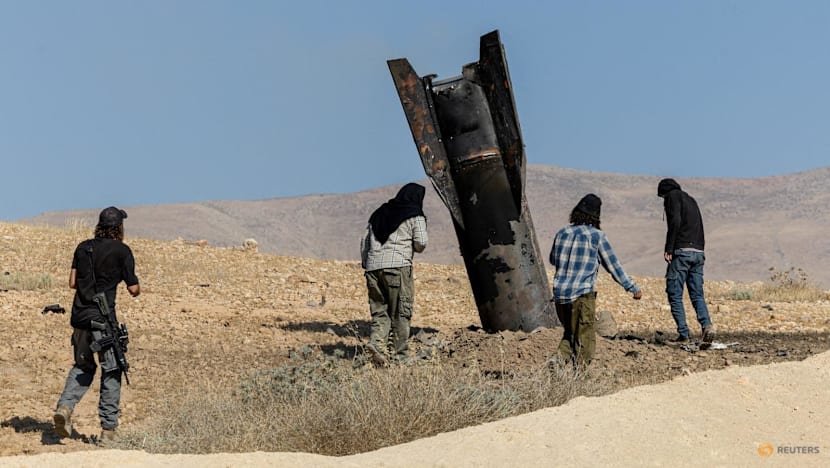
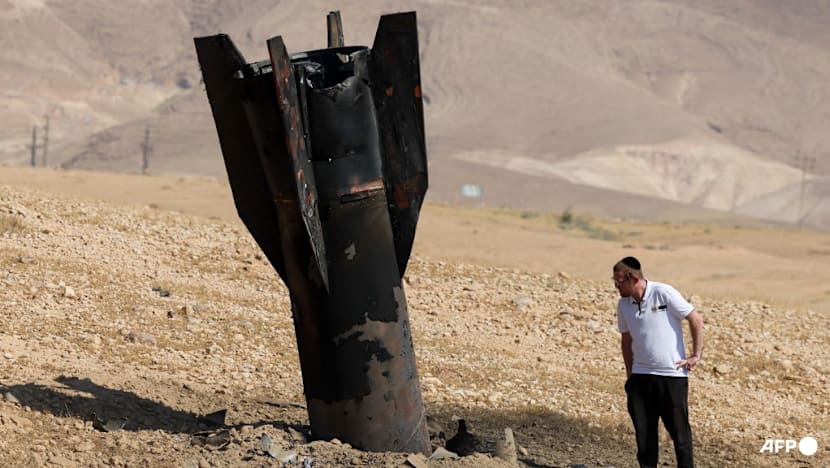
Israelis stand next to part of a missile protruding from the ground, following strikes from Iran, in the central Israeli-occupied West Bank, Jun 8, 2026. (Photo: Reuters/Naama Stern)
JERUSALEM: Iran and Israel said on Monday (Jun 8) they had halted attacks on each other following an appeal from United States President Donald Trump that they immediately "stop 'shooting'", though Tehran said it would resume strikes if Israel continued to hit Hezbollah in Lebanon.
The wave of attacks over the past 24 hours marked the most direct confrontation between Iran and Israel since an April ceasefire, threatening to wreck Washington's efforts to reach an agreement with Tehran to end their more than three-month war.
Iran had delivered a "painful response" to Israel and "accordingly, the cessation of armed forces operations is hereby announced", the Khatam al-Anbiya command said in a statement carried by state television.
"However, it is emphasised that should acts of aggression and hostility continue, including in southern Lebanon, much more severe and crushing measures than before will follow," it added.
Iran's president Masoud Pezeshkian also said that Tehran was still at the negotiating table after halting attacks on Israel.
"Diplomacy and defence are the two wings of national power; we have neither left the battlefield nor the negotiating table," Pezeshkian said in a post on X, adding that Tehran "will not retreat in the face of any threat".
His statement comes after Trump demanded that Israel and Iran "immediately stop 'shooting'", following a flurry of attacks that drove oil prices up around 4 per cent and threatened to wreck US-led efforts to broker a deal to end the war.
A source briefed on the matter told Reuters that Israel had also decided to halt its attacks on Iran.
If Hezbollah attacks on Israeli towns continue, Israel will attack the southern suburbs of Beirut, a senior Israeli official was cited as saying by Channel 12.
The Channel 12 report, citing the senior Israeli official, also said that Israeli strikes in southern Lebanon would continue at full strength in the coming days.
Israel hit a petrochemical plant in southwestern Iran that it said was used to produce ballistic missiles, and Iran's Islamic Revolutionary Guard Corps (IRGC) said it retaliated with a strike aimed at a similar Israeli facility in the city of Haifa.
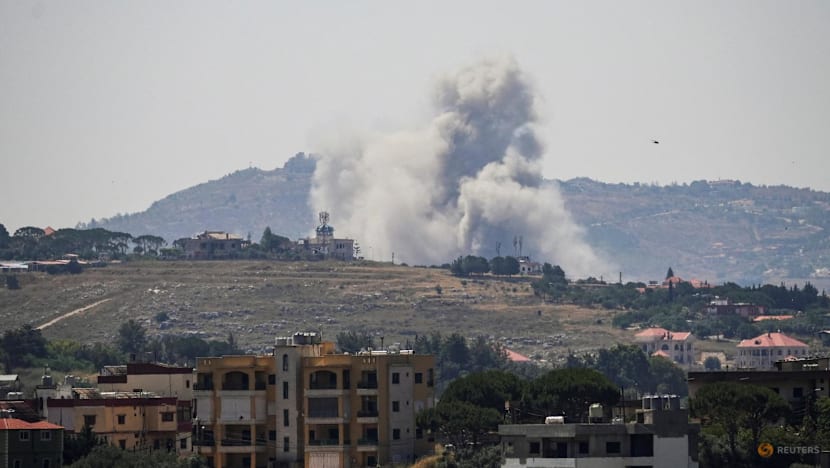
The exchange followed Israeli strikes on strongholds of Iran-backed Hezbollah in Beirut over the weekend. Tehran has repeatedly said any deal with Washington to end the conflict must include a halt to Israel's campaign in Lebanon.
"Israel and Iran must immediately stop 'shooting'," Trump said in a post on Truth Social, a day after he told Israeli Prime Minister Benjamin Netanyahu to refrain from further attacks to avoid undermining the peace talks with Tehran to end the more than three-month-old conflict.
Minutes later, he added in a new post that "final negotiations" towards peace were proceeding "subject to ignorance or stupidity getting in its way".
An Israeli military official said on Monday his country was prepared for a range of options in Iran, from several days to "as long as it takes", adding that it had struck Iranian air defence systems that were being rebuilt after previous Israeli attacks, as well as the petrochemical plant.
In a similarly defiant vein, an Iranian military source quoted by the Tasnim news agency said Tehran was prepared for a prolonged conflict with Israel and for renewed strikes against US interests in the region.
"EXTREME SUSPICION"
Iranian Foreign Ministry spokesperson Esmaeil Baghaei said earlier on Monday that Tehran was exchanging messages with Washington in an atmosphere of "extreme suspicion". Israel's actions in Lebanon, whether carried out with US knowledge and consent or not, were aimed at sabotaging diplomacy, he added.
"The United States bears direct responsibility for any action the Zionist regime (Israel) takes in relation to violating regional peace and security against Iran," he said.
Iranian media later reported the sound of explosions in Tehran on Monday, and the semi-official Mehr news agency said air defences had shot down a drone over the capital. There were no immediate reports of casualties or damage.
Yemen's Iran-aligned Houthis pledged in a statement to stop Israel's maritime navigation in the Red Sea, and said it was behind the first missile attack on Israel since an Apr 8 ceasefire which paused all-out warfare.
The Israeli military official said Iran had fired "close to 30 ballistic missiles" at Israel since Sunday evening, and the Houthis a further two missiles. Israel activated its aerial defence systems to repel most of the incoming strikes.
STRIKE ON PETROCHEMICAL COMPLEX
Israel said it struck targets at the Mahshahr petrochemical complex that were used to produce and export raw materials for Iran's missile programme. A provincial official told Iranian media parts of the plant were damaged.
The IRGC said it had targeted Ramat David air base, near Nazareth, on Sunday. Israel said it identified missiles launched from Iran and its defence systems had intercepted them.
Trump has leaned on Israel to stop its attacks on Iran-backed Hezbollah in Lebanon to allow room for a deal to end the wider war with Iran, including rebuking Netanyahu with obscenities in a phone call last week.
However, Israel launched strikes on Hezbollah strongholds in the Beirut area on Sunday for the first time since the US announced a truce plan for Lebanon last week.
Iran fired salvos of missiles at Israeli targets in retaliation, but Trump insisted that an agreement to end the wider war remained within reach.
Trump told Netanyahu during Sunday's call to refrain from further strikes because "we are close to doing something good in terms of a deal", according to a US official quoted by Axios.
The White House and the Israeli prime minister's office did not respond to requests for comment.

LEBANESE-ISRAELI TALKS TO RESUME
Israel has never halted its Lebanon campaign, which has killed thousands of people and driven hundreds of thousands more from their homes, saying it should be treated separately from any Iran ceasefire.
Hezbollah, which kept out of truce talks, has also continued its attacks and says it will not give up its weapons unless Israel halts its attacks and withdraws from Lebanon.
Tehran has long said any peace deal with the US would depend on a ceasefire also holding in Lebanon, which Israel invaded in March in pursuit of Hezbollah fighters who fired across the border in solidarity with Tehran.
The US ambassador to Lebanon, Michel Issa, said on Monday that Lebanese-Israeli negotiations were scheduled to resume in Washington.
Despite the April ceasefire, there have been sporadic flare-ups of fighting in the Gulf. Tehran has blocked most shipping through the Strait of Hormuz, which carried a fifth of the world's crude oil and liquefied natural gas before the war.
Washington has imposed its own blockade of Iranian ports.
Trump has said any deal to end the war must prevent Iran from developing a nuclear weapon. Tehran's demands include the lifting of US and international sanctions, the release of billions of dollars in frozen assets and recognition of its sway over the strait.