analysis World
How might the ‘major’ US-Indonesia defence partnership impact Southeast Asia?
Analysts say the new Major Defence Cooperation Partnership inked by both sides on Apr 13 is mainly about modernising the Indonesian armed forces, but it could still test Jakarta’s room to manoeuvre diplomatically.

This audio is generated by an AI tool.


SINGAPORE: The signing of a “major” defence partnership between the United States and Indonesia reflects a “practical alignment of interests” between Jakarta’s push to modernise its armed forces and Washington’s efforts to deepen ties with a strategically vital Southeast Asian power, analysts told CNA.
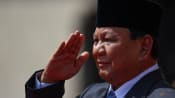
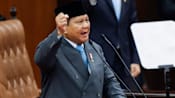
It also signals a relationship that is on an “upward” trajectory, compared to their chequered past with Indonesian military officials previously barred from entering the US amid purported human rights violations. These include President Prabowo Subianto and reportedly also Defence Minister Sjafrie Sjamsoeddin.
And this, analysts say, may have a broader impact on the region and see Indonesia emerge as a “stronger and more credible voice” within the Association of Southeast Asian Nations (ASEAN) bloc.
“More broadly, the Major Defence Cooperation Partnership (MDCP) has the potential to elevate Indonesia’s status as a middle power with a firmer strategic footing in Southeast Asia,” said Teuku Rezasyah, an international relations lecturer at Indonesia’s President University and Padjadjaran University.







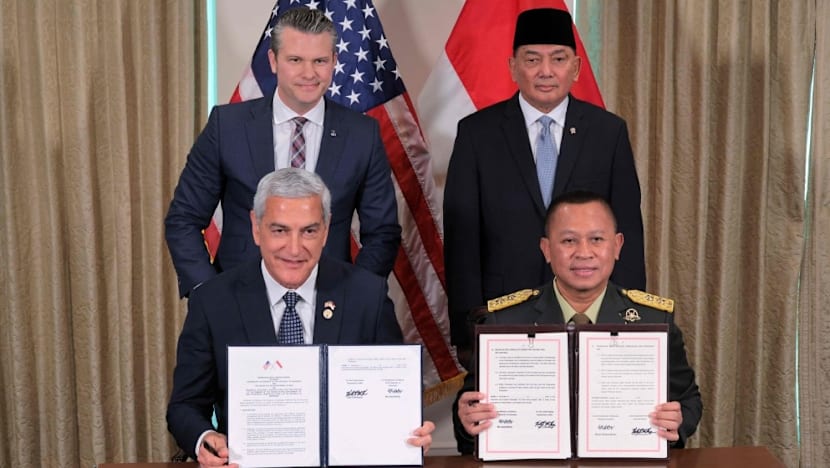
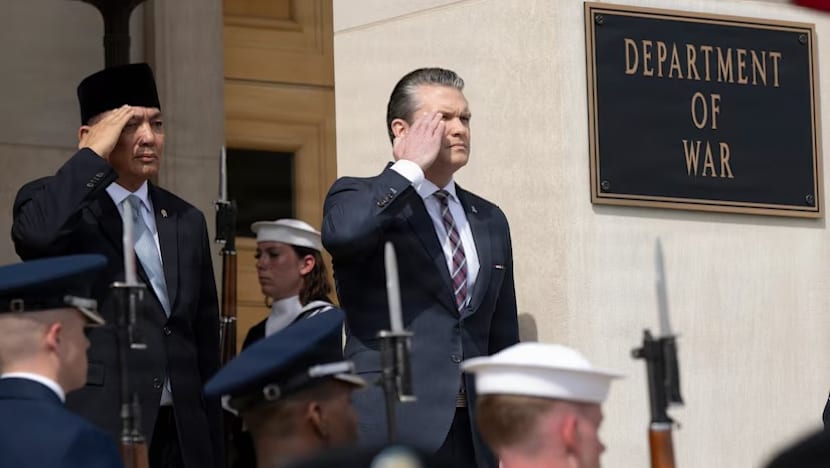
The MDCP was announced after US Defense Secretary Pete Hegseth met Sjafrie at the Pentagon on Apr 13. The partnership covers "military modernisation and capacity building", "training and professional military education" and "exercises and operational cooperation", according to a joint statement.
While Washington has used other “major defence” formulations elsewhere, including the Framework for the US-India Major Defence Partnership and a US-UAE Major Defence Partnership, the exact “Major Defence Cooperation Partnership” label appears to be publicly used for the first time for Indonesia.
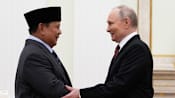
The timing of the pact makes it harder to treat the deal as just another technical upgrade in defence relations, said observers, noting how it was unveiled on the same day that Prabowo was in Moscow for talks with Russia President Vladimir Putin, underscoring Jakarta’s effort to keep major powers engaged on multiple fronts.
Indonesia has widened defence ties with a broad range of partners in recent years, from France and Turkey to Australia and China, while insisting it remains non-aligned.
Analysts whom CNA spoke to said that the MDCP is meant primarily to help Indonesia rebuild and modernise its armed forces, and not to turn Jakarta into a US ally or suggest it is choosing sides.
Even so, they warned that the symbolism of closer defence ties with Washington could still create diplomatic and political pressure, especially if cooperation expands into more sensitive areas such as military access or overflight, raising doubts about Indonesia’s long-standing “free and active” foreign policy.
MODERNISATION FIRST
Rezasyah told CNA that the MDCP announcement “appeared designed” to show that Jakarta was still practising its non-aligned diplomacy by engaging multiple major powers simultaneously, reading the timing of the defence pact through the choreography of Indonesia’s broader diplomacy efforts.
The MDCP also did not emerge from nowhere, he noted. Indonesia and the US, Rezasyah said, had already elevated ties to a Comprehensive Strategic Partnership in 2023, including stronger cooperation in maritime security and defence. The new pact pushes that relationship further, but in a more pointed defence direction.
According to Rezasyah, the MDCP should be seen as part of a relationship that had already been moving upward rather than a completely new direction.
US-Indonesia military ties were sharply downgraded after the 1999 East Timor violence and only gradually restored from the mid-2000s.
The violence erupted after East Timorese voted overwhelmingly for independence in a UN-backed referendum, triggering a wave of killings, forced displacement and destruction by pro-Indonesian militias.

Full International Military Education and Training (IMET) resumed in 2005, while US restrictions on assistance to Indonesian Special Forces were lifted in 2010.
Prabowo himself had long been barred from entering the US over alleged human rights abuses linked to his military career, including the 1997-1998 kidnappings of pro-democracy activists, before the restriction was effectively lifted in 2020, when he travelled there as defence minister.
Citing leaked diplomatic material and Indonesian media reports, Sjafrie was also reported to have faced a US blacklist or denial of entry over human rights allegations tied to East Timor. News outlet Detik reported in 2009 that he had been denied entry to the United States, and in 2011 cited WikiLeaks-linked material saying he was on a blacklist.
Akbar Kurnia Putra, an international law expert from the University of Jambi, said the decision to move forward with the MDCP “did not occur in a vacuum” but reflected a longer strategic shift shaped by pragmatic geopolitical calculation on both sides.
“The MDCP represents a clear case of realpolitik,” he told CNA. Realpolitik is a system of politics or principles based on practical rather than moral or ideological considerations.
For the US, Akbar explained, the need to compete with China in the region has outweighed earlier reluctance to engage Indonesia’s military due to its past.
On Indonesia’s side, he said the calculation is just as clear.
“For Indonesia, the need to leverage US technology and training to modernise the armed forces has taken precedence over concerns about appearing too closely aligned with Washington.”
Echoing Akbar, Yohanes Sulaiman - an associate professor in international relations at West Java’s Achmad Yani University - said that the core purpose of the MDCP is “straightforward”.
“So far, Prabowo’s focus seems to be on seeking US assistance to modernise Indonesia’s military, which aligns with the current administration’s broader priorities,” Yohanes told CNA.
That reading matches Indonesia’s wider procurement drive under Prabowo. Since becoming defence minister in 2019, and later president, he has placed defence squarely back in the political spotlight.
In air power, Jakarta ordered 42 Rafale fighter jets from France in 2022, with deliveries beginning in 2026. It also ordered five US-made C-130J-30 Super Hercules tactical airlifters, completed by 2024, and two Airbus A400M aircraft in 2021, both of which had been delivered by March 2026.
Indonesia has also signed in 2025 for 48 KAAN fighter jets from Turkey, while separately announcing plans in 2025 to acquire Chinese-made J-10 fighters. Jakarta had also previously explored a possible purchase of US-made F-15EX fighters.
At sea, Indonesia signed for two Scorpene Evolved submarines with France’s Naval Group and PT PAL in 2024, with the contract entering into force in 2025.
It also signed a March 2024 contract for two Italian-built PPA patrol/combat ships from Fincantieri, while Indonesian officials say the retired Italian carrier Giuseppe Garibaldi is due to be transferred as a grant in 2026.
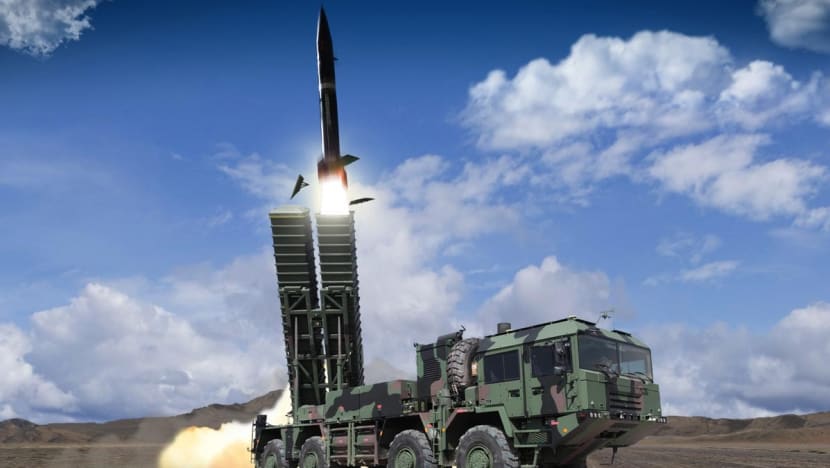
Beyond aircraft and ships, Indonesia agreed in 2023 to acquire 13 long-range air surveillance radars from France’s Thales, and ordered the Turkish-made KHAN short-range ballistic missile system in 2022 before later receiving it in 2025.
Akbar said that the MDCP could complement Indonesia’s wider modernisation drive by opening the way to more advanced defence technology and possible co-development, particularly in maritime, undersea and autonomous systems such as unmanned aerial vehicles (UAVs) and remotely operated vehicles (ROVs).
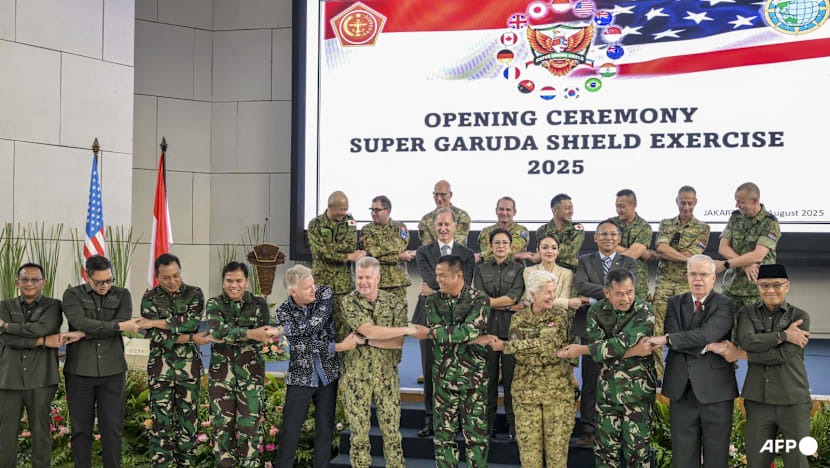
He also expects joint exercises such as Super Garuda Shield to grow in both scope and complexity, including deeper special forces cooperation, while expanded professional military education in the US and the growth of defence alumni networks could gradually improve interoperability between the two militaries.
Super Garuda Shield itself has become a more serious platform for that kind of interoperability. What began as a bilateral Indonesia-US drill has grown into a much larger multinational exercise involving the Indonesian Armed Forces, US forces and other partner countries.
STRONGER RELATIONS, BUT STILL SHORT OF ALLIANCE
Even with the “major” label, the analysts were clear that the MDCP falls well short of a treaty alliance.
The US has formal defence treaties with over 50 countries, primarily through the North Atlantic Treaty Organization (NATO) as well as regional agreements in Asia and the Americas.
In the Indo-Pacific region, Japan, South Korea, the Philippines, Thailand and Australia all have mutual defence treaties with the US. This means that the US is obligated to help defend the partner if attacked.
Singapore, meanwhile, remains one of Washington’s closest regional security partners without being a defence treaty ally. Under a 2005 Strategic Framework Agreement, the US recognised Singapore as a Major Security Cooperation Partner.
Singapore and the US then signed a joint Enhanced Defense Cooperation Agreement in 2015 to identify areas of cooperation in biosecurity, cyber defense, humanitarian assistance, disaster relief and strategic communications.
“Formal US defence arrangements with its allies usually involve some level of command-and-control integration,” Yohanes said. “While the US cannot directly command allied forces, coordination is institutionalised through regular joint exercises. The Indonesia-US partnership has not reached that level.”
Yohanes stressed that - based on what is publicly known - the relationship still appears centred on military education and joint training rather than treaty-level commitments.
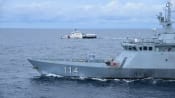
Meanwhile, Akbar placed Indonesia somewhere between strategic partners like Singapore and formal treaty allies such as the Philippines and Thailand “in the spectrum of defence relations with the US”.
“Indonesia is not bound by a mutual defence pact, but the ‘major’ designation reflects its importance as a key strategic partner for the US in the region. Legally, the MDCP is clearly a non-binding, cooperative framework rather than a formal defence alliance,” he said.
Rezasyah nevertheless argued that the pact carries broader strategic meaning because of Indonesia’s geography and weight.
“In practical terms, although the document lacks detailed clarity, it carries a similar spirit to US security arrangements with countries such as the Philippines, Thailand, and even Vietnam.
“Given Indonesia’s geoeconomic and geostrategic importance, the agreement also leaves room for future contingencies, including potential developments related to the South China Sea,” he told CNA.
While Indonesia is not a claimant of the South China Sea, China’s “nine-dash line” claiming most of the waterway overlaps with Indonesia’s exclusive economic zone (EEZ) near the oil- and gas-rich Natuna Islands. ASEAN states that have laid a claim to the important waterway include Malaysia, Brunei, the Philippines and Vietnam.
OVERFLIGHT AND SOVEREIGNTY
Political sensitivity around the MDCP deepened amid reports that the US was separately seeking overflight access for military aircraft through Indonesian airspace.
Reuters reported that Indonesia’s foreign ministry warned the defence ministry in an early-April letter that a US proposal to grant its military “blanket” permission to fly over Indonesian territory risked entangling Jakarta in potential South China Sea conflicts.
The letter, marked urgent and confidential, urged the defence ministry to delay any final agreement with Washington.
Indonesia’s defence ministry later clarified to CNA that overflight clearance is not part of the MDCP.
“Based on the officially published MDCP document available on the Pentagon’s website, overflight clearance is not part of the partnership,” defence ministry spokesperson Brigadier General Rico Ricardo Sirait said.
Even so, the issue has remained sensitive because it touches directly on sovereignty and strategic autonomy.
Akbar said that the overflight proposal, as far as he knew, had not been approved.
“To my knowledge, the proposal for overflight clearance for US military aircraft has not yet been approved. However, there are potential benefits and risks for Indonesia if such access is granted,” he told CNA.
Akbar said that overflight could bring practical advantages by improving logistics for joint exercises such as Super Garuda Shield, strengthening operational capacity and interoperability and supporting quicker humanitarian responses.
Improved US access would be highly useful for disaster relief operations - such as earthquakes or tsunamis - or evacuation missions, given Indonesia’s location along the Pacific Ring of Fire.
But he also warned that any arrangement seen as granting privileged access to a major power would be politically charged.
“On the risk side, the most significant concern is sovereignty and the principle of a ‘free and active’ foreign policy. Granting privileged access to a major power could be perceived as undermining Indonesia’s long-standing strategic autonomy, an issue that is highly sensitive among the public and political elites,” Akbar warned.
He added that such a move could complicate relations with China. Beijing would likely interpret it as Indonesia leaning toward the US in the broader geopolitical competition, which could affect economic ties and investment, particularly in the context of tensions in the South China Sea around Natuna Islands.
Akbar said a full Status of Forces Agreement, or SOFA, would not necessarily be required if any overflight arrangement were approved. A SOFA is a broader agreement that usually governs the legal status of foreign military personnel operating in another country, including issues such as jurisdiction and privileges.
In his view, a Letter of Intent, by contrast, would be a narrower arrangement and, in this case, would more likely deal with technical procedures for overflight clearance rather than a wider foreign military presence. Even so, he said the political meaning of such a move would still be hard to contain.
Rezasyah, meanwhile, raised the issue of the optics arising from the MDCP rather than its legal mechanics.
Any overflight agreement, he said, could create the perception that Indonesia was moving closer to a US security umbrella. If operational access ever widened further, he added, places such as Natuna Islands and Morotai would naturally draw attention because of their strategic value and proximity to key maritime routes and regional hotspots.
A FOREIGN POLICY TEST
How far the MDCP affects Indonesia’s foreign policy posture is where the analysts place their emphasis differently.
Rezasyah opined the timing of the MDCP was “not ideal” for Indonesia because it comes amid heightened tensions in the Middle East and could create the perception that Jakarta is leaning slightly towards Washington in a way that may not align with domestic sentiment.
“Theoretically, this agreement could be seen as a partial shift away from Indonesia’s strict ‘free and active’ foreign policy - particularly at the geostrategic level,” he said.
China, he added, is likely to seek clarification through security dialogue and may look more closely at Indonesia’s position, especially in relation to the South China Sea.
Akbar added that once defence cooperation begins to touch on privileged access or other sensitive operational arrangements, sovereignty and strategic autonomy then become the centre of the debate.
Meanwhile, Yohanes believes that Indonesia’s policy still appears consistent with its long-standing “free and active strategic neutrality”.
His concern lies more in how the defence and foreign policy is handled than in the doctrine itself.
“However, a key concern for the foreign ministry is that the president tends to act independently without fully involving diplomatic channels, raising the risk of major missteps, such as previous statements suggesting Indonesia and China have overlapping disputed areas,” said Yohanes.
Meanwhile, the analysts believe that the regional implications of Indonesia’s MDCP signing also cut both ways.
Rezasyah said the MDCP could strengthen Indonesia’s standing within ASEAN, especially for countries uneasy about China’s claims in the South China Sea.
Akbar, however, sees a harder edge to the regional picture. In his view, the broader effect of the MDCP is a “shift in the region’s strategic balance”.
“Given Indonesia’s highly strategic geographic position - particularly along the Malacca Strait, one of the world’s busiest global trade routes - this partnership will inevitably influence the dynamics of US-China competition.
“It is also likely to create a domino effect, accelerating geopolitical polarisation in Southeast Asia,” he warned.