'It was quite scary' – domestic helpers on being caregivers without enough training
Dementia, disability and serious illness can require specialised care and round-the-clock attention at home. CNA TODAY looks at what happens when domestic workers' skills and families' caregiving needs don't match – and what could help.
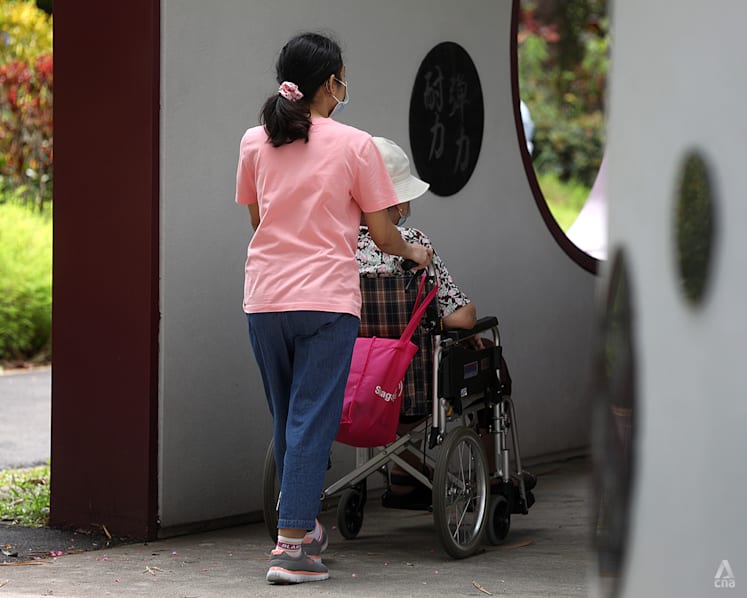
As more families turn to migrant domestic workers for caregiving support, some of them are tasked with caring for seniors with complex needs. (Photo: CNA file)

This audio is generated by an AI tool.


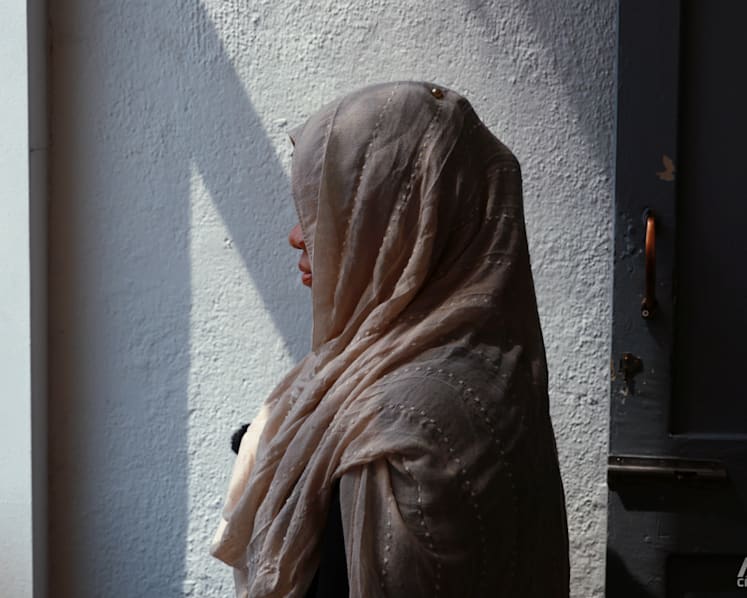
Anna (not her real name) came to Singapore in 2023 from Myanmar after securing a job as a domestic worker, with an interest in taking care of seniors.
Her first two jobs quickly showed her how demanding caregiving could be – especially for a newbie lacking in both experience and training.
She was first assigned to be the sole caregiver of a woman in her 80s who had dementia.
"I had no experience; it was very difficult. I (didn't) know what to do," the worker in her 40s said. "I never learnt how to take care of such a patient."





The older woman had no family in Singapore, because her daughter was overseas. "So it was only her and me," Anna recalled. "It was quite scary."
Early in Anna's employment, the older woman fell and became wheelchair-bound, growing more dependent on her for daily tasks.
The heavier workload, compounded by the woman's deteriorating memory and mood, placed further mental and emotional strain on Anna.
"I just came to Singapore; I had no friends. So I told the agent and the (woman's) daughter (about my struggles). They told me just to try my best to be patient."
After about a year, she requested a transfer. She was placed with another family to care for a bedridden man with dementia.
This job took a significant physical toll on her, because her new charge was bigger and taller than her. She again asked to end her employment after about a year and eventually transferred to another employment agency.
"I like taking care of the elderly, but with no training or experience, it was very stressful."
Anna and some other migrant domestic workers who spoke to CNA TODAY asked to remain anonymous, as they either did not have their current employer's permission to speak to the media or wanted to maintain good relations with their former employers.
Anna's experience also reflects broader concerns about migrant domestic workers taking on caregiving duties for which they may be inadequately prepared or trained.
Parliament highlighted the issue in January, when labour Member of Parliament Yeo Wan Ling filed an adjournment motion calling for better support for these workers and the families relying on their caregiving services.
Ms Yeo called for expansions in both training schemes and relevant subsidies such as the Caregivers Training Grant.
She also put forth other suggestions, including better healthcare, mental health and social support for domestic workers, and raising the standards of job matching at employment agencies.
She noted that there are more than 308,000 migrant domestic workers in Singapore today, whom she called "the invisible workforce behind our workforce".
"When they function well, families work. When they fail, families can fall," she said.
The Humanitarian Organization for Migration Economics (HOME) told CNA TODAY that it regularly encounters domestic workers who are expected to take on substantial caregiving responsibilities despite having little or no relevant training or experience.
Dr Stephanie Chok, executive director of the migrant worker-focused non-governmental organisation, said: "Many of the students from the HOME Academy Caregiving courses have also shared that they have been placed in households with caregiving needs before receiving structured training.
"They are often expected to learn on the job."
In January, HOME issued a statement supporting Ms Yeo's recommendations to support such workers with caregiving responsibilities.
"Insufficient training can lead to heightened fatigue, stress and potential risks to both the care recipient and the caregiver," the organisation said then.
WHEN CARE NEEDS AND SKILLS DON'T MATCH
Thirteen years ago, Ms Christina Abalayan got her very first stint as a domestic worker, caring for a child with cerebral palsy in the Philippines. Before that, she had no training and no experience caring for a child with special needs.
"It was really hard at the start," Ms Christina, now 30, said. "He needed help with almost everything because he had so little control over his own body."
She had to carry him, prevent him from banging his head and stop him from biting himself while being fed – sometimes at the expense of getting bitten herself.
She could not rest fully through the night, since her young charge often awoke and began biting himself again. Most heartbreaking to her was watching his tantrums when he wanted something but was unable to communicate it to her.
"There were definitely nights when I felt drained. Not just tired in my body but in my heart, too.
"If I'd learnt about cerebral palsy before, I probably would've understood his behaviour better and known what to do when things got difficult."
She underwent a year-long caregiving training before coming to Singapore and has now been employed by a family here for almost eight years, caring for a child with autism – a role she felt better prepared for, thanks to the training she received and her experience with her first employer's family.
Ms L, another worker from the Philippines, was once employed to take care of an older couple with cancer without any experience or training.
"The main source of stress for me was their temperament, especially the grandmother, which I was not mentally prepared for," Ms L recalled.
The grandmother would secretly consume food and drinks that were off-limits, misplace things and then blame Ms L, while both elders would sometimes insist on doing things independently despite their frailty.
"She would also get upset with me over simple matters like not putting an item back exactly the way she had put it, or if I missed a small droplet of water when wiping surfaces," Ms L added.
"And my employers (the couple's children) did not arrange any caregiving training for me. They said there was no need because my job was just to accompany their parents around the house."
She asked for a transfer within a year.
Dr Chok told CNA TODAY about an Indonesian worker whose experience was so bad that she fled to HOME's shelter.
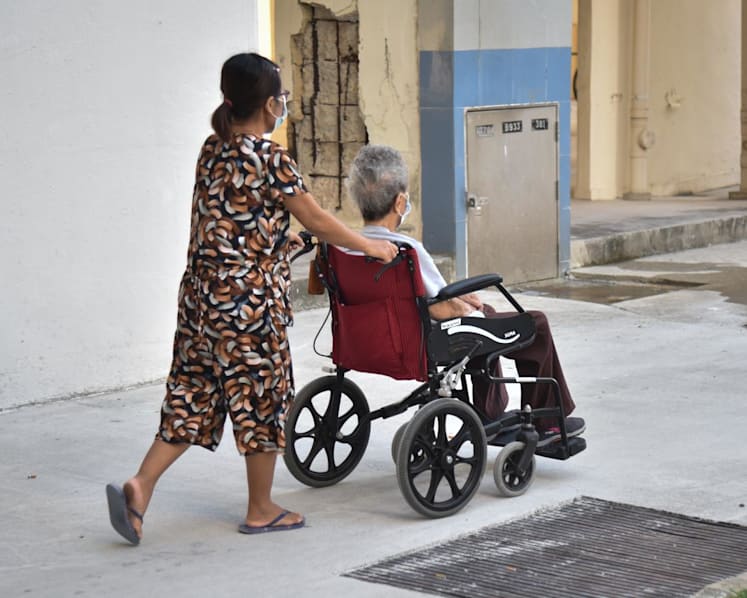
Safira (not her real name) was tasked to care for an immobile older woman weighing 104kg – considerably more than what the worker had been told before starting on the job.
Dr Chok said: "Despite having no formal training, she was required to transfer the care recipient alone between the bed, wheelchair and bathroom, even after hospital crew advised that several caregivers were needed."
On top of caregiving, Safira handled chores for the family of five, working about 17 hours a day. Her nightly rests were frequently interrupted to tend to the older woman.
Within four months, she had lost significant weight and developed chronic pain.
"When she raised concerns about falling ill, her employer told her, 'You cannot be sick, ya? If you fall sick, then mati, ah (we die)'."
Safira sought help and asked for a transfer so that she could continue working in Singapore, but her complaints were not taken up for further investigation by the authorities and her transfer request was denied, Dr Chok said.
With no other recourse, Safira eventually returned to Indonesia.
Dr Chok reiterated how such mismatches can endanger both workers and care recipients.
"Workers may suffer injury, exhaustion and severe psychological distress, while mistakes involving lifting, medication or medical equipment may harm those receiving care," she added.

In its January statement, HOME noted that some migrant domestic workers also find it difficult to communicate with their care recipients in a common language, heightening stress and frustration for both parties.
Ms Kate Lim, 47, decided to get a live-in helper in 2023 for her mother who has dementia. Previously, her father was the main caregiver when the couple, now both aged 77, lived alone.
At the time, her mother's condition began worsening. She would frequently wake up at night, confused between night and day, taking a toll on her ageing father.
Ms Lim said: "We made known during the employment interviews that the crucial need was the night waking. So if you agree to take on the work, you have to be prepared that your sleep overnight will be disrupted."
All three prospective workers said okay, Ms Lim added. "But once they started, each of these three did not last for more than two weeks."
Ms Lim changed helpers twice during this period, with only one worker caring for her mother at any one time.
On some nights, while awake in her own home, Ms Lim would watch through a surveillance camera as her mother woke up confused in the middle of the night.
Speaking broadly about the problems she encountered with the helpers, Ms Lim said there were instances when her mother was "pushed down like a rag doll" instead of being calmed and coaxed back to sleep, causing her head to bounce slightly off the pillow.
This was among a few issues, including the helpers' inability to communicate with the mother in Mandarin or dialect, which added to frustrations on both sides and led the family to reconsider their employment.
"Things got really tense between (the helpers) and my father, so we had to end the working relationship," Ms Lim added.
Conversely, the right match and training can significantly improve the level of care that helpers provide.
Ms Kate Cham, 36, recalled how her late grandfather, who was in an advanced stage of dementia and Parkinson's disease, was initially cared for by a domestic worker with basic caregiving knowledge.
The bedbound senior experienced "an improved level of care" after the family engaged someone with years of experience and training.
Ms Cham, who is also co-founder of live-in helper and caregiver agency Anglo Caregivers, said: "On the first day, immediately she knew what to do – when to change diapers, how often to turn him, how to position him, how often to wet his mouth, how to do daily range-of-motion exercises to loosen his contractures."
The worker also quickly noticed Ms Cham's grandfather having difficulty expelling phlegm due to his advanced-stage dementia and Parkinson's disease, and suggested that the family consider suctioning the phlegm.
"She also started performing chest percussion for my grandfather to help him with loosening the phlegm without us prompting."
WHY THE RIGHT MATCH CAN BE HARD TO FIND
Filling the ever-growing demand for domestic workers who can perform caregiving roles can be challenging, employment agencies said.
Ms Chloe Lim, co-founder and director of maid agency gentleHelp, said: "Helpers with relevant caregiving experience or formal training typically command a premium, in both one-off hiring costs and monthly salary, simply because that experience is harder to come by.
"They're also not easy to source, since migrant domestic workers with these skill sets often have other job opportunities as well, for instance, in the institutional care sector."
Families and observers said that some employers may be reluctant to have their helpers undergo training because of cost and time constraints.
Others may underestimate the importance of training or finding the right fit, believing that the workers can simply learn on the job.
Associate Professor Kelvin Tan, a gerontologist at the Singapore University of Social Sciences (SUSS) who studies ageing and the needs of older people, said: "There is no 'plug and play' for human-related services, and even more so for caregiving.
"Even experienced migrant domestic workers need refresher courses to keep up with the knowledge and be an improved version of themselves."
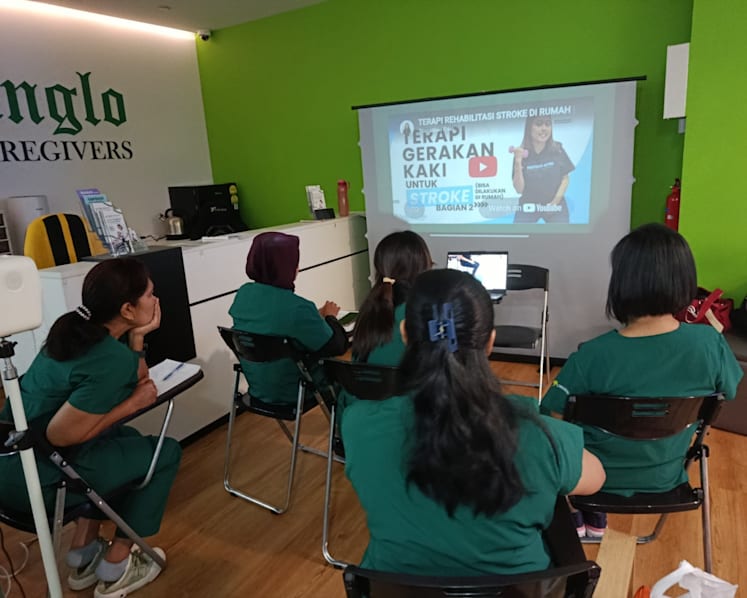
Families and employment agencies agreed that requiring domestic workers to complete a basic, standardised caregiver course could be a good first step towards addressing skill gaps.
"Attending this course can orientate the new or untrained helper to some of the basics of caregiving and clarify expectations before she starts working," Ms Cham from Anglo Caregivers said.
The worker and employer will also be better placed to identify learning and skill gaps and tap the Caregivers Training Grant for the helper to attend advanced caregiving courses most suited to the family's specific needs, she added.
However, training alone is not enough if prospective employers are not upfront about their real expectations, and if the workers are not best matched to the families' caregiving needs based on their experience, skills and capabilities.
Dr Chok reiterated HOME's initial call in 2020 for a standard care matrix to match households' care needs better with workers' abilities.
The organisation also echoed Ms Yeo's call for care assessors to be placed within employment agencies to ensure that matching is done professionally.
Assoc Prof Tan from SUSS further argued that employers can also consider taking courses to be "good managers".
"Treating migrant domestic workers as robots that will not fail is unrealistic."
He added that both employers and domestic workers could benefit from learning how to manage the caregiving relationship better.
"Learning for both parties will help build a sustainable and balanced relationship of respect, dignity and empowerment."
Overall, the experts and agencies stressed that training alone is not enough to ensure that domestic workers can provide adequate care.
"Migrant domestic workers must be appropriately matched, fully informed about their responsibilities, and given adequate daily and weekly rest," Dr Chok from HOME said.
"Protecting workers from exhaustion is also essential to ensuring that care recipients receive safe and appropriate care."
Treating migrant domestic workers as robots that will not fail is unrealistic.
After domestic worker Anna transferred to a new agency, she was matched with an employer who enrolled her in an extensive caregiving course before she began looking after his parents-in-law.
The family also stepped in to care for the two elders while Anna attended caregiving classes.
Her employer, who wanted to be known only by his surname Yew, said that being upfront about the family's caregiving needs – and investing the time and resources to prepare Anna for the role – had benefited both sides.
With her new skills and knowledge, Anna has become more confident and competent.
Mr Yew is equally pleased with the arrangement, saying the family would keep her "as long as she can serve my old folks".
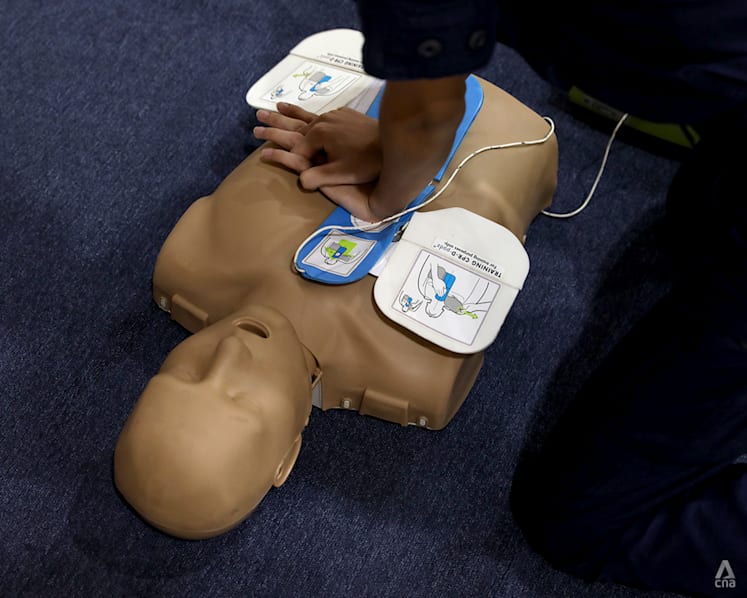
The difference proper support and training can make became clear in a potentially life-saving situation.
Barely two months on the job, Mr Yew's mother-in-law choked on some food.
Having been taught the Heimlich manoeuvre in her caregiving course, Anna immediately performed it on the elder to force out the food.
Mr Yew said: "If we had not taught her, my mother-in-law would have suffocated and died."
Three years after arriving in Singapore with a desire to care for seniors, Anna is now doing the work she had wanted to do – only now, with a better understanding of how to care for those who depend on her.