Micro gardens take root in Singapore as urban farming demand grows
More schools, companies and community spaces are hosting small gardens, with some solution providers reporting up to a 30 per cent increase in demand.
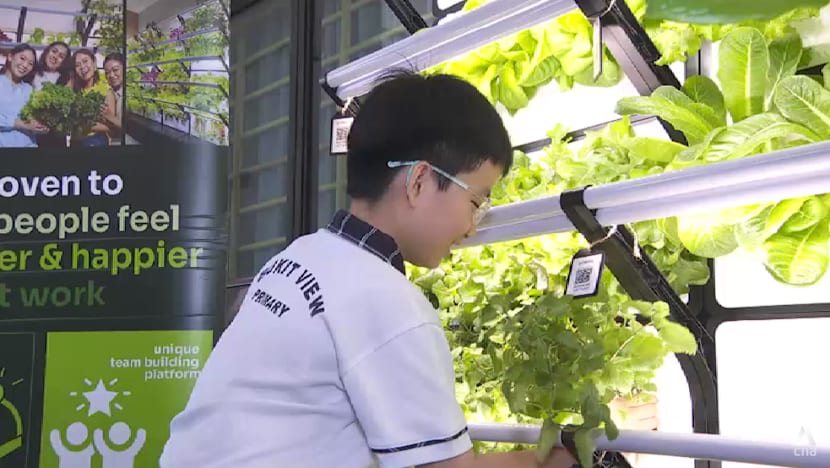
About 220 Primary 4 pupils at Bukit View Primary School take turns to tend to a vertical garden grown along a corridor.

This audio is generated by an AI tool.




SINGAPORE: A school corridor might not seem like a place for farming, but at Bukit View Primary School, unused space has been transformed into rows of thriving leafy greens.
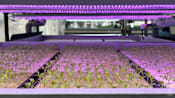
The vegetables and herbs – including romaine lettuce and thyme – grown in a vertical garden, can be harvested every three weeks.
Such micro-gardens are becoming more common in Singapore, found in places such as schools, companies and community spaces.
STUDENTS, SENIORS WORKING TOGETHER
At the school in Bukit Batok, around 220 Primary 4 students take turns to manage the garden. They are involved in every step, from preparing seedlings and transplanting vegetables to harvesting them.





“I hope to see more urban farms in our school, as this way we can have more plants and also eat them. And I hope we can, next time, (grow) more of these plants around our school,” said student Valen Tan.
Supporting them is a group of “silver farmers” – seniors from a nearby active ageing centre. Five of them are assigned every week to guide the students and help maintain the farm.
The school’s principal Teo Eng Hui said the partnership helps address the challenge of keeping the farm running outside term time.
“School holidays (are) always a tricky part in school gardens,” Mdm Teo added.
Alongside seniors, the school also works with parents to help maintain the garden during school holidays.
DEMAND FOR URBAN FARMING ON THE RISE
Bukit View Primary School is among several new clients of local urban farming service Grobrix, which has installed more than 100 edible green walls across the island.
The company’s founder Mathew Howe said it has seen strong demand over the last quarter, growing its farming footprint by about 30 per cent in Singapore.
It has also expanded in Malaysia and is scaling up in the United States following a pilot, with projects in Boston's life sciences corridor.
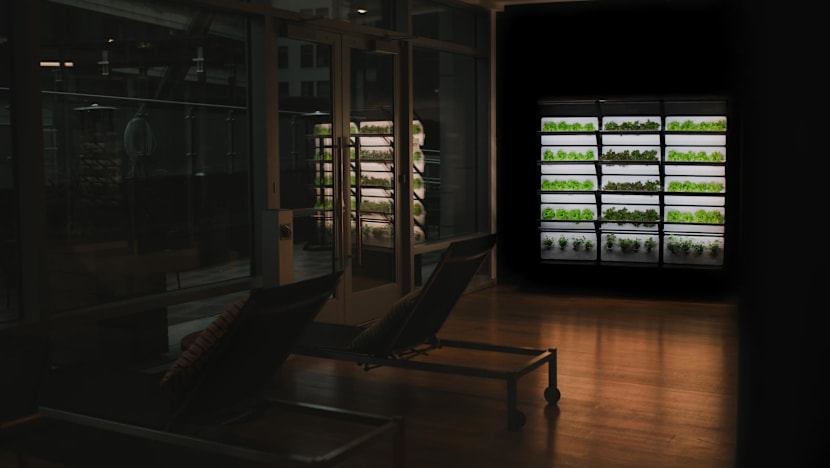
Mr Howe said this growth aligns with Singapore’s push to strengthen food resilience, adding that such efforts complement large-scale food production by focusing on community-led initiatives.
“How can we empower the community at large to take matters into their own hands and grow food for themselves?” he said.
“With the right amount of support and at the right scale, I'd like to think that we can actually move the needle from a bottom-up perspective when it comes to food security here in Singapore.”
Singapore imports more than 90 per cent of its food, leaving it vulnerable to external supply disruptions.
The country recently updated its food resilience targets, aiming for local farms to supply 20 per cent of its fibre needs by 2035 – including fresh leafy and fruited vegetables, bean sprouts and mushrooms.
It has also set a target to meet 30 per cent of its protein needs locally by 2035, including eggs and seafood.
These replace an earlier “30 by 30” target of producing 30 per cent of Singapore's nutritional needs locally by 2030.
BRINGING FARMS INTO THE COMMUNITY
Another local player, Corridor Farmers, has also seen a modest rise of about 5 to 10 per cent in requests for community gardens over the past year.
It currently services eight sites across Singapore, ranging from office spaces in the Central Business District to residential neighbourhoods.
In Chinatown, one such garden involves students from the Singapore University of Social Sciences and St Andrew's Autism Centre, who help to water and harvest crops such as strawberries and grapes as part of the programme.
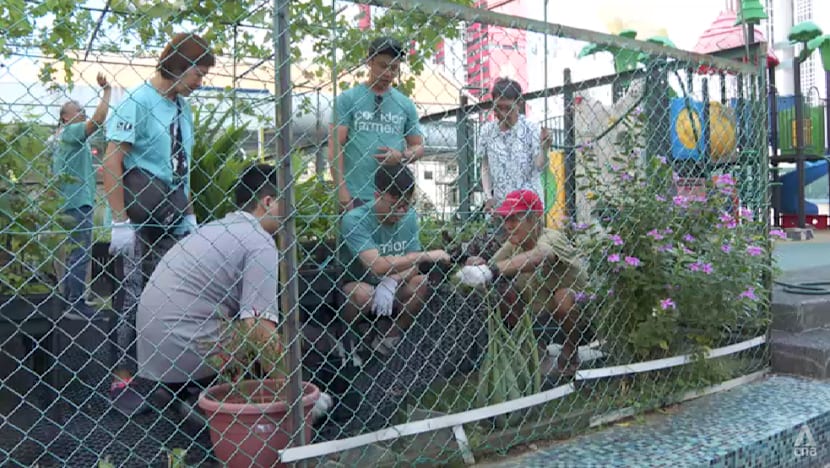
Founder Roc Koh said while these small-scale farms are not meant to feed the nation, they play an important role in other aspects.
“Firstly, it fosters behavioural change. You create awareness and also teach the life skills of growing your own food,” he said.
“With that, you're able to cultivate a group (within the) population that (is) very aware of what they're eating. You get people who are truly informed and choose what they want to eat and likely support local produce.”
Produce from its gardens is typically shared among volunteers or supplied to nearby restaurants.
More projects are in the pipeline, with Corridor Farmers planning another community garden in a different neighbourhood by July.