Teo Siong Seng expands leave of absence to roles at NUS, shipping company PIL after US indictment
Mr Teo says he does not intend to seek re-election as Singapore Business Federation chairman when his term ends on Jun 24.
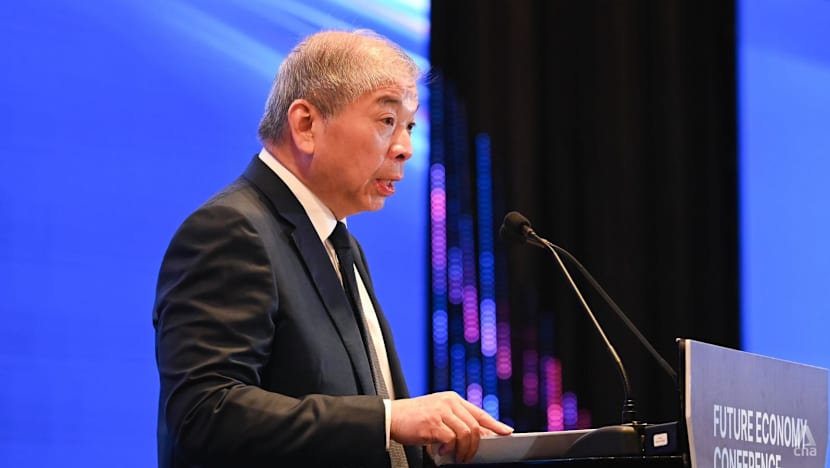
Mr Teo Siong Seng, chairman of the Singapore Business Federation, gives a welcome address at the SBF Future Economy Conference on May 13, 2026. (Photo: CNA/Liew Zhi Xin)

This audio is generated by an AI tool.


SINGAPORE: Shipping executive Teo Siong Seng has expanded his leave of absence to his roles in the National University of Singapore (NUS) and shipping firm Pacific International Lines (PIL), following accusations in the US of conspiring to restrict the output and fix prices of dry containers.
In a statement on Thursday (May 28), Mr Teo also said he does not intend to seek re-election as chairman of the Singapore Business Federation (SBF) when his term ends on Jun 24.
It was previously announced that the industry veteran would take a leave of absence from his roles as SBF chairman, member of the Singapore Economic Resilience Taskforce (SERT) and board member at Enterprise Singapore.
These will take effect from Jun 1, along with his leave of absence as Pro-Chancellor of NUS.





Mr Teo's duties will be covered by other members of NUS' chancellery, the university said in response to queries from CNA.
He has also applied for a leave of absence from his role as executive chairman and director of PIL with effect from Jun 8.
"I have proactively decided to take these leaves of absence to afford myself sufficient time to attend to this matter, and for the best interests of the aforementioned organisations," Mr Teo said in the statement.
SBF told CNA on May 22 that Mr Teo’s duties as chairman would be assumed by vice-chairman and treasurer Mark Lee.
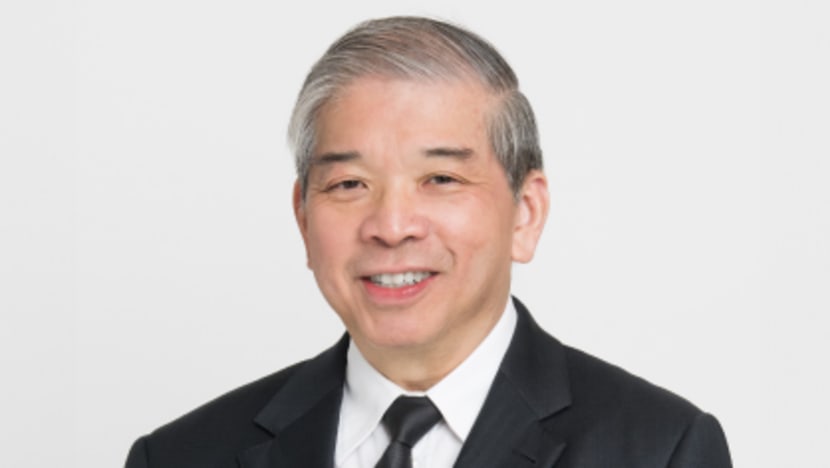
Mr Teo, who is the CEO and chairman of Hong Kong company Singamas Container Holdings, is one of seven executives from shipping container manufacturing companies that the US Department of Justice named in the price-fixing conspiracy.
The alleged conspiracy went on for over four years, from November 2019 to at least January 2024.
The US Justice Department said that as a result of the conspiracy, the prices of standard shipping containers doubled between 2019 and 2021, increasing container manufacturers’ profits by about 100-fold during the COVID-19 pandemic and global supply chain crisis.
Court documents showed that days after a December 2019 meeting between the alleged conspirators, a Singamas executive reported to Mr Teo that he had reminded the others “not to be high profile since it might violate the monopoly law or being accused of price manipulation by our customers”.
Mr Teo had purportedly written in response to the executive’s report on the meeting that “we also need to keep low key”.
When another Singamas board member said in an email that the discussions “appeared to be anti-competition” and suggested deleting the email string, Mr Teo allegedly wrote back saying: “Yes I feel the same."
Apart from Singamas, other companies allegedly involved in the conspiracy were China International Marine Containers (Group), Shanghai Universal Logistics Equipment Co, which owns Dong Fang International Containers, and CXIC Group Containers Co.
The indictments come during a period of heightened trade and political tensions between Washington and Beijing, with logistical infrastructure increasingly scrutinised through the lens of economic security.
If found guilty, the defendants face up to 10 years in prison and a US$1 million fine for individuals and a US$100 million fine for corporations.
The fines may be raised to twice the gains from the crime or losses suffered by victims if those amounts exceed the statutory maximum.