Singapore Airlines says India investments have been and will remain internally funded
Air India’s transformation is a “complex, multi-year programme and is not expected to be linear”, SIA says.
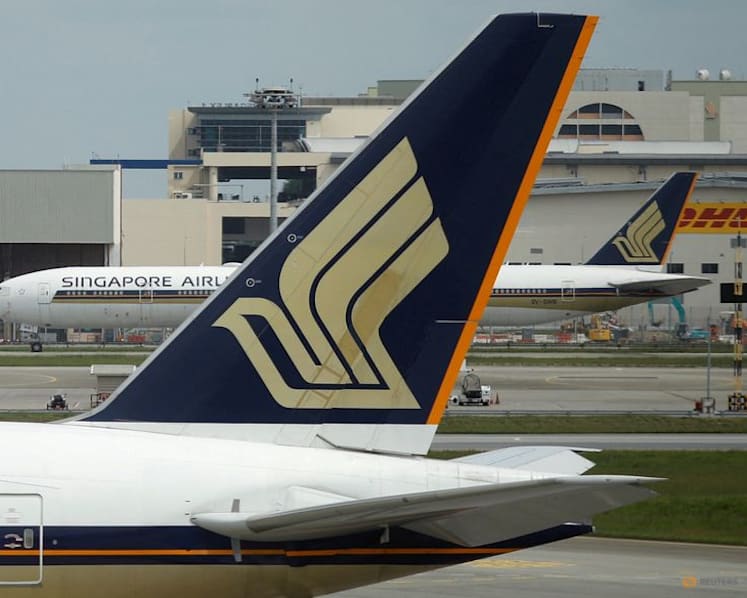
Singapore Airlines planes sit on the tarmac at Changi Airport in Singapore on Dec 8, 2020. (File photo: Reuters/Edgar Su)

This audio is generated by an AI tool.


SINGAPORE: Singapore Airlines (SIA) said on Tuesday (Sep 8) its investments in India have been, and will continue to be, funded through internal resources.
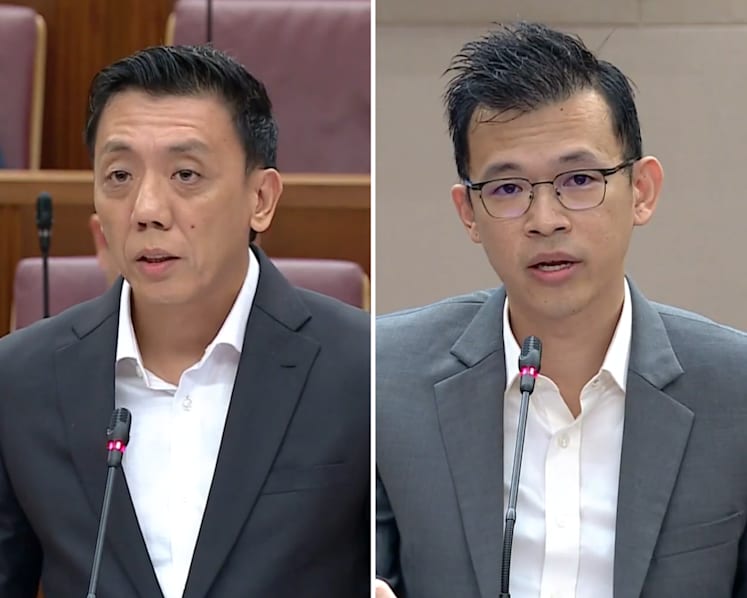
The statement came after MP Kenneth Tiong (WP-Aljunied) asked in parliament whether losses from SIA’s foreign associates have been assessed against its capacity to provide essential transport services, among other questions.
SIA set up Vistara as a joint venture with Tata Sons in 2013. Following Vistara’s consolidation into Air India in November 2024, SIA holds a 25.1 per cent stake in the enlarged Air India Group.
Its investments in India are “subject to board approval and its disciplined capital allocation framework”, the airline said.





An SIA spokesperson said the company has “one of the strongest financial positions in the airline industry”, with S$10.48 billion (US$8.27 billion) in cash reserves as of Jun 30, comprising S$9.10 billion in cash and bank balances and S$1.38 billion in fixed deposits.
The group has less than S$3 billion in current debt obligations – those due within 12 months – which are well covered by its cash reserves, the spokesperson said. SIA's debt largely comprises fixed-rate notes, lease liabilities and loans.
“SIA also has access to S$3.24 billion in committed lines of credit, all of which remains undrawn,” the spokesperson said, adding that any requests for additional capital would be evaluated under the group's capital allocation framework, taking into account Air India's business strategy, SIA Group's operating cash flow and its own investment requirements for new aircraft and products.
“The Air India investment receives the full attention of the SIA board,” the spokesperson added.
SIA had also said in a statement in 2022, when it and Tata Sons announced the merger of Air India and Vistara, saying it would fully fund the investment with internal cash resources.
Scrutiny over the investment has grown since a Reuters report last month cited sources as saying that Air India is seeking a further US$1.5 billion in support from owners Tata Sons and SIA, just months after it posted a record annual loss.
Minister for Transport Jeffrey Siow told parliament on Tuesday that SIA's ability to serve Singaporeans is not affected by its investment in Air India.
The airline is "nowhere near" a scenario where losses or other factors have materially constrained the resources available for its fleet maintenance or network operations here, he said.
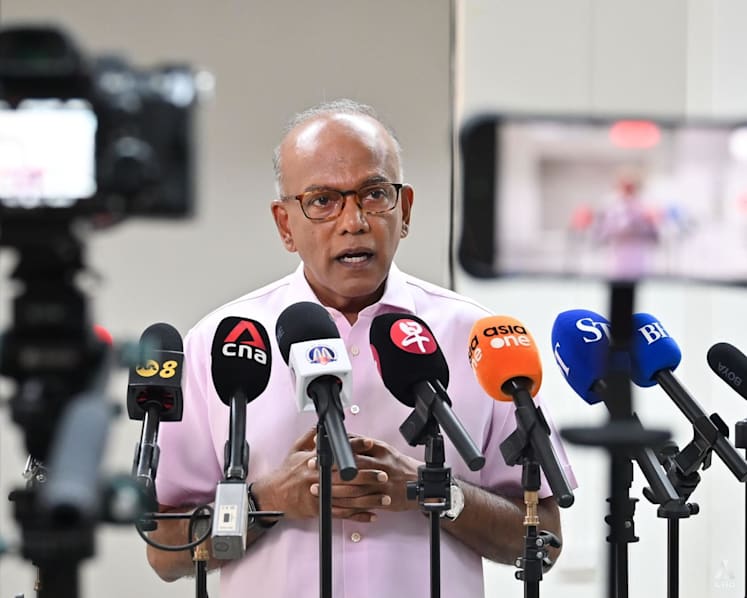
Senior Minister K Shanmugam said on Sep 5 that police are looking into racist and xenophobic online comments about SIA's investment in Air India, as well as the Nepal-Tibet disaster.
"COMPLEX, MULTI-YEAR PROGRAMME"
SIA said on Tuesday that Air India's transformation is a "complex, multi-year programme" that is "not expected to be linear".
Challenges cited include the prolonged closure of Pakistani airspace to Indian carriers, the Air India crash last year that killed 260 people, the rupee's depreciation against the US dollar, supply chain disruptions, the loss of a key market due to the Middle East conflict and sustained high fuel prices.
“At the same time, Air India has made tangible progress across customer experience and operational performance,” said the spokesperson.
SIA noted that Air India's net promoter score, which reflects how likely customers are to recommend a brand, has increased by more than 70 points since November 2022. In May, the carrier received a four-star airline rating from review site Skytrax, while Air India Express was certified as a four-star low-cost airline, “on par with leading international carriers”.
“SIA and Tata Sons have both publicly acknowledged that there is still much work to be done,” said the spokesperson. “Both remain committed to supporting Air India’s long-term transformation programme.”
The spokesperson said Air India has a strong presence in both the full-service and low-fare segments, and in domestic and international markets, with access to "valuable slots and air traffic rights at key domestic and international airports" that were not available to Vistara.
“Today, the SIA Group is the only non-Indian airline group with a direct stake in this important and fast-growing market,” said the spokesperson, adding that the investment has deepened commercial cooperation between the two carriers and strengthened Singapore and India's complementary roles as aviation hubs.
This has also given Singapore “greater access to India’s vast and fast-growing aviation market, while connecting India more extensively through Singapore to Changi Airport’s global network”.