Companies urged to play 'active role' to retain senior workers; lack of flexible work options a challenge: Koh Poh Koon
Ageing bus captains get a second wind at Tower Transit, as the bus operator trials new job roles to keep senior employees on board.
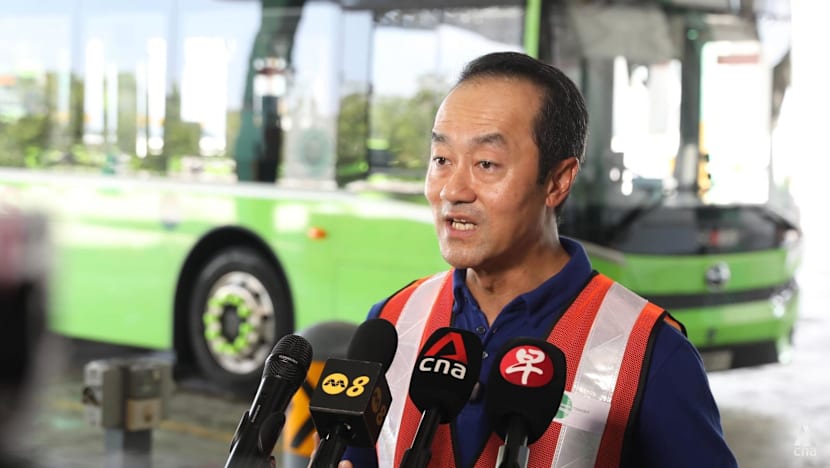
Senior Minister of State for Manpower and Health Koh Poh Koon speaking to the media at Bulim Bus Depot on Apr 23, 2026. (Photo: CNA/Mak Jia Kee)

This audio is generated by an AI tool.


SINGAPORE: Amid Singapore's push for more seniors to remain in employment, employers have found that the lack of flexible work options as well as the know-how to train seniors for flexible roles is challenging, Senior Minister of State for Manpower Koh Poh Koon said on Thursday (Apr 23).
To that end, there is a need for more companies to play an "active role" in finding innovative ways to help their older staff remain employed, he said.
"We hope that companies who are prepared to do so will show the way and allow us to ... share with more companies," said Dr Koh. "Through our policy support to companies' innovation from the ground up, I think we can scale this in a wider way."
Dr Koh, who co-chairs a tripartite workgroup aimed at enabling more seniors to keep working if they want to, was speaking to the media during a tour of bus operator Tower Transit's facilities at Bulim Bus Depot.





During the visit, Dr Koh and other members from the workgroup were introduced to various trials by Tower Transit, such as a pilot of three career pathways for bus captains above 60 to take on less physically demanding tasks while retaining their operational experience and abilities to make safety-related judgment calls.
Dr Koh said the tripartite workgroup hoped such innovations from companies could help to solve the issues that employers have raised.
"As the government, we can create policies and incentives. But because there are many diverse work roles and different industry sectors, companies need to play a very active role to see how they can make things work within their own individual company's business model, but also within the sector itself," he said.
Singapore is projected to reach super-aged status this year, when more than 21 per cent of the population is aged 65 and above.
Senior workers are still able to make significant contributions to the economy, and are wanted given Singapore's constrained labour force, said Dr Koh.
Many senior workers also want to continue working to earn an income and maintain their social circle at work, he said.
"And from the medical perspective, we know that once a person stops working, both physical and cognitive decline set in rather quickly," added Dr Koh.
More than 30 companies have partnered with the tripartite workgroup to trial ways of redesigning careers for workers at different stages of life. Where feasible, these prototypes will be scaled across different sectors, the workgroup has said.
National Trades Union Congress (NTUC) deputy secretary-general Desmond Tan, who was also present on the tour, said the objective of the workgroup's efforts is to give workers more options for employment, as well as more flexibility and dignity at work.

TOWER TRANSIT UNDERGOING SENIOR WORK TRIALS
From May, 15 senior Tower Transit bus captains who have expressed interest will join a trial of three career pathways designed for older workers aged above 60, according to the company.
Tower Transit has a workforce of 1,600 bus captains, of whom 14 per cent are aged 60 and above.
These roles are less physically demanding than those of full-time bus captains, and include two roles that do not currently exist.
Under the pilot, bus captains can alternate between their driving duties and becoming "interchange officers" who assist with duties at bus interchanges and are given training in operations and basic digital skills.
They may also become "buddies", who accompany new bus captains on the road and help them with route familiarisation, building their confidence and a culture of safety.
The third role is for part-time bus drivers.
Without these alternative pathways, bus captains typically continue driving until the age of 75, which is the age limit for holding the required driving licence.
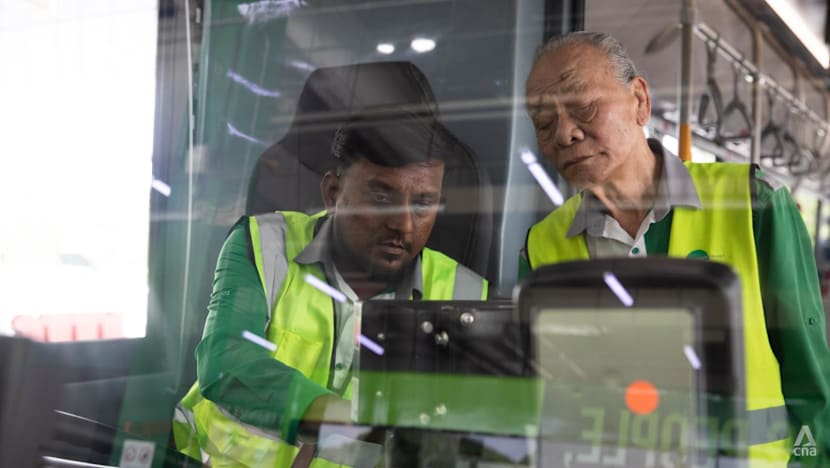
Mr Alex Poon, who turns 75 this year, is a senior bus captain of about 30 years who will be moving into a mentor and buddy role.
Rather than retiring, he said he wanted to keep working as he is healthy, and felt happy about being able to pass on his knowledge to younger bus captains.
Tower Transit managing director Winston Toh said recruitment of local bus captains is a big challenge, and the initiatives for senior bus captains help to retain some of these workers.
At the end of one year, the company will assess the outcomes of the trial to ensure it is cost-efficient, and then consider whether to have more senior workers join the pathways.
"I must be able to make sure that I'm able to do this efficiently, so that it doesn't incur additional costs to the organisation," said Mr Toh.
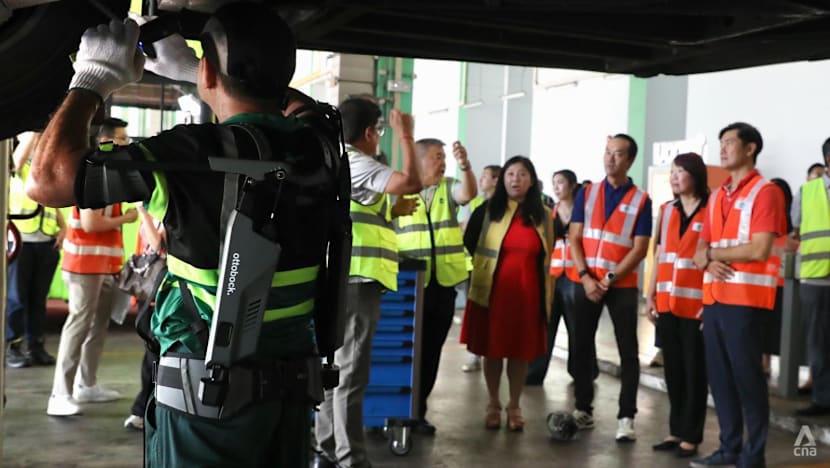
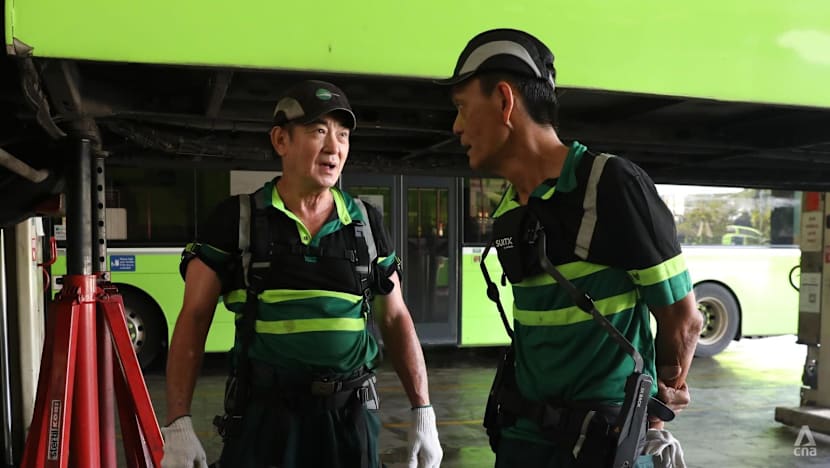
Apart from the alternative pathways, Tower Transit has also implemented other solutions to make the workplace more inclusive for older workers.
For example, the company has started using wearable exoskeletons to help lighten the load for older technicians and store officers when they perform lifting and overhead actions, allowing them to continue this work even as they age.
"The knowledge that they have maintaining these buses accumulates over many years. It's not just overnight. We do not want to lose them," said Tower Transit's Mr Toh.
Singapore National Employers Federation vice-president Tan Hwee Bin said Tower Transit's initiatives are practical and show how job redesign can help employers better deploy senior workers into operational roles and address labour shortages.