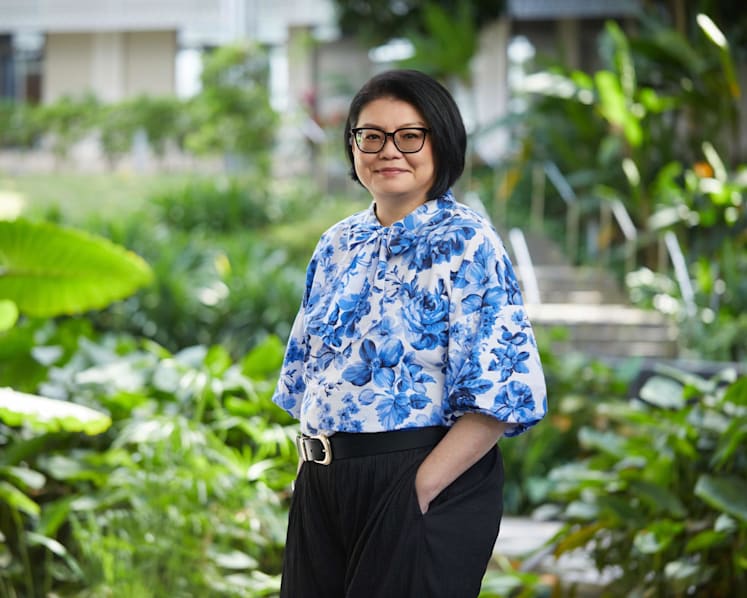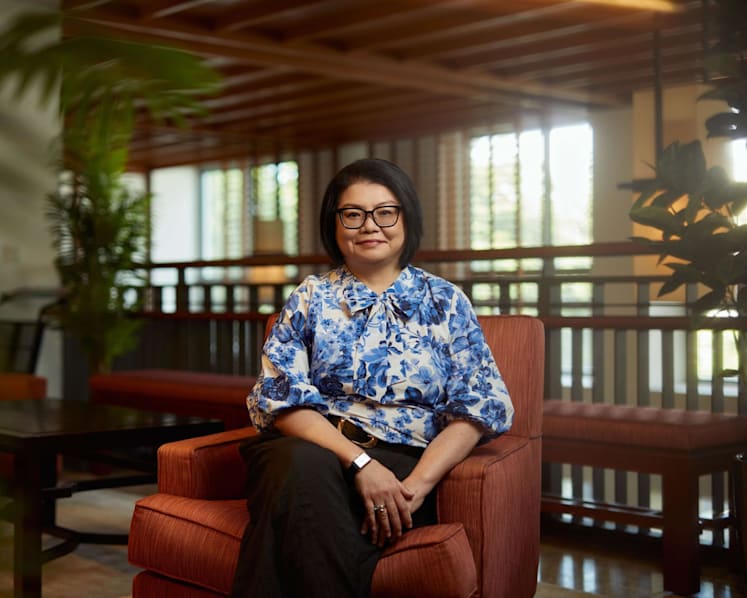



Rena Lee elected to International Court of Justice, becoming first Singaporean judge
Ms Lee, 57, secured the highest number of votes in the UN General Assembly with 151 out of 191 votes, and the joint-highest number in the Security Council with 13 out of 15 votes.
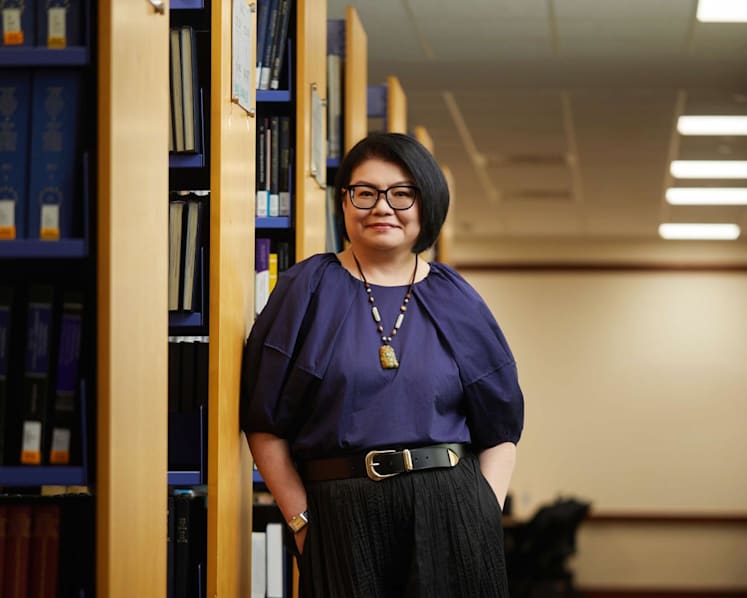
Ambassador Rena Lee will begin her term as an ICJ judge in February 2027. (File photo: NUS Law)

This audio is generated by an AI tool.
SINGAPORE: Ambassador for International Law Rena Lee has been elected as a judge of the International Court of Justice (ICJ), said the Ministry of Law (MinLaw) on Wednesday (Nov 4).
She is the first Singaporean and the first woman from Southeast Asia to be elected to the court, the ministry added.
Ms Lee, 57, secured one of five seats on the 15-judge court for the 2027 to 2036 term.
She will begin her term in February 2027.
The election was held on Tuesday at the United Nations headquarters in New York, with voting conducted in both the UN General Assembly and the UN Security Council.





Ms Lee secured an absolute majority in both bodies, receiving 151 out of 191 votes in the General Assembly and 13 out of 15 votes in the Security Council.
She received the highest number of votes in the General Assembly and the joint-highest number in the Security Council.
What does the International Court of Justice do?
As the UN's principal judicial organ, the ICJ adjudicates legal disputes between sovereign states that they agree to submit to the ICJ, and may give advisory opinions to the General Assembly or Security Council, involving international law, said senior lecturer Michael Ng from the School of Law at the Singapore University of Social Sciences.
The ICJ is distinct from the International Criminal Court, which prosecutes individuals for international crimes like genocide and war crimes.
Established in 1945 under the UN Charter, the 15-judge ICJ deals principally with settling legal disputes submitted by states and issuing advisory opinions on legal questions referred to it by authorised UN bodies and agencies.
In other words, the ICJ serves as a rules-based dispute mechanism allowing UN member states to resolve international disagreements peacefully through law, rather than through conflict and coercion.
Singapore has previously participated in proceedings before the court. In 2008, the ICJ resolved a long-standing territorial dispute with Malaysia over Pedra Branca.
The ICJ awarded sovereignty over Pedra Branca to Singapore and Middle Rocks to Malaysia, while ruling that South Ledge belonged to whichever state's territorial waters it falls within.
Malaysia subsequently sought revision and interpretation of the judgment in 2017, but withdrew both proceedings in 2018.
More recently, the court has addressed prominent disputes and questions involving armed conflict, climate change, and states’ obligations under international law.
The Singapore government congratulated Ms Lee on her election, calling it a significant milestone for the country.
MinLaw said the strong support reflected the international community's trust and confidence in Ms Lee, and wished her and the incoming ICJ bench a successful term.
Her candidature was first announced in 2024, and she was formally nominated in 2026.
On her election, Ms Lee said: "I am deeply honoured by the trust and confidence that the international community has placed in me. I am grateful to the many countries that have supported my candidature.
"The International Court of Justice plays a vital role in the peaceful settlement of disputes and the upholding of international law, particularly at a time of growing global uncertainty. I look forward to serving on the Court with independence, impartiality and integrity, and to contributing to its important work in the years ahead."
Foreign Affairs Minister Vivian Balakrishnan said Ms Lee's election is a "remarkable achievement and a moment of immense pride for Singapore".
In a Facebook post after the vote, he said this is particularly meaningful for a small state like Singapore.
"At a time when international law and the rules-based multilateral system are under increasing strain, Rena’s election underscores the importance of strong international institutions and the contributions that small states can make on the world stage."
Law Minister Edwin Tong said the historic vote "underscores the strong affirmation of the confidence in Rena, amidst a very strong field of candidates up for election".
"Singapore’s candidature, our very first, represents the value we see in upholding the international rule of law, particularly as a small state, supporting a rules based multilateral system. International law is the common language with which all states, big or small, can transact and the ICJ plays an important role in upholding peaceful settlement of disputes."
Ms Lee also holds positions in institutions including the Permanent Court of Arbitration and the Panel of Conciliators of the International Centre for Settlement of Investment Disputes.
As president of the UN Intergovernmental Conference on Marine Biodiversity of Areas Beyond National Jurisdiction (BBNJ), Ms Lee steered five years of complex, high-stakes multilateral negotiations, leading to the adoption of the landmark BBNJ Agreement in 2023.
Dr Balakrishnan and Mr Edwin Tong were in New York for the election, having reiterated the government's full support for Ms Lee's candidature on Tuesday.
They also hosted a reception for her in New York on Monday evening, ahead of the vote.
Before the vote, Dr Balakrishnan said: "Her deep expertise, strong conviction in the rule of law, and ability to understand different perspectives in resolving differences would be an asset to the ICJ."
He noted that at a time when multilateral institutions are "under growing strain", Ms Lee's candidature was one way that Singapore was seeking to support and uphold the rules-based multilateral system.
Mr Tong said that the ICJ's strength is enhanced when its bench "draws on varied legal traditions, professional experiences and perspectives".
Ms Lee would bring such breadth to the court, together with "an unwavering commitment to fairness, integrity and the rule of law".
Who are the 15 judges of the ICJ?
Current judges:
- President Iwasawa Yuji (Japan)
- Vice-President Julia Sebutinde (Uganda)
- Peter Tomka (Slovakia)
- Xue Hanqin (China)
- Georg Nolte (Germany)
- Hilary Charlesworth (Australia)
- Juan Manuel Gomez Robledo (Mexico)
- Sarah H Cleveland (US)
- Bogdan-Lucian Aurescu (Romania)
- Dire Tladi (South Africa)
- Ronny Abraham (France)
- Dalveer Bhandari (India)
- Leonardo Nemer Caldeira Brant (Brazil)
- Mahmoud Daifallah Hmoud (Jordan) - re-elected
- Phoebe N Okowa (Kenya) - re-elected
Newly elected judges (from Feb 6, 2027)
- Rena Lee (Singapore)
- Francois Alabrune (France)
- Dapo Akande (UK)