Private ambulance operators in Singapore mulling fuel surcharges as diesel prices surge 70%
At least one operator has introduced a fuel surcharge, while others said they would have to follow suit if diesel costs do not come down soon.
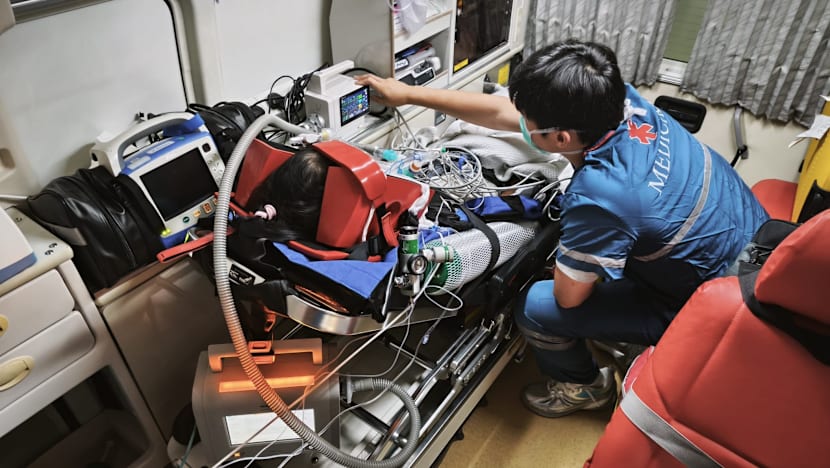
Medivac medical team with a patient on a life support ventilator in a private ambulance. (Photo: Medivac Emergency Ambulance Services)

This audio is generated by an AI tool.


SINGAPORE: Private ambulance operators in Singapore are weighing fuel surcharges to cope with rising diesel prices, as war in the Middle East disrupts global oil supply.
Several providers told CNA their diesel-related expenses have surged since the war in Iran began in late February, driving up operating costs and putting pressure on services.
These operators are Ministry of Health-licensed private companies that provide emergency and non-emergency medical transport and care.
They serve patients such as the elderly and mobility-impaired who need to travel to hospitals and medical centres, or across the border to Malaysia for treatments or check-ups.





Since the war started at the end of February, diesel prices at the pumps have gone up by about 70 per cent to around S$4.50 (US$3.50) per litre.
Lentor Ambulance announced last month that due to rising diesel costs, a fuel surcharge would be applied to all bookings from Apr 1. It did not say how much the surcharge would be or how it would be implemented.
When contacted, Lentor said it would not discuss the matter with the media.
Other private ambulance services said they are absorbing the costs for now, but the increasing expenses may force their hand.
"We have chosen not to introduce a fuel surcharge at this time because we want to ensure our services remain accessible to patients in need," said Medivac Emergency Ambulance Service's director Daryn Lim.
"Wherever possible, we are absorbing the increased operating costs instead of passing them on immediately to patients and families.”
FUEL SURCHARGES ON THE CARDS
Although none of the five private ambulance operators that CNA spoke to had introduced a fuel surcharge, some said they may have to if diesel prices remain elevated.
Two of them have begun working out the extra fees they may require.
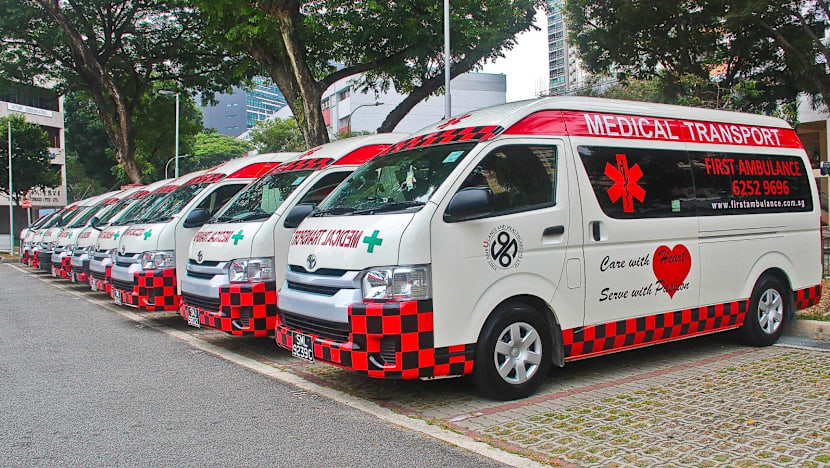
First Ambulance said its overall operating costs have increased by 15 to 20 per cent since late February. It is considering adding a fuel surcharge of S$7 to S$15 per booking, depending on location and whether it is a one-way or round trip.
The operator is still hoping for government support to cushion the blow. "We don't want to add any more financial stress on the patients," said the spokesperson.
Royal Ambulance may introduce a fuel surcharge of 5 per cent for one-way and 10 per cent for round trips, said assistant operations manager Shaduan Abd Samad.
The firm currently charges S$150 for a one-way trip and S$170 for a round trip for its medical transport service.
Its diesel expenses have gone up by around 30 to 40 per cent since February, while operating costs have increased by about S$2,000 to S$3,000, Mr Shaduan added.
The operator offers medical transport for non-emergency cases such as medical, dialysis and psychiatric appointments, as well as hospital transfer, admission and discharge.
It also provides medical escort services for patients who are not wheelchair-bound and event medics and ambulance standby services for events. These two services have been most affected and have since been scaled down due to manpower costs, said Mr Shaduan.
"For now, we are doing our best to maintain our current pricing, as many of our clients frequently request discounts and may not be ready for price increases despite the rise in diesel costs," he said, adding that the elderly and low-income families may struggle with higher fees.
One other operator has found other ways to make ends meet – Ambulance Medical Services said it is managing cost pressures through internal efficiency measures.
“We are engaging our institutional partners to ensure transparency and explore fair approaches if the situation persists,” it added.
The operator said that response time and coverage areas remain unaffected, although long-distance and cross-border transports have become more costly to run.


IMPACT ON SERVICES
Providers such as Medivac and Sunlight Ambulance Services said cross-border transfers are among the services that have been hit the hardest.
These trips are increasingly expensive due to the longer distances, said Sunlight Ambulance Services' manager Shervonne Kok.
She pointed to regulatory restrictions in Malaysia, such as a purchase limit of 20 litres of diesel per station for foreign-registered vehicles, which complicates logistics.
Medivac's Mr Lim said fuel costs, route planning and operating restrictions directly affect the deployment of ambulances for cross-border trips.
Its services to Malaysia have seen the largest increase in operating costs of about 60 per cent, he said, citing factors such as diesel price increases in Malaysia and the availability of Euro 5 diesel required for Singapore-registered ambulances.
To manage this, Medivac works closely with Malaysian ambulance associates and adjusts transfers where clinically appropriate.
For instance, a Malaysian ambulance may convey clinically stable patients to the immigration checkpoint, where a Singapore ambulance crew takes over and continues the transfer, said Mr Lim, adding that this reduces costs while maintaining patient safety.
But these arrangements are unsuitable for critically ill patients on life support and they may require Medivac's critical care ambulance and ICU team to be deployed to Malaysia, he added.
Other Medivac services have also become costlier: sea ambulance transfers to Batam or Bintan rose 15 per cent in operating costs, while local ground ambulance operating costs are 40 per cent higher.
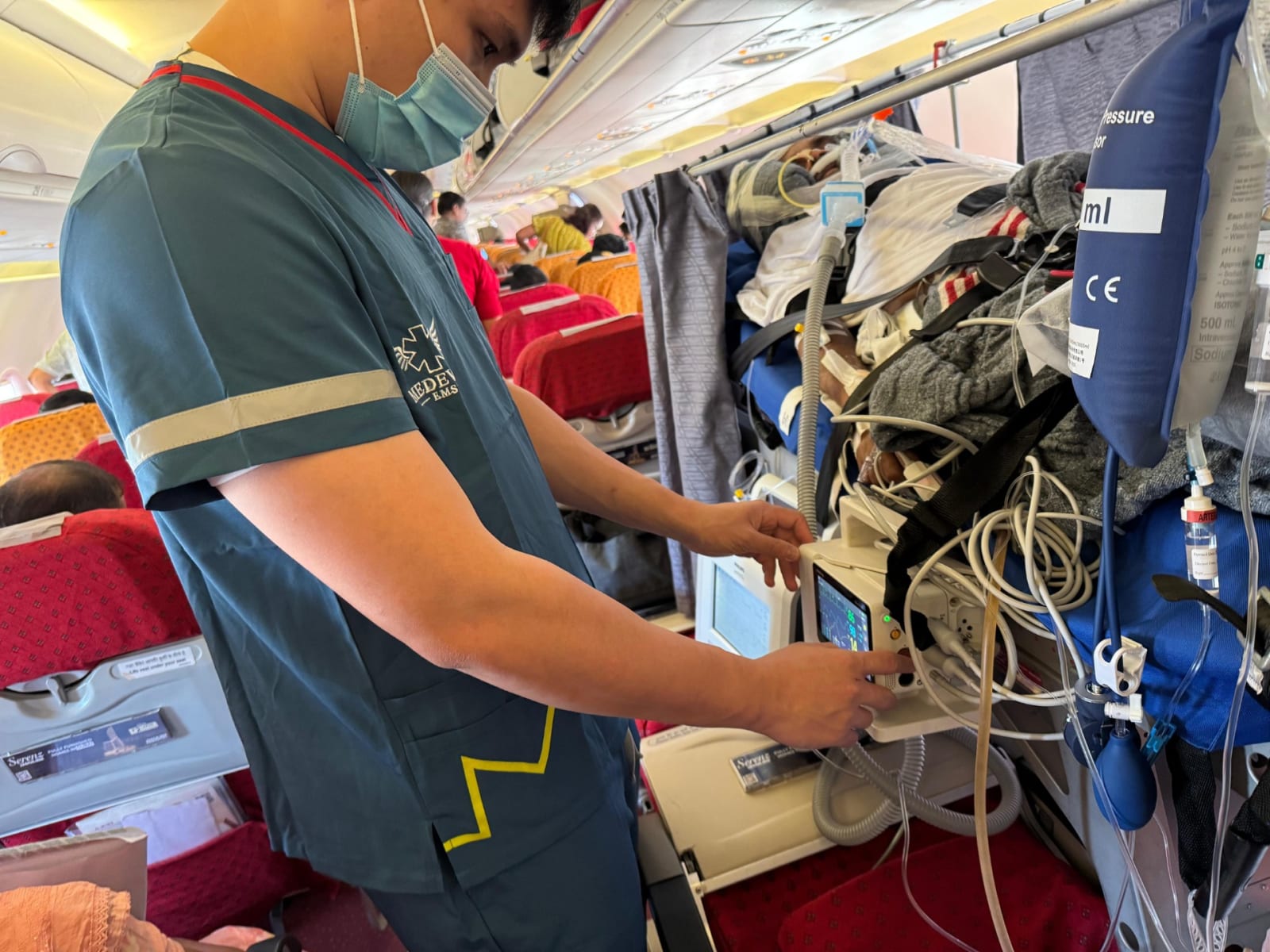
Air ambulance services are also affected by higher flight-related charges beyond the firm’s control, with costs for short-haul flights within Asia up by around 15 per cent, and long-haul journeys to Europe up by about 40 per cent.
By comparison, house calls and first aid coverage are less affected.
Making price adjustments is not easy. "For our business-to-business clients, we are tied down by legally binding, fixed-rate contracts that unfortunately do not factor in sudden macroeconomic shifts," said Ms Kok.
"Instead of the burden being shared, we are currently absorbing the increased costs entirely.”
For cash-paying private clients, the company is also holding off on a surcharge as it monitors the situation.
"We understand that sudden price hikes for the exact same service are highly unpleasant for families already dealing with medical stress," Ms Kok said.
“We are trying to operate as leanly as possible to tide us through this period before determining if our current pricing model is no longer sustainable.”
A standard, non-emergency local ambulance transfer typically costs S$90 to S$150 per trip, and can increase depending on factors such as booking time, oxygen support or whether stair carry is needed, said Ms Kok.
A basic cross-border transfer starts from S$400 to S$600, but can increase significantly depending on the distance and medical complexity involved.
She added that these rates for the public apply to a small fraction of the operator's business, as about 80 to 90 per cent of its jobs are from institutions it has "rigid" contracts with.
Ms Kok said she noticed a growing trend around price sensitivity, with customers actively comparing prices across the board.
The operator has seen more instances of families cancelling their private ambulance bookings and transporting their loved ones themselves.
Medivac's Mr Lim also observed that medically stable patients are pivoting to cheaper alternatives, such as commercial airline stretcher services – which require a longer lead time – or choosing to continue treatment locally instead.
The company typically deals with individuals, hospitals, insurers and assistance companies, and most understand the realities of rising costs, especially for critical care transfers where safety is priority, said Mr Lim.
Medivac has not imposed a blanket surcharge, but that could change if diesel prices remain elevated.
"If fuel prices continue to rise over a prolonged period, we may eventually have to review our pricing approach," said Mr Lim.
Its local ambulance fees range from S$100 for one-way medical transport services for non-emergency cases to S$1,000 for transporting violent patients requiring chemical restraint or sedation, during office hours.
Prices are higher for calls beyond working hours and add-on requirements, such as doctor escort or oxygen supply, come with extra fees.
SOLUTIONS?
To address immediate concerns, Sunlight Ambulance Services is now "hyper-vigilant" about its fuel consumption.
Drivers are instructed to adopt more fuel-efficient habits and route planning is more rigorously optimised, said Ms Kok, adding that this increases operational stress for both drivers and the management team.
To offset rising baseline expenses, the operator is enforcing standard fees more strictly, such as waiting time charges or fees for incorrect destinations.
"In the past, we would often waive these out of goodwill, but the current climate makes that difficult," said Ms Kok.
Listen:
Royal Ambulance said the diesel spike has affected its coverage areas – it no longer covers islandwide, focusing more on clustered areas instead, said Mr Shaduan.
Operators said the fuel crisis has accelerated interest in electric vehicles (EVs), but these are not yet practical for ambulance work.
The main hurdle is the long charging time and the resulting downtime.
Time is critical in patient transport, and current alternative-energy options may not be suitable for the demands of ambulance work in terms of travel range and the onboard medical equipment needed, said Medivac's Mr Lim.
"Ambulances, particularly critical care units, require specific capacity, reliability, range, and readiness at all times,” he added.
Ms Kok added: "A full EV charge currently cannot sustain an entire day's worth of intensive, unpredictable operations.
"Needing to recharge mid-shift would lead to unacceptable downtimes, especially during our peak periods.”
For now, many operators are hoping government support can be sent their way to tide them through the energy supply crunch.
Private ambulance fees are often an out-of-pocket expense for patients and their loved ones, said Ms Kok.
“If fuel prices remain high, the prolonged strain on our operating expenses will inevitably force us to raise our prices across the board. This risks making essential transport less accessible to vulnerable segments of the population,” she added.
She said it would be “highly beneficial” if patients could use their MediSave or receive partial government subsidies for private ambulance services.
"We genuinely hope the situation improves so we don't have to implement a surcharge," said Ms Kok.