Certification alone may not ensure safe PMA use, say occupational therapists
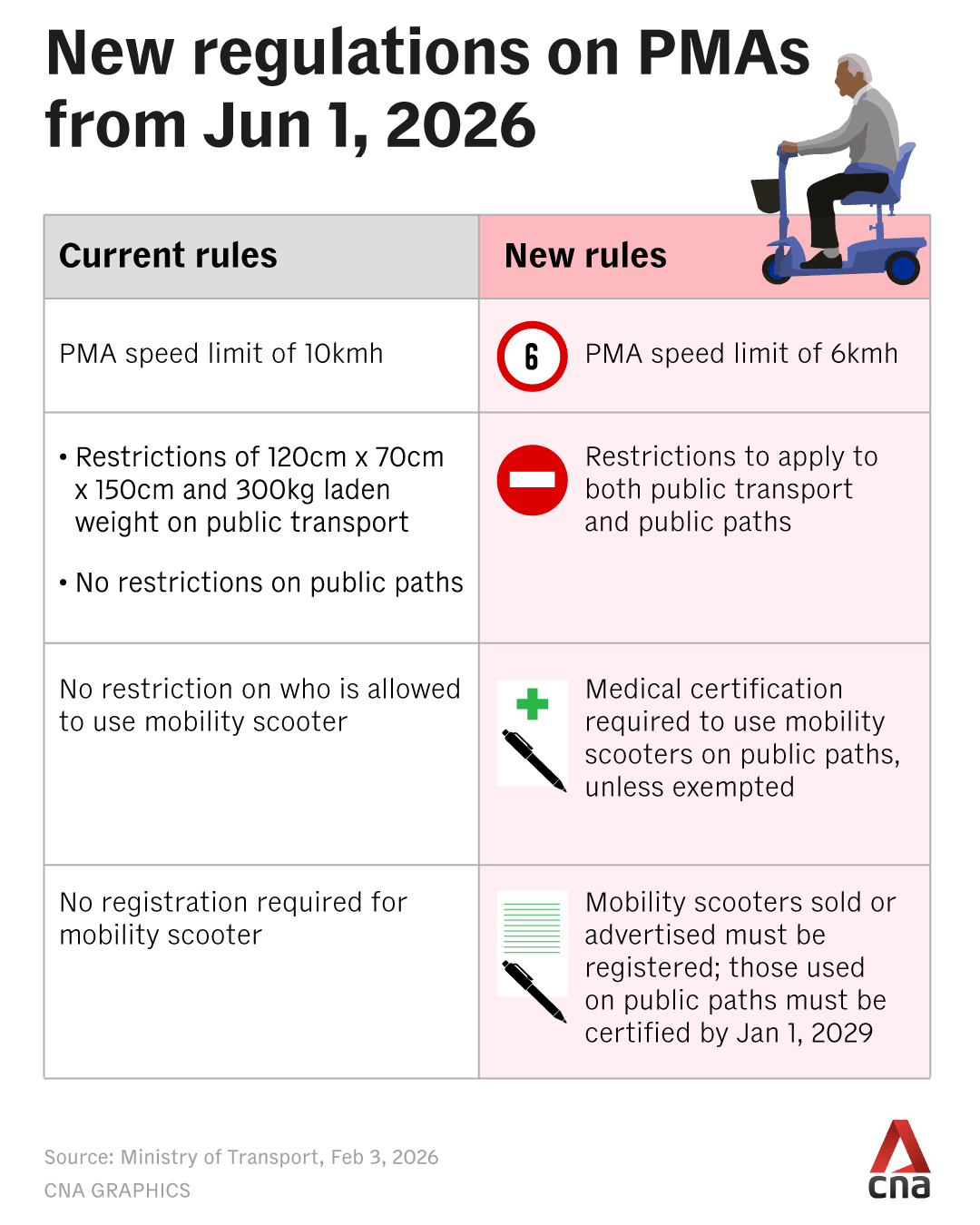
New personal mobility aid rules took effect on Jun 1, which include users having to obtain a certificate of medical need unless they qualify for an exemption.
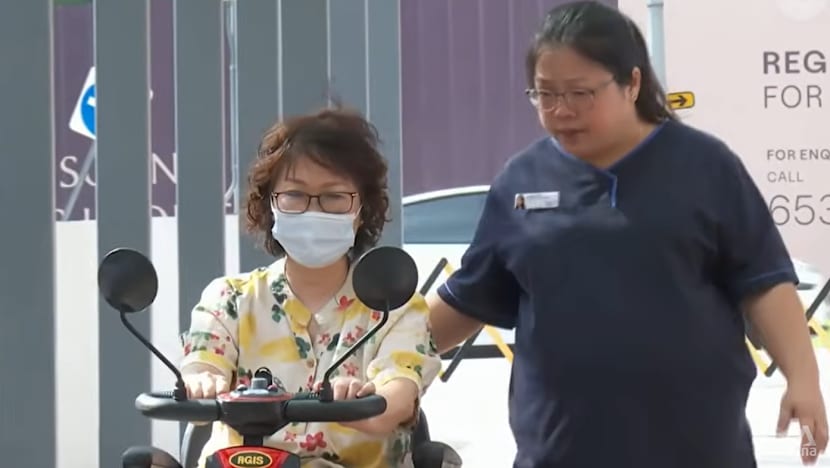
A personal mobility aid user undergoing a training session with Ms Huang Huixin, principal occupational therapist at Tan Tock Seng Hospital.

This audio is generated by an AI tool.




SINGAPORE: Operating personal mobility aid (PMA) devices safely can remain a challenge for some individuals, particularly older users and those with multiple medical conditions, occupational therapists told CNA.
They said such users may need more extensive assessment and training, even as they undergo certification under tightened rules that took effect from Monday (Jun 1).
Among these new rules, PMA users must now obtain a certificate of medical need from a Singapore-registered doctor or occupational therapist unless they qualify for an exemption, such as being aged 70 or older.
According to the Land Transport Authority, more than 1,000 such certificates have been issued so far.
MORE PATIENTS COMING IN
At Tan Tock Seng Hospital (TTSH), its occupational therapists – who assess PMA users on their ability to ride motorised scooters safely – have been seeing about 20 to 25 patients a week in the last few weeks before the new rules kicked in.
This marked an increase of about 35 per cent compared to several months before.
In some cases, users are referred by doctors who have already issued a certificate of medical need.
For example, occupational therapists can reject the certificate if they realise these users – who were certified as they had a clear need to ride a PMA – do not have good cognitive function and are not fit for the roads.





While some users can be assessed as safe to ride after just two sessions, others require additional assessments and training.
Patients with complex health conditions may face difficulties operating PMAs safely, said TTSH principal occupational therapist Huang Huixin.
"One of the challenges we have is patients with multiple medical conditions, (which) will affect their judgment and ability to drive the motorised scooter safely,” she pointed out.
“We will be looking at whether they remember how to operate the device, whether they are able to slow down when approaching obstacles, and whether they will keep a safe distance from others when they are on the move.”
Some other lessons include making a three-point turn, boarding a bus, and stopping safely when travelling up a slope.
Patients who need more training will require four to five sessions before being certified fit to ride a PMA, said Ms Huang.
Occupational therapists are among the healthcare professionals authorised to issue certificates of medical need, alongside doctors at more than 200 participating general practitioner clinics.
However, Ms Huang said some confusion remains among users over who should issue the certification.
“We do have cases whereby we have done it, (then) they go back to doctors to ask because they are expecting a letter or memo, so that they are able to bring it along in the public and show it to the enforcer when they are being stopped,” she noted.
She added that patients are informed the certification process is digital and that their status is typically updated within a week.

NOT ALL ARE CERTIFIED
Dr Benjamin Lim, principal occupational therapist at NTUC Health, said not all users who undergo assessments are ultimately certified.
"We do have quite a number of seniors who did not manage to pass assessment. Most of them who did not pass, (it’s) mostly due to the cognitive functions that deter them from using a motorised device safely,” he added.
Occupational therapists like himself will work with these patients to improve their cognitive abilities. Once they regain these functions, they can resume training and eventually return to using their devices, Dr Lim said.
He noted that while assessments help determine whether an individual can safely operate a PMA, a person's condition may change over time.
Some users may develop medical or mobility issues that affect their ability to use the devices safely, he said.
As a result, he encourages PMA users to undergo regular reviews, even though annual assessments are not currently mandatory.