Public rating system for nursing homes 'worth studying': MOH
Any such framework must be tailored to Singapore's healthcare context, says Dr Raymond Chua, MOH’s deputy director-general of health regulation.

This audio is generated by an AI tool.


SINGAPORE: A public rating system for nursing homes in Singapore is worth looking into, but any such framework must be tailored to Singapore's healthcare context, said Dr Raymond Chua, the Ministry of Health's (MOH) deputy director-general of health regulation.
"This is something that is worth studying ... if we want to adapt this into our local Singapore context, how do we do so appropriately," he said during a CNA Deep Dive podcast on Thursday (Jul 9).
"It's not just about the providers but also enhancing the literacy of the consumers in understanding how the rating system works."
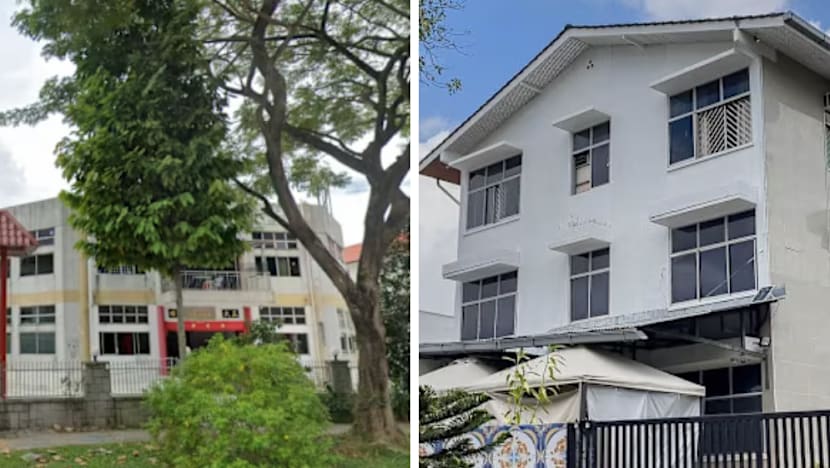
His comments come after Windsor Convalescent Home and LC Nursing Home lost their licences within weeks of each other, after inspections uncovered serious regulatory breaches.





The closures have sparked questions over whether families should have easier access to information on the quality and safety of nursing homes before deciding where to place their loved ones.
Singapore currently has no public rating or star classification system for nursing homes.
During the podcast, Professor Andy Ho, provost's chair in psychology at Nanyang Technological University, pointed to systems in countries such as the United States and Australia, where government-run portals publish nursing home performance on measures including safety, staffing levels, quality of care and residents' experiences.
Such systems make it easier for families to compare homes and make informed decisions, he said.
Dr Chua said MOH is open to moving in that direction, but cautioned against oversimplifying the process. “While we would say that we want to move towards a star rating system, I think we must also be cognisant that healthcare is very complex,” he said.
“It's very difficult to rate, or determine the care level or the safety level just by ratings themselves, because it's not just a checkbox where you ask people to say, give me a five-star rating.”
Families weighing a nursing home have to consider several factors beyond a rating, he noted, including affordability, location, specialised programmes and whether a home's services match a resident's care needs.
BALANCING TRANSPARENCY AND FAIRNESS
The discussion also touched on whether inspection findings should be made public. MOH previously told CNA that audit findings are shared directly with the licensee, which is responsible for implementing rectifications promptly.
Because such findings may lead to regulatory proceedings governed by statutory procedure, MOH does not inform residents and their families before any regulatory action is confirmed, it added.
Dr Chua said families understandably want reassurance about the quality of care their loved ones receive, but providers should first be given the chance to address shortcomings before findings are publicly disclosed.
“To be fair to them, they should have the firsthand knowledge of what actually went wrong, where are the areas of shortcomings, how they should be improving themselves, and then give them the chance to rectify some of this first,” he said.
If serious lapses persist or providers fail to sustain improvements, MOH will step in with stronger enforcement action, he added.
The vast majority of nursing homes, he said, successfully rectify shortcomings identified during inspections.
"If we need to inform and shut down everyone because of minor shortcomings, that's not going to be a good outcome for the residents as well."
Under the Healthcare Services Act, nursing homes must meet requirements covering patient care, staffing, governance, infection control, medication management and incident reporting.
All homes are inspected before receiving a licence and undergo periodic inspections every two years. Homes found to have deficiencies are placed under closer scrutiny, with more frequent spot checks to ensure improvements are implemented and sustained.

RISK OF "GAMING" THE SYSTEM
Prof Ho said overseas rating systems typically assess nursing homes beyond minimum safety requirements, using indicators such as person-centred care, staff-to-resident ratios and residents' quality of life.
Australia also publishes survey findings from residents themselves, offering insight into their lived experiences.
He acknowledged no rating system is perfect and that providers may try to improve their scores without necessarily improving care. "There are new mechanisms and new research to be put in place to minimise those gaming possibilities," he said.
Still, he argued that a transparent assessment framework could create healthy competition among providers and ease the burden on families, who currently have to visit multiple facilities and do their own research.
“If there is a transparent, publicly available, same criteria of assessment for all nursing homes, then it will be a lot more accessible and convenient for the family member to be able to have that information and make an informed decision without having to do all the legwork,” he said.
“If you're a family caregiver, you're caregiving 24 hours a day, 365 days a year, there's no holiday. And if I am tasked to go down to find out what is the best nursing home, then that may be quite challenging.”
BEYOND REGULATION
Dr Chua said improving nursing home standards requires more than regulation. Providers need strong governance structures, proper staff training and sound financial oversight, and should regularly seek feedback from residents and families to identify areas for improvement.
Families also have a role to play, he added.
"When they visit the residents, we also encourage family members to look out. If there's anything that they don't know, ask. If there are any shortcomings or areas that can improve, feedback to the nursing homes, or if not, MOH or AIC (the Agency for Integrated Care), and let us see how we can improve the whole ecosystem together,” he said.
The conversation also touched on Singapore's broader aged care strategy as the country becomes a super-aged society. Dr Chua reiterated that nursing homes are intended primarily for people with complex medical or nursing needs who cannot be safely cared for at home.
At the same time, the government is expanding alternatives such as home care, active ageing centres and community-based services to help more seniors age in place.
"This is where we want the bulk of it to be, rather than to be in the nursing home," he said, adding that Singapore aims to provide a range of care options to meet different needs as the population ages.