Nearly 9 in 10 missing person appeals in Singapore involve youths or seniors – what’s behind the trend?
From family conflict and distress among youths to dementia and isolation among seniors, different factors are behind why both groups go missing.

This audio is generated by an AI tool.




SINGAPORE: Missing person reports in Singapore have risen in recent years, putting the spotlight on two vulnerable groups – youths and seniors.
Police data shows about 1,450 missing person reports were made last year, the highest since 2021.
CNA’s review of police appeals for information over the past eight months found that nearly nine in 10 cases involved these two groups. Youths alone made up about four in 10 of these appeals.
While each case is unique, social service agencies say youths often leave home due to family conflict or distress, while seniors may go missing due to dementia or disorientation.
YOUTHS WHO LEAVE HOME
At 13, running away felt like the easiest way out of her problems.
Now 18, Isabelle (not her real name) said each time she left home, she had no clear plan.
“I'm not too sure about where I had to stay, where's my source of food going to come from. I just went from house to house,” she told CNA.
“My parents did try to contact me, but I went missing in action, so I pretty much just ignored whatever messages or calls that went through,” she said.
Over the years, Isabelle went missing more than 10 times – sometimes for as long as two months.
She was usually found by the police and brought home. But the cycle continued. Outside, not everyone she turned to could be trusted.
“Especially like your friends, you never know their true colours until you're in need of help,” she recounted.
She warned that some help can come with conditions, and youths should walk away if they feel unsafe.
Today, Isabelle says she is getting support from counsellors and teachers, and things at home have improved.
“To other youths who have the thought of running away from home, my advice to them is … look for a trusted adult who you can talk to, rather than running away,” she said.
“It is more dangerous than it sounds, being away from home. You may be free and all, but really the danger out there is worse than you think it is.”





REPEAT RUNAWAYS
Isabelle’s case is not isolated.
Social service agencies say they are seeing more youths leaving home – sometimes repeatedly, and for longer stretches.
Care Corner Singapore, which engages about 1,800 youths, has seen about one such case every two months in the past year. Previously, it handled up to four cases a year.
At PPIS Family Service Centre, about 20 such cases have been seen each year over the past two years.
In one extreme case, a youth ran away and returned home about 50 to 60 times.
Some youths are even turning to people they barely know for help.
“It might also be seen as a transactional kind of an exchange where they are provided shelter, roof over their heads, in exchange for other things. Sometimes it's to the point that it's in exchange for sexual kind of services," said Mr Muhammad Zahin Saini, a senior social worker at PPIS.
Others move from place to place, relying on their social networks.
"If they have a wide social network, it means that they can couch surf quite a bit,” said Ms Flora Tan, lead social worker at Care Corner.
“Monday to Wednesday, it's at Jurong, and then Thursday to Friday, they are somewhere in the East. It's just a matter of being able to move from place to place and they're increasingly mobile,” she added.
Family conflict remains a key reason why youths run away, alongside pressures from school or social media.
"In the past few years, we do see an increasing rise in cases of family violence … it's a rather complex kind of issue that can't really be resolved within a short span of time,” said Mr Zahin.
“We do see during these periods whereby the youth would actually resume back their behaviour of running away from home," he added.
Ms Leela Samy, deputy head of the sports, arts and youth integrated team at the Singapore Association for Mental Health (SAMH), said that there has been an increase in distress among youths over the past two years.
“They are very vulnerable to academic stressors, bullying, family conflicts … even issues with identity, belonging and even isolation,” she added.
"That's when they feel that they want to have temporary relief and leave their homes.”
ONLINE NETWORKS STEP IN
When youths go missing, word often spreads quickly online.
Content creator Kao Rong Sheng, better known by his social media handle RunnerKao, has become part of an informal network helping to amplify such cases.
Since last year, the former social worker has posted appeals for about 10 missing youths. The youngest was 13.
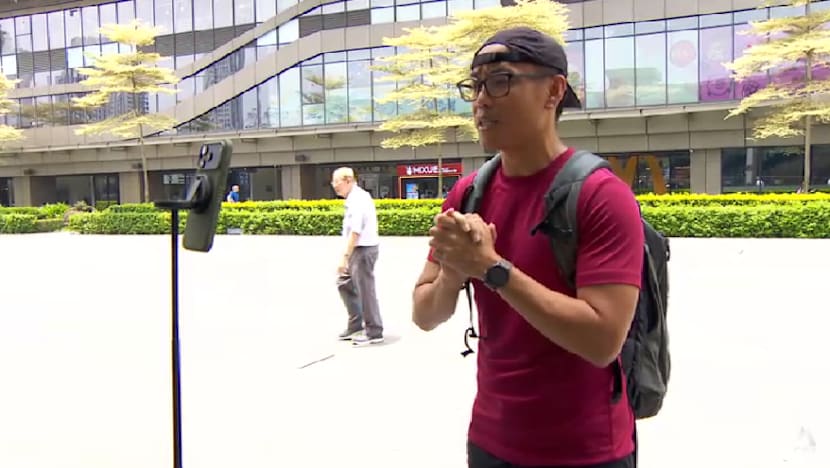
“In the most recent case, where a boy was missing, I received at least 10 messages asking whether I am able to help spread awareness about him,” Mr Kao said.
“Some of those messages came from his own friends or schoolmates, who were really very concerned that their friend was missing.”
His posts often generate 20 to 30 leads.
Mr Kao added: “There are casual messages saying, ‘Hey RunnerKao, my friend is not missing, don’t worry. My friend is just hiding and wants to take a breather from the parents.’ And there are some who tell me, ‘I just saw my friend in Jurong West, at (a certain block) or something like that.’”
Not every tip can be verified, but he hopes the visibility helps.
“If they run away from home, they are able to change their mind and come home. Also, if they are really in danger, the people staying around the area of the youth's last seen location, more people are able to look out,” he said.
At times, desperate parents also appeal directly to their children online, with one such post drawing nearly 3 million views before the youths were found and reunited with their family.


MOST CASES RESOLVED QUICKLY: POLICE
When a missing person report is made, police begin investigations immediately – reviewing camera footage, sending alerts and issuing public appeals where necessary.
Priority is given to vulnerable persons including young children, the elderly and those with intellectual disabilities such as dementia.
Contrary to popular belief, there is no need to wait 24 hours before making a report.
Police say most missing persons are found within a day, and CNA’s observations show many cases are resolved within one to two days.
SENIORS FACE DIFFERENT RISKS
At the other end of the spectrum, a different set of challenges affects seniors, who also make up a significant share of missing person cases.
Singapore’s ageing population is expected to make such cases more common.
About 100,000 people here currently live with dementia. By 2030, that number could rise to 152,000.
At the same time, the number of seniors living alone has doubled over the past decade.
Checks by CNA found that nearly one in two police appeals issued in the last eight months were for seniors.
These include seniors with dementia, as well as those struggling with isolation or mental health issues, social agencies say.

Ms Lee Wei Xuan, deputy head of the mobile support team at SAMH, said some seniors may have psychological distress or symptoms of depression or anxiety, “so they may leave home without letting their family know, and hence (go) missing”.
In one case two years ago, Mr Ng Chee Yat, who has dementia, wandered off while out with his wife.
Mrs Elizabeth Chong said that on the afternoon they were heading for a health check, her husband had been walking just behind her as usual. But when she turned around, Mr Ng was gone – having mistakenly followed someone else into a lift.
She searched for nearly two hours before he was found.
Now, she takes precautions, including snapping a photo of him before they leave home, to record what he is wearing.
PROGRAMMES TO SUPPORT YOUTHS AND SENIORS
Across Singapore, efforts are underway to support both youths and seniors.
For youths, agencies are working not just with them, but also with their families.
For example, Care Corner is rolling out training to help staff better support parents and guide them through conflict and problem-solving.
"Increasingly, we are seeing a need for our youth workers to also be able to engage parents. And parents might be older than our youth workers. Some of our youth workers may not really know what parenting is about, or we can level up their knowledge and capabilities," added Care Corner’s Ms Tan.
At active ageing centres, regular routines help others notice when something is wrong.
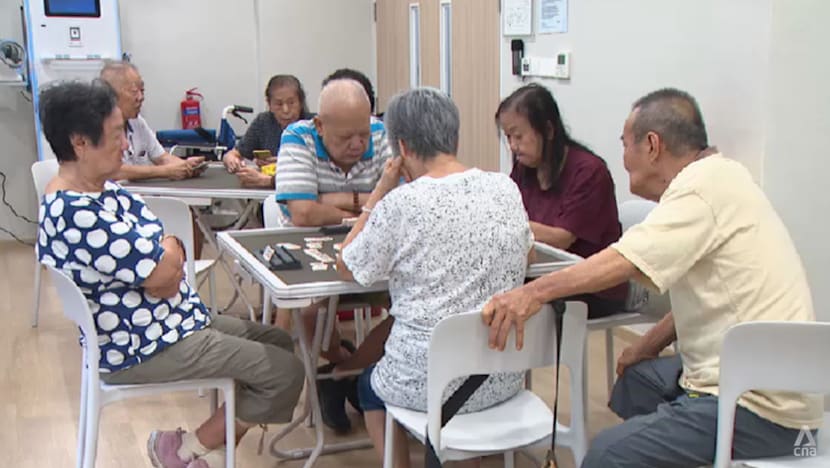
"If they are supposed to come for a class every Thursday, and we realise that they are not here, what usually the people in the class will do is call the senior to ask if everything is okay," said Ms Jean Nee, an active ageing centre manager from Thye Hua Kwan Moral Charities.
Technology is also being used.
The CARA app, developed by Dementia Singapore with support from government agencies, sends alerts to its 14,000 users when a person with dementia goes missing.
"The CARA app taps members of the public … to kind of look out for these people who are missing, depending on where they are at that moment," said Mr Bernard Lim, director of advocacy and communications at Dementia Singapore.
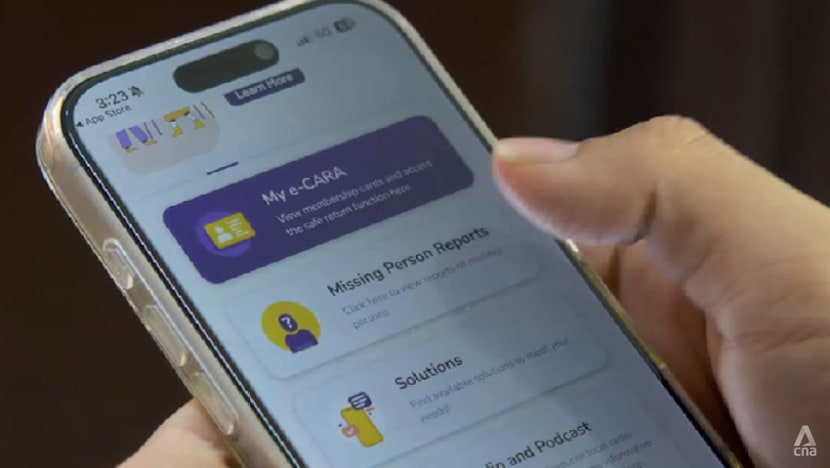
So far this year, 11 cases have been lodged on the app. At this rate, that could surpass the 19 cases recorded over the whole of 2025.
On average, a missing person is found within about eight hours, Mr Lim said.
By the end of the year, the app’s user base is expected to grow to about 15,000.
There are also about 800 dementia go-to points across Singapore – including at MRT stations and supermarkets – where members of the public can bring someone who appears lost.
The number of such go-to points is expected to grow to 1,000.


At social service agency AWWA’s reminiscence programme, seniors take part in guided conversations around themes such as childhood memories, family and music.
This helps to stimulate memory recall while also encouraging social interaction and early detection of cognitive decline.
"Early diagnosis and intervention allow families and caregivers to plan ahead and address mood or behavioural changes and put practical safety measures in place," said Ms Stella Phua, centre manager at AWWA’s Dementia Day Care Centre.
This may include establishing structured routines, making simple home modifications and using tools such as identification cards or GPS trackers, she added.