Law passed to lower drink-driving limits, impose harsher penalties for dangerous driving causing grievous hurt
Last year, there was a 10-year high of 149 fatalities on Singapore's roads – almost one death every two days.

This audio is generated by an AI tool.


SINGAPORE: A law was passed in parliament on Tuesday (Aug 4) to lower the alcohol limits for drink-driving and impose harsher penalties for dangerous driving causing grievous hurt.
The Road Traffic (Miscellaneous Amendments) Bill was debated by 27 MPs on both sides of the House over five hours, raising concerns about whether the new penalties were still too lenient, if income-based fines should be considered, and how technology could be used to enhance enforcement.
Second Minister for Home Affairs Sim Ann said that the Bill sought to strengthen accountability for the "most egregious road conduct", further deter driving under the influence of alcohol or drugs, and enhance the traffic police’s ability to enforce traffic offences.
Amendments include a new offence of purposeful endangerment, where an offender deliberately uses a vehicle to endanger another person’s life or safety, resulting in death or grievous hurt.
Ms Sim raised the case of Jarrett Tee, who deliberately swerved his car to cut off a motorcycle in 2024, causing the pillion rider to die.
Before doing so, he had said to his passengers: “Do you want to see motorcycle fly?”
Ms Sim said: "Yet the most serious charge that the offender could face based on the facts of the case was dangerous driving causing death, which carries a maximum imprisonment sentence of eight years.
“The government's view is that such conduct must face harsher consequences.”
The penalties for purposeful endangerment are higher than those for dangerous driving causing death. Where death is caused, the offender may be jailed for up to 15 years, fined and caned.
The court must also impose driving disqualification for life, unless there are special reasons not to do so; and if special reasons apply, the court must impose at least 10 years of driving disqualification.
The new law also raised the penalties for careless and dangerous driving causing grievous hurt.
"We are making this amendment because the most serious forms of grievous hurt may cause victims to suffer permanent, life-altering consequences, leaving them unable to work, live independently or care for themselves," Ms Sim said.
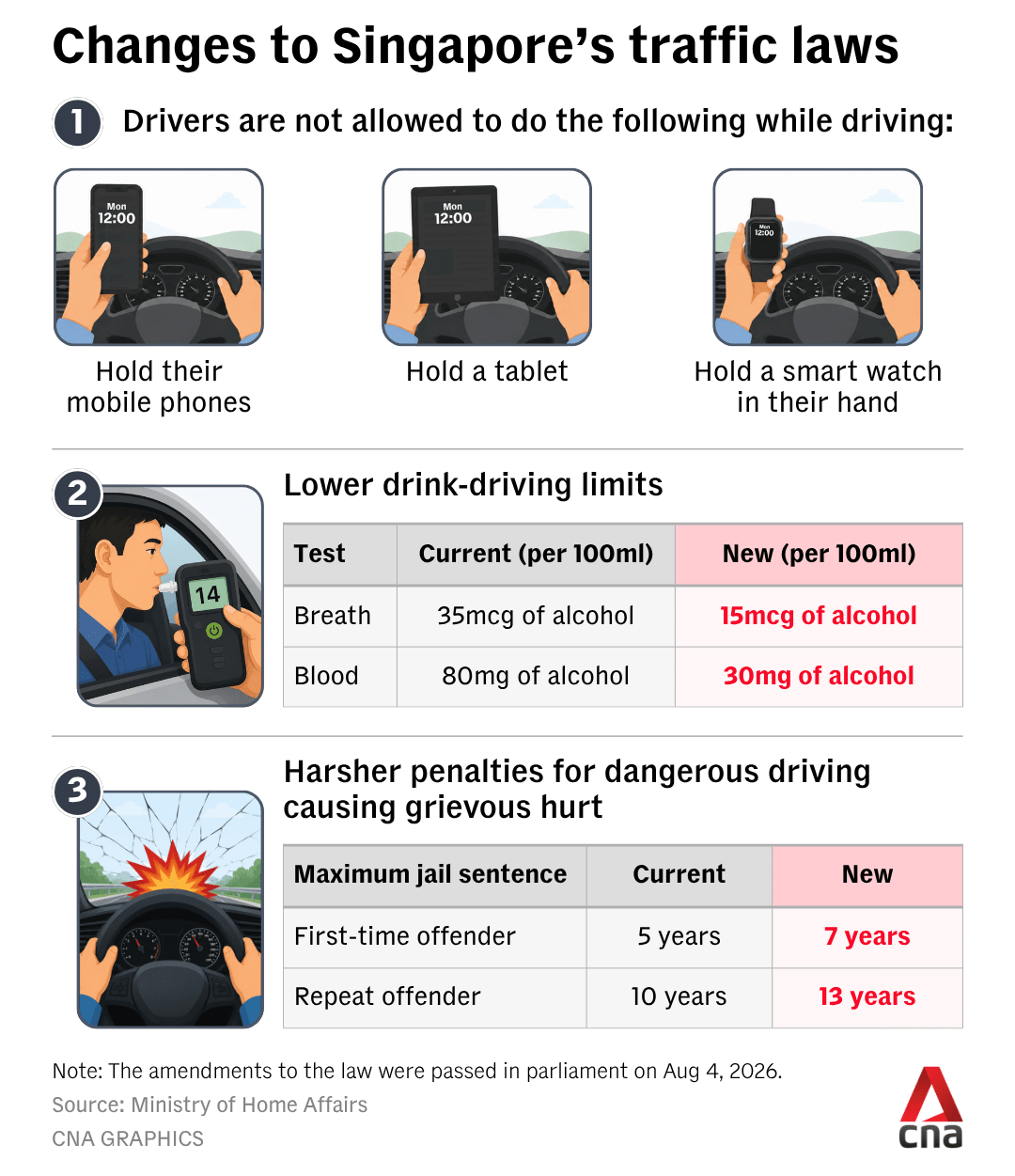
For dangerous driving causing grievous hurt, the new law increases the maximum jail term for first-time offenders from five years to seven years, and for repeat offenders from 10 years to 13 years.
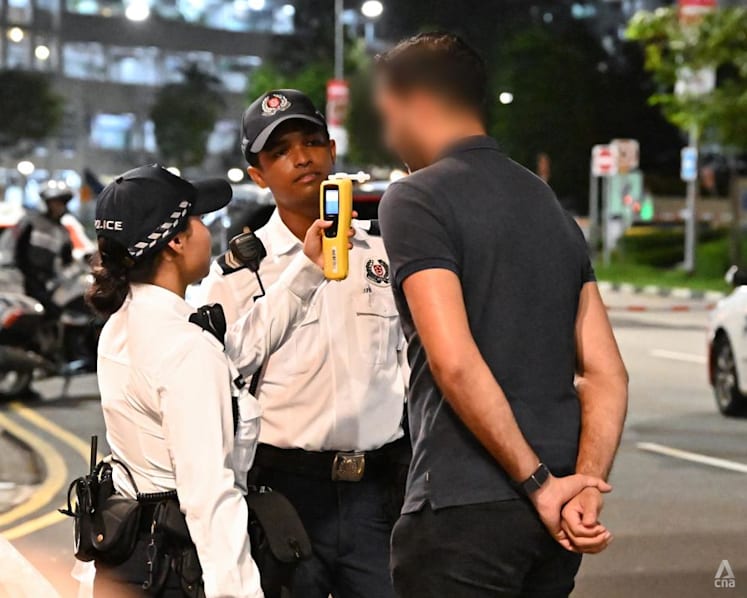
Drink-driving limits will be lowered from 35mcg of alcohol in 100ml of breath to 15mcg of alcohol in 100ml of breath.
It will also be reduced from 80mg of alcohol per 100ml of blood to 30mg of alcohol per 100ml of blood.
The current prescribed alcohol limits have been in force since 1985.
"Since then, scientific understanding of alcohol impairment has advanced considerably. Many jurisdictions, including Thailand, Philippines, Australia and South Korea, have adopted lower prescribed alcohol limits," she added.
Last year, there was a 10-year high of 149 fatalities on the roads – almost one death every two days.
"Our accident rate and fatality numbers need to come down," said Ms Sim.
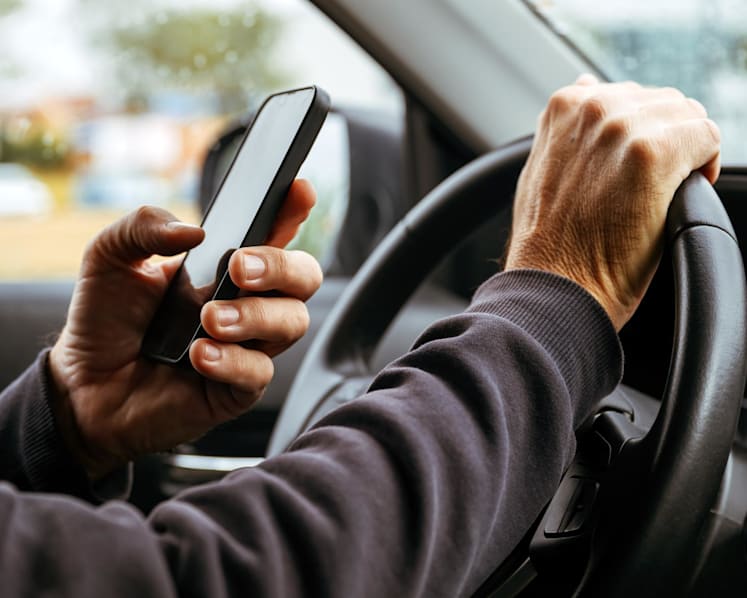
The government is making significant changes to the law to decisively arrest the increase in traffic fatalities and injuries. Second Minister for Home Affairs Sim Ann, who highlighted the key provisions of the Road Traffic (Miscellaneous Amendments) Bill in parliament on Tuesday (Aug 4), said it will strengthen accountability for the most egregious road conduct, further deter driving under the influence of alcohol or drugs and enhance the Traffic Police's ability to detect and enforce against traffic offences. One key change relates to dangerous driving - with a new offence of purposeful endangerment. To further deter driving under the influence of alcohol or drugs, the bill tightens the prescribed alcohol limits, which broadly correspond to no more than 1.5 standard drinks for males and not more than one standard drink for females consumed three hours before driving. Another key change - it will be an offence for a driver to hold a mobile communication device while the vehicle is moving. During the reading of the bill, Speaker Seah Kian Peng welcomed Thailand’s Princess Maha Chakri Sirindhorn and her entourage to parliament. He described her as a cherished and long-standing friend of Singapore who has played a pivotal role in deepening bilateral ties.
TOO LENIENT?
While the laws had been revised to increase penalties against dangerous driving causing grievous hurt, Member of Parliament Xie Yao Quan (PAP-Jurong Central) said he wished the traffic laws were “even stricter”.
He brought up the case of Jeremiah Ng, who in 2021 drove drunk and exceeded the speed limit. He crashed through the centre divider and into the driver's side of another car, killing its 59-year-old Gojek driver who had stopped at a red light with other vehicles.
The crash led to further collisions which left five others injured. A traumatic brain injury and multiple fractures were among the serious injuries suffered by victims.
Ng was sentenced to seven years' jail for dangerous driving causing death, and six months' jail for drink driving, with both sentences running concurrently.
“Reckless as Jeremiah Ng was, I do not think his state of mind would have met the threshold for purposeful endangerment if this law had existed then, and so he would still have been prosecuted under dangerous driving causing death, with a maximum penalty of eight rather than 15 years' jail, and that just does not compute for me,” said Mr Xie.
He added that the maximum sentence of eight years for dangerous driving causing death feels “way too light” given the “recklessness and wanton disregard for other road users”.
The maximum penalty for the new offence of purposeful endangerment by drivers causing death or grievous hurt is 15 years’ jail, on par with culpable homicide not amounting to murder. Yet the maximum penalty for dangerous driving causing death is still about half of that, at eight years. MP Xie Yao Quan made a case for why this should be raised - to 11 years, he suggested. In parliament on Tuesday (Aug 4), he also argued for harmonising the offence of dangerous driving causing grievous hurt with dangerous driving causing death. He noted that for victims in the worst types of incidents, “surviving may not be better off than death”.
He said that using the maximum penalty of 15 years' jail for the new offence of purposeful endangerment, the discount for dangerous driving causing death should be no more than 30 per cent.
“I wish the maximum penalty for dangerous driving causing death had been revised upwards to 11 years instead of eight,” he said.
He added that he wished the Bill could also harmonise the offence of dangerous driving causing grievous hurt with the offence of dangerous driving causing death. This is because for some types of accidents, survival may “not be better off than death”.
Acknowledging Mr Xie’s suggestions, Ms Sim said that the ministry will continue to review the penalties, including raising the maximum penalties, depending on the road traffic situation.
“As we review the penalties in the Act, we will reference penalties in other legislations such as the Penal Code where appropriate,” she said.
She agreed that severe forms of grievous hurt, such as those where victims fall into a permanent vegetative state, can have "consequences that are almost as serious as death, and the penalties should therefore be broadly similar", she said.
"This is what the Bill seeks to achieve by increasing the penalties that can be imposed for dangerous driving causing grievous hurt," she added.
"WHEN YOU DRINK, DO NOT DRIVE"
Non-Constituency MP Andre Low (WP) asked for evidence supporting the precise limits for which the lower drink-driving limits were chosen, including the relationship between these levels and the risk of impaired driving.
Ms Sim said that in reviewing the limit, the ministry considered both the scientific evidence on alcohol-induced impairment and the approaches adopted in comparable jurisdictions.
"Scientific evidence shows that impairment begins at low levels of alcohol consumption," said Ms Sim.
"The tightened limit therefore targets the range at which alcohol-induced impairment begins, while also accounting for endogenous alcohol production where the body naturally produces small amounts of ethanol through normal metabolic processes."
MP Diana Pang (PAP-Marine Parade-Braddell Heights) asked if the government would consider certifying reliable breath testing devices for purchase by members of the public.
This would allow a person who has consumed alcohol to conduct a preliminary self-check before deciding whether to drive.
Ms Sim reiterated that the key message with the drink driving amendments is that “when you drink, do not drive”.
"There is thus no reason to provide breath testing devices in the market for drivers to self-check their alcohol levels," she added.
INCOME-BASED FINES
Several MPs also raised the issue of whether fines for traffic offences could be tiered to income brackets.
MP He Ting Ru (WP-Sengkang) asked what evidence and methodology were used to assess whether the fine limits remain sufficiently deterrent for motorists of very different means.
“Does MHA examine the sentencing outcomes, repeat offending, and the relative burden of fines across offenders' financial circumstances?” she said.
MP Hazlina Abdul Halim (PAP-East Coast) asked if MHA would study the use of income-based fines.
“It would be useful to understand whether fixed fines achieve a broadly similar deterrent effect across different income groups, or whether they are too easily absorbed by some and disproportionately damaging to others,” she said.
Ms Sim said that the idea of income-based fines is “a complex issue and involves questions of equity and fairness”.
“We are aware that some jurisdictions have rolled this out and will study their experience,” she added.
How will new road safety laws address drivers who interact extensively with a mounted phone or entertainment system, or an in-vehicle display? What evidence is there that the current system of enforcement cameras effectively tackles speeding and dangerous driving, given official statistics showing that motorists adapt their behaviour at such locations to ensure they are not caught? These were some questions asked by MP He Ting Ru in parliament on Tuesday (Aug 4). She also called for bringing down offending in the first place by rethinking road infrastructure, rolling out traffic-calming measures more quickly, especially on new roads, and studying the root causes of driver behaviour, such as the impact on road safety of increased stress, population density and crowding.
USE OF TECHNOLOGY TO DETERMINE OFFENCES
The new law also supports the traffic police’s efforts to leverage technology to scale up enforcement of traffic violations, said Ms Sim.
Today, when a camera captures a vehicle committing a traffic violation, a police officer must review the footage to determine whether there is sufficient evidence that an offence has been committed.
The new law allows a computer program to assess whether there is sufficient evidence that a traffic offence was committed and, if so, automatically issue a notice to require the vehicle owner to provide the particulars of the driver at the time of the alleged offence.
“This enables the traffic police to significantly scale up the enforcement of traffic violations and eliminate manual processes, by using video analytics in traffic enforcement cameras,” said Ms Sim.
Questioning the move, MP Darryl David (PAP-Ang Mo Kio) asked if avenues of review will be available to motorists who believe an offence has been wrongly detected.
He also asked about the standards governing the collection, retention, and verification of digital evidence.
Ms Sim said that the automated notices will only be sent for “technical traffic offences”, which will be prescribed in the subsidiary legislation.
Any application to revoke the notices issued through automated processing must be reviewed by an authorised public officer, she added.
The traffic police will also aim to resolve appeals submitted by members of the public expeditiously, with most appeals being dealt with within a month, and more complex appeals taking up to three months to process.
She added that the addressing of appeals will continue to be free.
In parliament on Tuesday (Aug 4), Second Minister for Home Affairs Sim Ann responded to clarifications sought by Members on the Road Traffic (Miscellaneous Amendments) Bill. The bill was then passed in the House.
IMPAIRED DRIVING
The changes to the law include a new offence of driving with the presence of controlled drugs, intoxicating substances or psychoactive substances detected in a driver’s blood specimen.
"While it is an offence to drive simply with a certain concentration of alcohol in one’s blood, there is no corresponding offence for specified substances," said Ms Sim.
"This is because there is no single scientifically established concentration threshold that can reliably indicate impairment across the wide range of such substances."
The prosecution must prove not only that the driver had consumed drugs, but also that the drugs had rendered him incapable of having proper control of the vehicle, giving rise to “significant evidential challenges”.
Under the changes to the law, there will not be a need to prove impaired driving.
Driving with the presence of specified substances in the blood is dangerous and should be deterred, since these specified substances – for example, etomidate – are already regulated under existing laws and are known to impair driving ability by affecting reaction time, attention and coordination, said Ms Sim.
Several MPs raised concerns about the criminal liability of drivers who take lawfully prescribed medication that may impair driving.
MP Vikram Nair (PAP-Sembawang) asked if it would be a crime if a person inhales the substances unintentionally through their course of work at a petrol station or factory site.
MP Wan Rizal (PAP-Jalan Besar) asked whether there will be more emphasis on which prescribed medicines could affect a driver’s fitness. He suggested a hotline which drivers can call before taking the wheel to enquire about such medication.
Ms Sim assured the new offence does not apply to “most common medicines or over-the-counter medicines”.
The new presence-based offence is a targeted one. It applies only to controlled drugs, psychoactive substances, or intoxicating substances already covered under existing legislation, she added.
A statutory defence is available for those who can prove two conditions on the balance of probabilities.
First, that the controlled drug, psychoactive substance or intoxicating substance was lawfully smoked, inhaled, used, consumed or administered, said Ms Sim.
Second, the person did not know or have reason to believe that this would affect his or her capacity, at the time of the alleged offence, to have proper control of a motor vehicle.
It continues to be an offence if a person is incapable of having proper control of the vehicle because he or she is impaired by any medicine or other substance.
“If in doubt, members of the public should consult with their healthcare professionals and err on the side of not driving,” said Ms Sim.