Three farms affected by Lim Chu Kang land-use changes seek lease extensions as expiry dates draw near
Two farm owners questioned why they have to leave within the next year, when two other farms will still be operating in the same area for at least another 10 years.
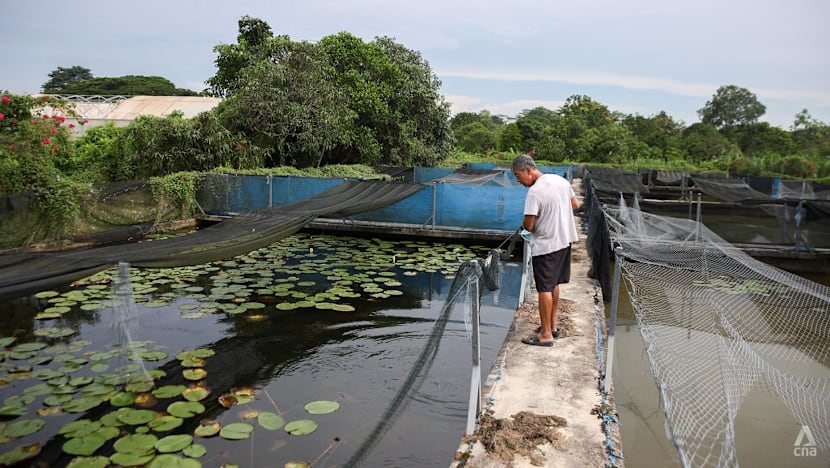
Gan Aquarium owner Gan Kian Leng feeding his fish on May 26, 2026. (Photo: CNA/Ili Mansor)

This audio is generated by an AI tool.


SINGAPORE: With less than a year to go until their leases expire, three farms in Lim Chu Kang are fighting for a chance to extend their tenures and hold on to their land.
These farms – Bollywood Farms, Gan Aquarium and Gallop Kranji Farm Resort – are hoping that their leases can be extended for at least three more years to keep running the businesses they poured decades of work into.
"I know the authorities have given enough time, we understand all that," said Gallop Kranji Farm Resort founder Mani Shanker.
"But what we're merely asking is … from the time our lease finishes to the time of the cut-off point that they have to hand over the land, I think this space is something that they should look at allowing us to continue," he added.





"I think everybody in the farm will also agree that this little extension plays a very, very important part for us."
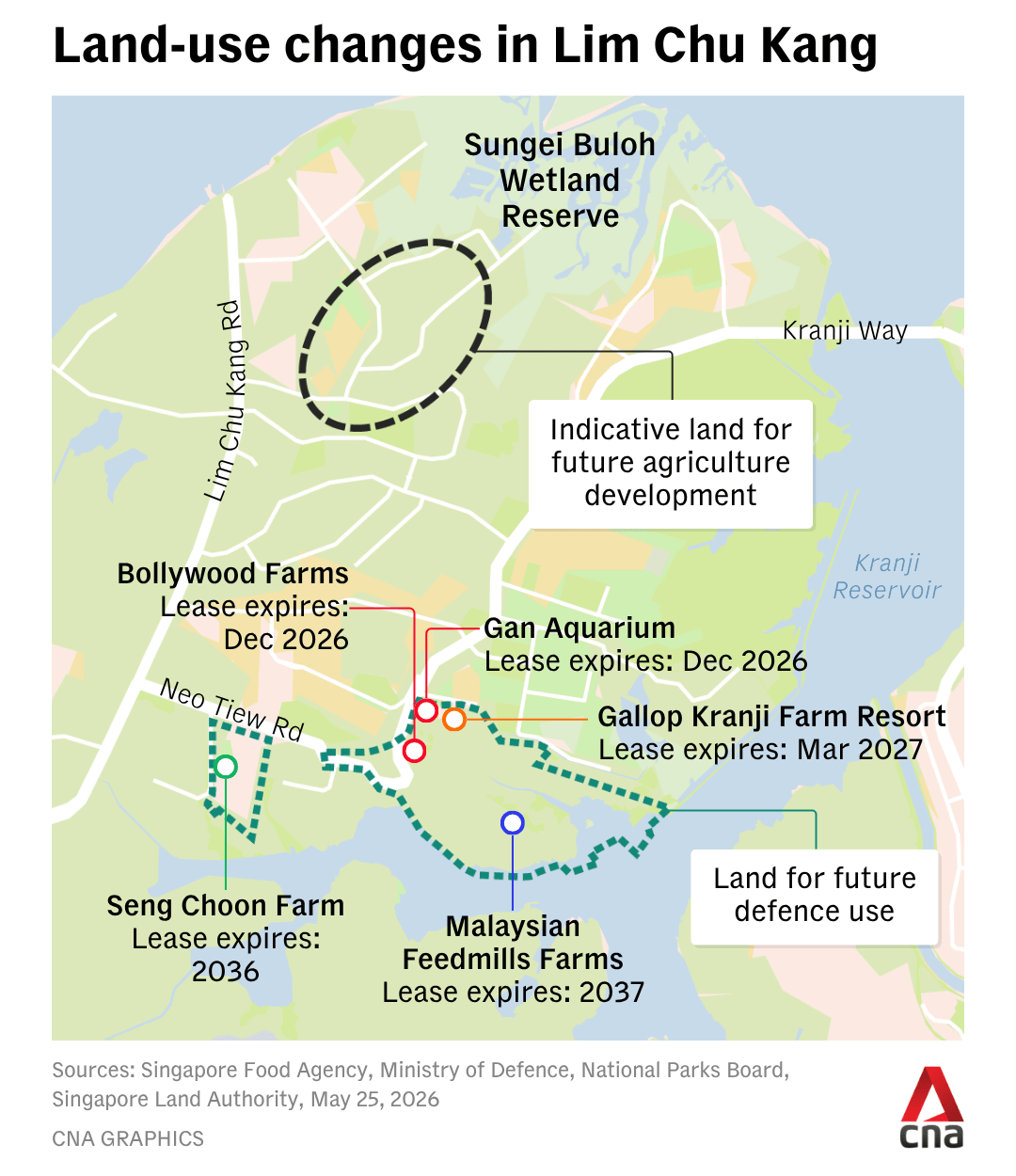
The three farms are currently situated in the southern part of Lim Chu Kang, which will undergo land-use changes, the government announced last Monday (May 25).
The government will repurpose the southern part of Lim Chu Kang for defence uses, while the land to the north of Lim Chu Kang that is currently designated for defence will be reallocated for future agricultural developments.
Bollywood Farms and Gan Aquarium have leases until December 2026, while Gallop Kranji Farm Resort has a lease until March 2027.
Another two farms are also affected: Seng Choon egg farm and Malaysian Feedmills Farms. But these have a longer runway, with leases expiring in 2036 and 2037, respectively, allowing them to continue operating for at least another 10 years.
Authorities said on Monday that all affected farms were informed early for clarity and to give them sufficient lead time to plan their business and operations.
The Singapore Food Agency (SFA), one of the authorities involved in the land-use changes, noted that the three farms with leases/tenancies expiring over the next year were notified since 2020 that no further lease renewals would be granted.
At least two of those farms questioned the need to move out within the next year, given that Seng Choon and Malaysian Feedmills Farms would still be operating in the same area for at least a decade.
At present, there are no food farms in the north of Lim Chu Kang.
LEASE EXTENSIONS
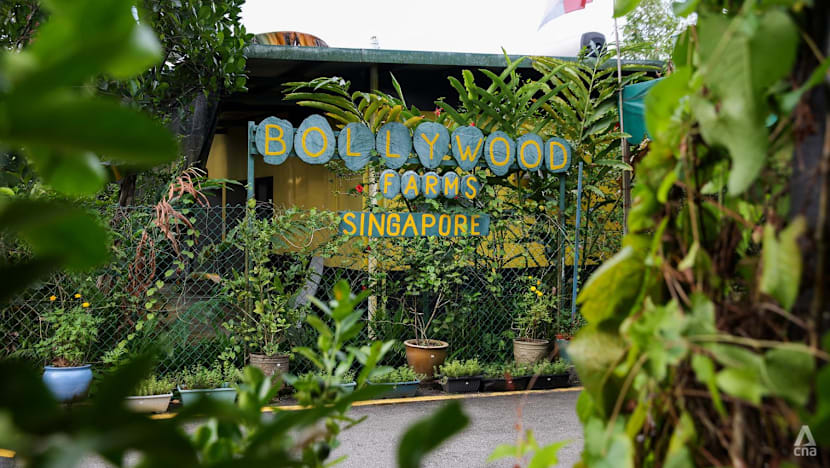
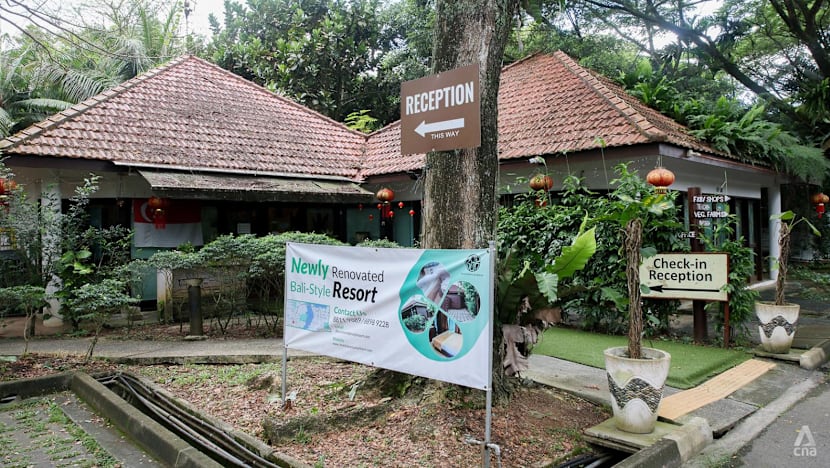
Mrs Ivy Singh-Lim, who owns Bollywood Farms with her husband, is appealing for a three-year extension of the lease on the land at 100 Neo Tiew Road, which also serves as their home.
The site was originally awarded through a public tender for a 20-year lease that expired in 2021.
Following the lease expiry and at Bollywood Farms' request, the government granted it two short-term tenancy extensions - from 2021 to 2023 and 2024 to 2026 - on a "goodwill basis” to facilitate its transition.
But Mrs Singh-Lim told CNA she has requested a further tenancy extension as she does not want to leave her house that has been adapted to suit the needs of her husband, who is wheelchair-bound.
"You look at this house, he can roll around to the front, he can roll to the bedroom. We built a special toilet, he can roll himself to the toilet," Mrs Singh-Lim said.
"The reason I'm appealing for an extension is so that I can live here for another three years. I'll be 80 years old, my husband will be 86 years old, and he's been in a wheelchair for many years.
"So by that time, I think we're ready to move into a retirement home," she said, adding that she has already arranged to relocate to one such place run by a friend.
"We don't have to look for another interim place before we retire to a retirement home."
She is confident that she will get an extension, adding that she has written to her Member of Parliament Zhulkarnain Abdul Rahim.
Mrs Singh-Lim told CNA that she will not be moving out until she gets a clear answer on what her land will be used for.
"I don't know what they want to take it back for now. I believe it's for the Ministry of Defence but what is the defence ministry going to do here?" she asked.
"If you don't give me a straightforward answer, I'm not moving. I've told them already, if they really need it for something really serious, I will move," she said.
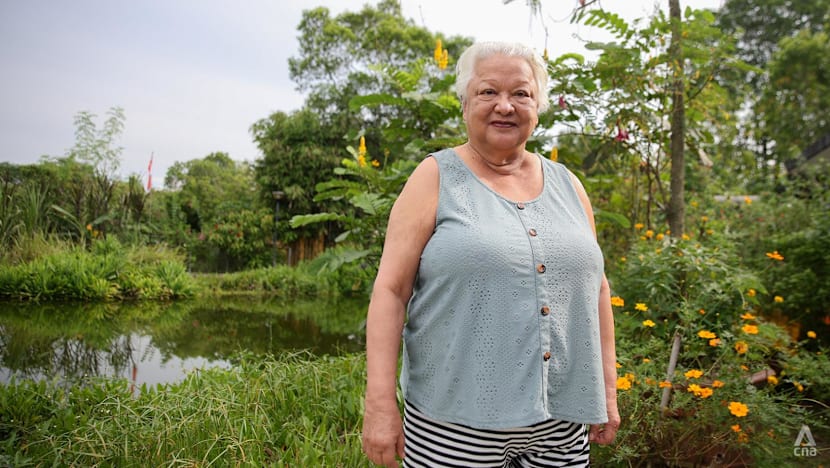
Asked what she will do if the extension is not granted, she said: "I have no plans. I'm just not going to move out."
Aside from growing vegetables, the farm also hosts educational events for students.
It is a chance for them to experience the countryside, she said. "So I think our government has got to be careful about how many farms they close down," she added.
In response to CNA's queries, SFA said it has received Bollywood Farms' request for a further tenancy extension and is considering the request carefully.
Gallop Kranji Farm Resort's Mr Shanker also pointed to his property being a place for people in Singapore to get away from the city and to get a taste of village life.
It is a resort that combines farmland, with more than 30 tenants, including herb and bird farm owners.
"Singapore needs something like that, a place where kids can understand nature, kids can get closer to animals," said Mr Shanker.
The site Gallop Kranji Farm Resort occupies has a 20-year lease period that will end in March next year. Mr Shanker is hoping the lease can be extended until 2030 at least, before the land is taken over.
"It will be good for the authorities to understand that this is also very important for us to extend to the maximum until you want to take back the land. Don't take it back early and keep it empty," he said.
"Those few years can also be very critical for us to do some business, or give the opportunity for Singaporeans to enjoy what has been set up. Rather than you take it back, and then you keep it empty for three more years," he added.
"(It's) not so much about business, but for the people to enjoy the opportunity for such a place, because it's going to be gone. I don't think we can emulate a place like that anymore, honestly," he said.
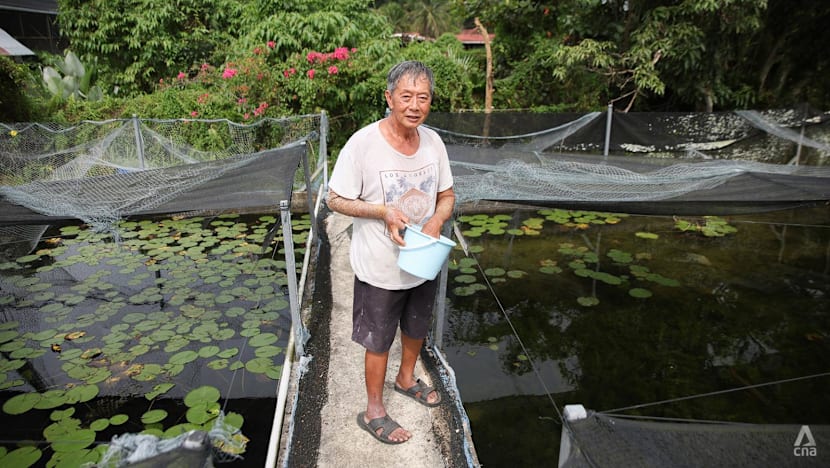
Mr Gan Kian Leng, who has been single-handedly running Gan Aquarium for 26 years, was similarly concerned that his land would be left unused before it is officially taken over by the government.
His lease, which is also for 20 years, will expire this December. But he questioned the need to move this year, given that Seng Choon and Malaysian Feedmills Farms will still be operating for at least another 10 years.
"Since Seng Choon (has) another 10 years … why don't let us all carry on?
"We can carry on our business, I can also produce something different," said Mr Gan, who lives on the farm with his elderly parents.
The 72-year-old farm owner breeds red Arowana and Soon Hock fish, or Marble Goby, which he has dedicated years of work to. He said it took him six years to grow and successfully breed his Arowana fish.
He started experimenting with Marble Goby three years ago and was just about to see the results of his work. He believes what he does is important and adds value to Singapore's freshwater fish species.
"I want to do something for the country, for the government. But they don't appreciate me, I cannot say anything," he added.
If no extension is granted, he said he may be forced to close his business.
Authorities said the land-use changes will allow them to explore how the physical co-location of food and non-food farms to the north of Lim Chu Kang could benefit from shared facilities and integrated infrastructure planning.
In response to CNA’s queries, SFA said any requests for further extensions beyond lease or tenancy expiry will be considered on a case-by-case basis.
It will take into account factors such as broader land-use plans, operational considerations and the lessee’s or tenant’s transition plans.
In response to queries on farm owners having to move out earlier, it added: "The different timelines for the phasing out of farms are based on their existing leases and tenancies.
“Redevelopment works have been planned based on these timelines."
The Ministry of Defence said agencies will proceed with the necessary reinstatement works as early as 2030, once sites are returned at the end of the farms' lease or tenancy.
"Any development at the vacated farms shall only take place after reinstatement works and feasibility studies have been completed. This is expected to take place from the 2030s," it added.
Farms that wish to continue operations can participate in SFA's annual Singapore Agri-space Sales programme, where agricultural land and sea spaces are released through open tenders.
Food farms relocating to a new site can apply for the Agri-food Cluster Transformation Fund, which provides co-funding for local farms to adopt farming technologies and upgrade their capabilities. Those who require additional help can contact their account manager in SFA for assistance.
Non-food farms can opt for the National Parks Board's land tenders and tap on the Landscape and Animal Sector Productivity Grant to defray the cost of buying equipment.

LONGER LEASES
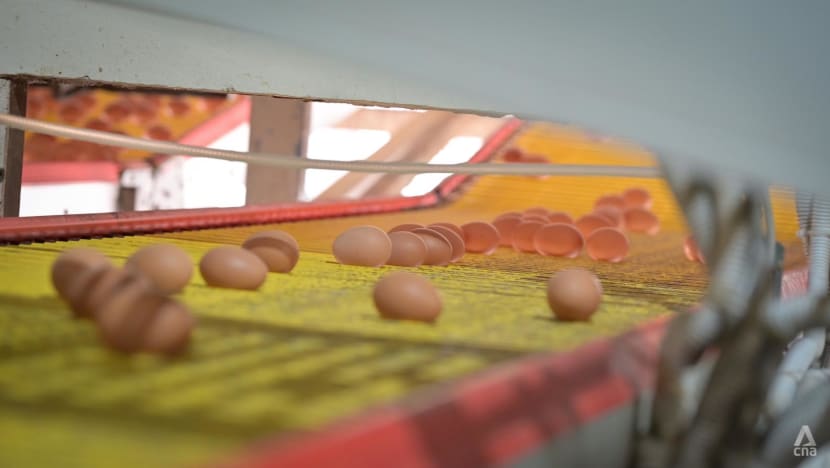
The highest profile farm affected by the land-use changes is Seng Choon, one of Singapore's three egg farms. Its lease expires in September 2036, and it is making plans after the news broke on Monday.
"While we were saddened by the situation, we are also excited about this new phase of growth for Seng Choon," said managing director Koh Yeow Koon.
Seng Choon will continue operating at its current site until the end of its tenure, while also working closely with the relevant authorities to secure a new site – ideally at least five years before the lease expires, Mr Koh told CNA.
This will allow sufficient time to ensure a smooth transition, and he does not expect disruptions to operations or egg supply.
He added that the farm had previously discussed with SFA the possibility of extending its lease beyond 2036. The farm has invested about S$3 million (US$2.3 million) over the past three years in artificial intelligence and automation to improve the efficiency of its quality control processes and reduce the physical workload on senior workers.
"While we had hoped for the opportunity to continue at our current site, we appreciate the government’s early notice, which provides us with valuable time to plan ahead in a thoughtful and responsible manner," Mr Koh said.
"Although we have strong emotional and operational ties to this site, we see this transition as an opportunity to design and build an even more advanced and future-ready Seng Choon."
Having a new facility will allow the farm to better integrate emerging technologies such as solar photovoltaics, which convert sunlight into electricity.
The future farm layout will also be built to support advanced AI systems and robotics for greater efficiency, sustainability and long-term growth, said Mr Koh.
"Our shared priority is to ensure continuity for both our customers and our 130 employees throughout this transition," he added.
Mr Koh said the farm appreciates any available government grants that can support its transition and the strong support extended to local farms like itself.
"Given the significant costs involved in relocating and rebuilding our operations, we also look forward to continued partnership and support from the government as we move into this next phase of growth."
Meanwhile, Malaysian Feedmills Farms has no plans at the moment, given that its lease expires in 2037, managing director Saw Chau Hian told CNA. He bought the 13ha land in the late 1980s and rented out plots to tenants.
Today, there are more than 10 farms occupying the land.
Mr Saw, 80, used to do egg farming but stopped about 10 years ago. Now, he focuses his time on a food waste recycling endeavour, where he collects food waste materials with high protein and converts them into fish feed.
"I'm already 80 … quite old already," he said when asked why he had no plans beyond 2037.
Instead, he will use the next 11 years to continue recycling food waste.
"It's a very high-cost hobby," Mr Saw said. "But I think it's very meaningful for society. It can cut costs a lot, maybe cut about half of the cost of feed," he said, adding that less waste is also incinerated.
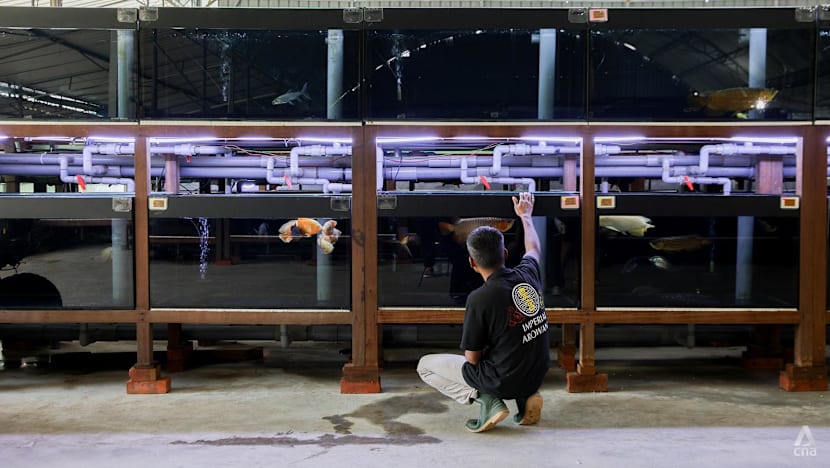
Mr Aaron Sim, owner of Imperial Arowana Breeding Farm, which occupies a plot at Malaysian Feedmills Farms, was unfazed about the lease expiry.
But the 44-year-old acknowledged there will be challenges in finding a new place because it needs to be big enough for Arowana fish breeding. "It's not just putting in two fish in … it is like humans," said Mr Sim.
"They need to find their own partners, they need to date, and then they pair up. Only then do they start the nest, and then they start laying the eggs. With respect to that, space is an issue."
"It's an impact to us in terms of cost. It's not cheap to maintain a farm," he added.
He plans to continue his operations at the current location until the lease expires, while keeping a lookout for new spaces.
But he is not expecting any extensions, stating that the lease periods are already laid out up front in contracts.
"Lease is up means lease is up. If they give us a lease extension, that's a bonus. It's not something that must be given," said Mr Sim.