Jetpacks, weaponised drones: Singapore police trialling new tech to protect waterways
The jetpacks will give Police Coast Guard officers a tactical advantage, says Coordinating Minister for National Security K Shanmugam.
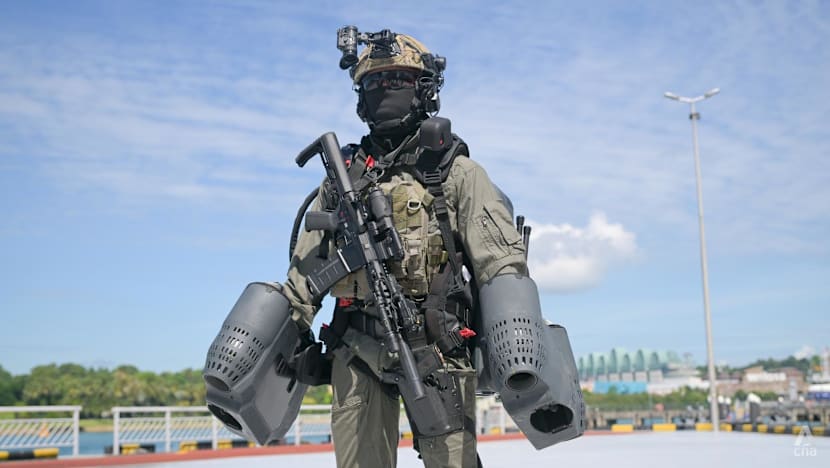
A Police Coast Guard officer wearing a jetpack at Brani Base on May 14, 2026. (Photo: CNA/Syamil Sapari)

This audio is generated by an AI tool.


SINGAPORE: Donning a jetpack, the Police Coast Guard (PCG) officer flies through the air from a police craft towards a hostile vessel.
Upon landing on board, he fires at the adversaries, while his teammates board the ship with ladders.
Meanwhile, in the air, a drone equipped with weapons also fires on the perpetrators to protect the officers approaching the vessel.
This could be how the coast guard approaches hostile situations in the future. The Singapore Police Force (SPF) is kicking off trials for both innovations in the coming months.





They were among the technological innovations showcased as Coordinating Minister for National Security K Shanmugam visited the PCG’s Brani Base on Thursday (May 14).
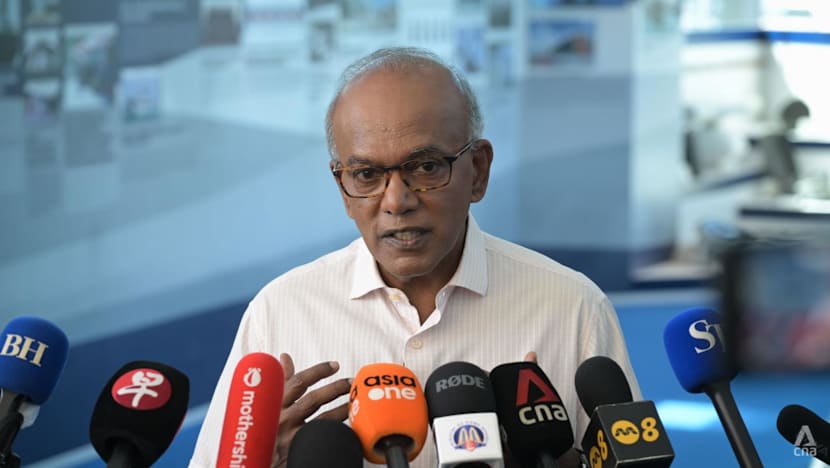
Speaking to the media, Mr Shanmugam said that the police innovations come not in response to any particular threat, but that the Home Team has been “on this trajectory” for a while.
“For some time now, I have asked SPF and other Home Team departments to really push down this route aggressively, and essentially this technology can protect our officers, ” said Mr Shanmugam, who is also home affairs minister.
"It is a quantum upgrade from how policing was done some years ago."
NEW TECH
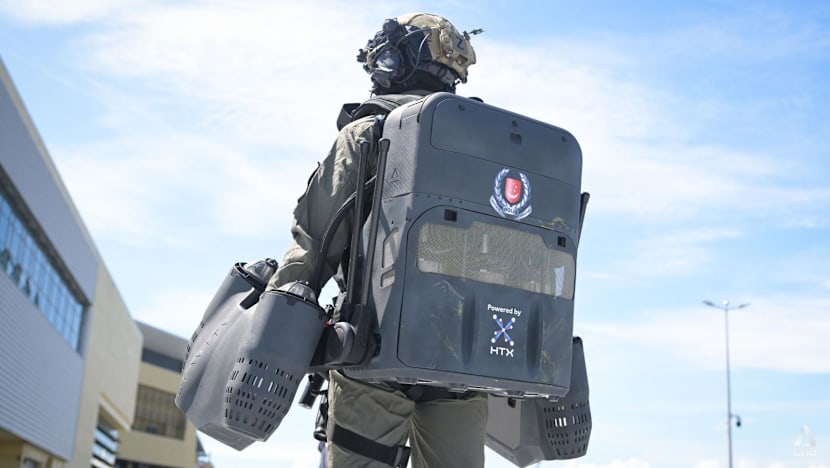
During his visit, Mr Shanmugam learnt about the use of a weaponised drone – called the weaponised unmanned systems (WUS) – and the jet-propelled manpack, to be used by the PCG’s Special Task Squadron officers.
The jetpack, created by British company Gravity Industries, weighs 35kg each and can hit a top speed of 137kmh. Each jetpack has a run time of about 3 minutes.
Mr Shanmugam said that a number of officers have been trained in this, and that it is “like what you see in the movies”.
While there are limitations on the distance, it is enough for operations, said Mr Shanmugam.
The jetpacks will provide PCG officers with a tactical advantage, he added.
SPF said in a statement that it is exploring the deployment of the WUS in “special operations where risks are heightened due to terrain limitations or the tactics used by adversaries”.
“The intent is to help officers maintain a tactical advantage with higher sensemaking, speed and/or surprise and response capabilities, that would in turn enhance mission success and the safety of both members of the public and officers during high-risk tactical operations,” said the police.
The WUS could also be used to deal with armed perpetrators in a building, by letting officers breach booby-trapped entry points and safely enter a barricaded stronghold.
Mr Shanmugam said that securing Singapore’s waterways involves both the country’s navy and the PCG.
"Singapore is a significant maritime centre. We have long been preparing, training for hostage-taking and other situations involving ships, hostile vessels," he said.
Senior Assistant Commissioner of Police (SAC) Leon Chan, the SPF’s director of operations, said that the WUS’ use has to be governed by strict legal principles, clear rules of engagement, and robust safeguards to ensure any deployment remains appropriate, proportionate and safe.
“The SPF will continue to take a responsible and measured approach in trialling and deploying such new technologies, with the safety of our officers and the public remaining our foremost consideration,” he said.