FAQ: What hikers need to know about volcano trekking insurance
Standard travel insurance may not cover high-altitude treks or expeditions to remote volcanoes.

This audio is generated by an AI tool.


SINGAPORE: The eruption of Indonesia's Mount Dukono, which left two Singaporeans and one Indonesian dead, has highlighted the risks of hiking active volcanoes – from sudden cancellations to emergency evacuations and, in the worst cases, death.
The tragedy also raises a practical concern for travellers planning to visit active volcanoes: How can they insure themselves against such risks?
CNA looks at what coverage hikers may need and whether specialised insurance is always necessary.
Is volcano trekking covered under general travel insurance policies?
Not always. Most insurers do not explicitly exclude trekking to active volcanoes. However, expeditions to inaccessible or remote areas, mountaineering or rock climbing that requires the use of specialised climbing equipment, as well as trekking above certain altitudes, are generally not covered, said Ms Jazzreal Wong, head of direct business at Etiqa Insurance.





Such activities may be deemed high risk due to a greater likelihood or severity of injury, difficult rescue conditions or technical skill requirements, she said. Leisure activities operated by licensed commercial operators following established safety guidelines are usually covered.
Mr Eugene Tan, senior manager of consumer general insurance product development at Income Insurance, said certain activities may be covered under higher-tiered plans or optional add-ons, though the scope and conditions of coverage can differ significantly between policies.
“Travellers are therefore strongly advised to review their policy terms carefully and seek clarification from their insurer before purchasing a policy, if in doubt,” he said.
In Singapore, adventure tour operators say they have protocols in place to prepare travellers for trips to remote, unusual or exotic destinations. From insurance advisories to training regimens, safety is a high priority for them. Germaine Wong reports.
What type of insurance should volcano hikers buy?
Hikers exploring active volcanoes should buy comprehensive travel insurance covering trekking and hiking — sometimes available as an add-on under adventure or extreme sports, expedition leaders told CNA.
Such policies are typically classified by maximum elevation, said Mr Vivek Vaidya, founder of Trekkers@Heart. He advises trekkers to choose policies covering the highest elevation tier — usually 6,000m — to ensure adequate coverage across all treks.
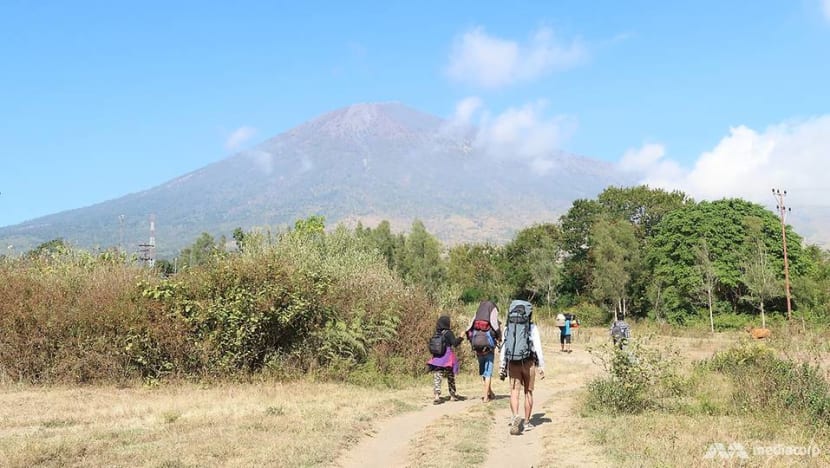
For reference, the highest active volcanoes in Indonesia are Mount Rinjani (3,726m) and Mount Kerinci (3,805m). Mount Dukono has a summit elevation of about 1,335m.
For a three-night trip, add-ons can cost between S$60 (US$47) and S$200, said JTrace founder Jeremy Tong.
“Regardless of whether you're a casual hiker or you are serious, we recommend that, as long as you're going to the mountains, you should get adequate coverage, because it's going to save your family a lot of money,” he said.
Those planning treks above 6,000m may consider Global Rescue, an international membership-based provider of medical, security and evacuation services. Mr Tong said this can cost up to US$1,000 and is typically suited for high-altitude mountain expeditions where rescue access is critical.
Do I still need specialised coverage if I’m visiting a managed volcano park?
It depends on the nature of the trek and how it is conducted.
Coverage differs between a tourist visiting a managed volcano park and an experienced trekker attempting a more remote or demanding route, said Ms Cherie Wang, CEO of insurance planning app Planner Bee.
Insurers define trekking cover differently, with varying altitude limits and activity conditions.
“One important factor is whether the trek takes place in an area that is open to the general public without restriction, or whether it is organised and supervised within recognised safety parameters,” she said.
Under Income Insurance's policy, trekking is a general exclusion unless it is for leisure purposes below 6,000m, takes place in a publicly accessible location, is organised by a recognised commercial operator or conducted under licensed guides, and follows proper safety procedures.
At FWD, hiking or trekking above 3,000m is a general exclusion.
For DirectAsia, trekking is covered as an add-on for expeditions up to 4,000m, provided they are organised by a licensed operator and conducted with a licensed guide throughout.
What risks does insurance protect hikers from?
Regardless of their planned itinerary, insurance protects travellers against unexpected out-of-pocket expenses, said a spokesperson from the General Insurance Association of Singapore (GIA).
The most significant benefit covers high-value losses that can run into five or six figures — overseas medical treatment, emergency repatriation, or liability for injury or property damage caused to third parties.
“Most individuals do not have the emergency funds to fund such large emergency expenses, and cases where travellers have had to turn to crowdfunding for such situations have been covered in the media,” GIA said.
Those intending to participate in higher-risk activities should understand whether the planned activity falls within the standard policy coverage, the spokesperson added.
Insurance can also cover trip cancellations caused by natural disasters such as volcanic eruptions, though expedition leaders say this is rare. Expeditions are typically suspended only during the monsoon season, when local authorities close trekking routes, said Mr Vijay Kumar, founder of SGTrek.
For more demanding expeditions, insurance has enabled swift evacuations. When a trekker's blood oxygen level dropped at Everest Base Camp (5,364m), he was flown to safety within hours — with helicopter and subsequent medical costs covered by the insurer, said Trekkers@Heart's Mr Vaidya.
When are claims most likely to be rejected or complicated?
Known events or situations already flagged under official travel advisories are generally excluded from coverage, said Etiqa's Ms Wong.
Losses arising from a traveller's failure to heed — or deliberate disregard of — official warnings, safety notices or travel advisories may also not be claimable.
She advised travellers to check Singapore Ministry of Foreign Affairs (MFA) travel advisories before departure, as policies exclude coverage for locations under such advisories.
“They are also encouraged to be fully updated on all developments at their destination of choice before confirming travel plans,” she said.
Insurers generally exclude claims arising from known events, which are treated as pre-existing risks, the GIA spokesperson added.
“Other factors that may affect claims include failure to disclose planned high-risk activities, participation in excluded activities, inadequate documentation, or non-compliance with operator or local safety requirements.”