Singapore to roll out haze subsidies at GP clinics, polyclinics from Oct 12
Eligible Singaporeans will pay no more than S$10 for treatment of haze-related conditions, said the Ministry of Health.
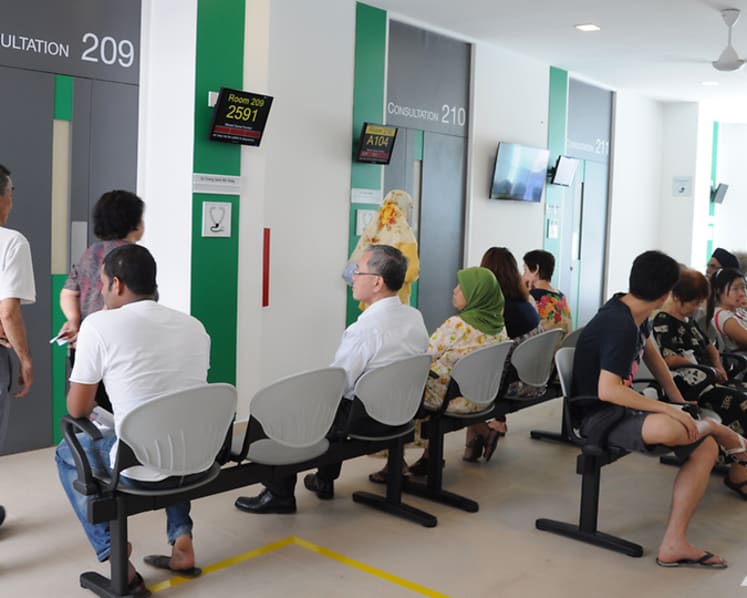
Patients at a polyclinic in Singapore. (File photo: Try Sutrisno Foo)

This audio is generated by an AI tool.


SINGAPORE: Subsidised treatment for haze-related conditions will be available at Public Health Preparedness Clinics (PHPCs) and polyclinics from Monday (Oct 12), as air quality deteriorates across the country due to transboundary haze.
Health Minister Ong Ye Kung announced the activation of the haze subsidy scheme on Sunday, saying it would help Singaporeans seek treatment for haze-related conditions at the primary care level.
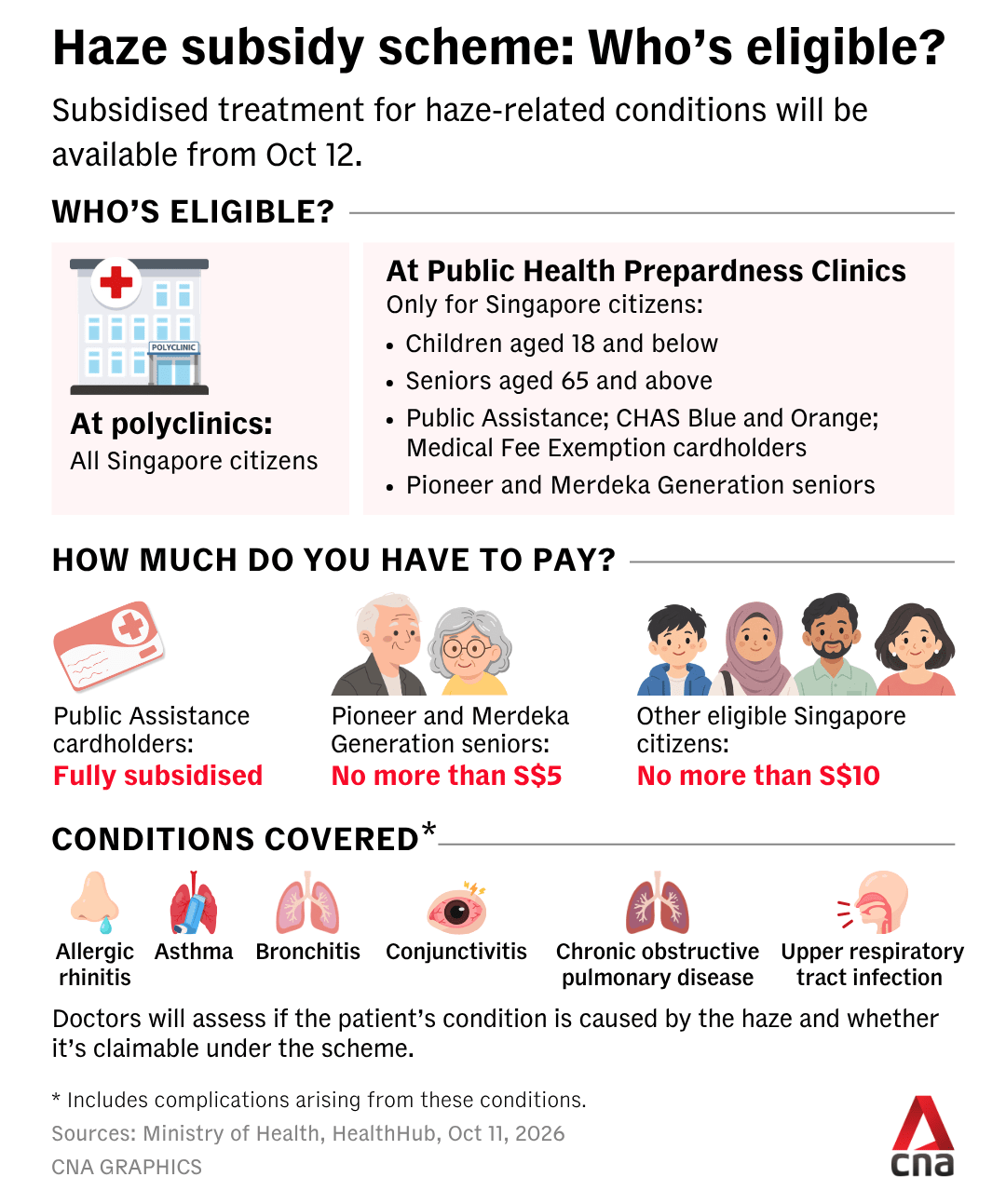
All Singapore citizens will be eligible for the subsidies at polyclinics, while eligibility at participating PHPCs will be limited to certain groups, including children and seniors.
Public Assistance cardholders will receive fully subsidised care, Pioneer and Merdeka Generation seniors will pay no more than S$5 (US$3.90), while fees for other eligible Singaporeans will be capped at S$10.





The haze subsidy scheme was last activated in 2015, when Singapore experienced one of its worst haze episodes as smoke from forest fires in Indonesia affected the region for weeks.
The Ministry of Health (MOH) will also activate the PHPC scheme, which aims to coordinate primary care responses and provide subsidised care during health alerts and emergencies, including haze and more recently for COVID-19.
WHO IS ELIGIBLE
At participating PHPCs, Singapore citizens aged 18 and below or 65 and above will be eligible for the subsidies.
The subsidies will also be available to those on Public Assistance, Pioneer Generation and Merdeka Generation schemes, CHAS Blue and Orange cardholders, and Medical Fee Exemption Card holders.
All Singapore citizens will be eligible at polyclinics.
Conditions covered under the haze subsidy scheme include allergic rhinitis, asthma, bronchitis, conjunctivitis, chronic obstructive pulmonary disease, upper respiratory tract infection and their complications.
According to Healthhub's website, doctors will assess whether a patient's condition is haze-related and claimable under the scheme, which does not cover treatment or medication for unrelated conditions.
Medication for haze-related conditions will be prescribed only in quantities needed for the episode of care.
The public can refer to the MOH website for a list of participating PHPCs. Participating clinics can also be identified by their PHPC decal or haze subsidy scheme poster.
Mr Ong said there are 1,370 clinics under the PHPC scheme, with close to 1,000 having already indicated that they would participate.
UPTICK IN EMERGENCY DEPARTMENT VISITS
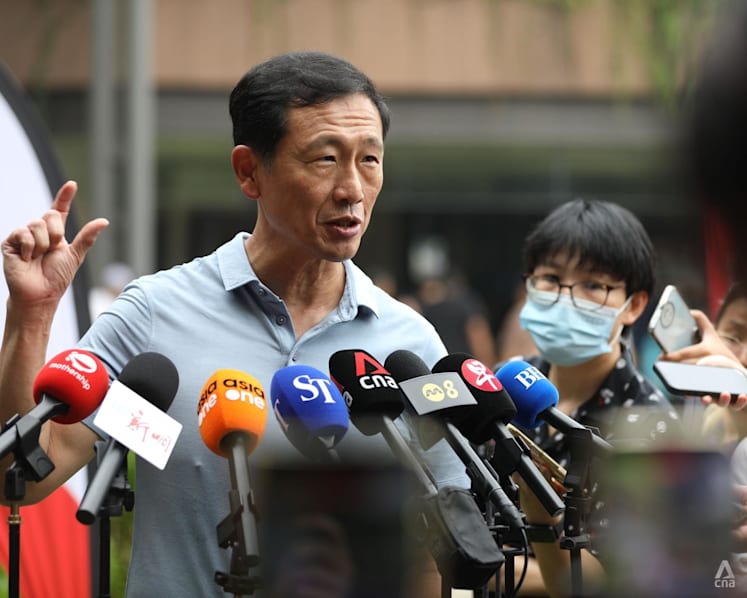
Speaking to reporters at an event at Bukit Canberra on Sunday morning, Mr Ong said he had observed a week-on-week increase in patients with respiratory issues at emergency departments, with polyclinics also seeing more such cases.
People with more serious conditions should continue to seek treatment at emergency departments, but respiratory issues that can be managed at the primary care level should be treated at clinics instead, Mr Ong added.
“If there are no major issues, you don’t have to visit the emergency department. Go to a PHPC clinic; they should be able to take care of you,” he said.
“We are very careful in protecting that resource because people need to go there for life and death situations,” he added, referring to emergency departments.
“We want to make sure we give people assurance … that doctors, family physicians, can take care of you."
Mr Ong also said hospitals had already activated haze-related measures, including using ventilators and air purifiers and keep ward windows closed.
He added that authorities were reviewing their emergency supplies and stock levels, which he said remained adequate.
"I think we are quite well-stocked, so there's no need to worry about that," Mr Ong added.
CONCERNS OVER POLYCLINIC CROWDS
The revived haze subsidy scheme was welcomed by residents CNA spoke to, though some raised concerns about eligibility and the potential for overcrowding at polyclinics.
With the subsidies available to all Singapore citizens at polyclinics, Ms Pong Ai Kuan was concerned that securing appointments could become even harder.
The 52-year-old said it was already difficult to secure polyclinic appointments and worried that more people would now seek treatment for minor symptoms they believe were haze-related.
"We already cannot make appointments ... now even worse," she added.
Mdm Siti Norbariah, 58, was disappointed to learn that she would not be eligible for the subsidy scheme at participating PHPCs, having switched from a CHAS Orange card to a Green one.
The secondary school laboratory technician had hoped she would still qualify based on her age, but subsidies at PHPCs for the elderly are only available to those aged 65 and above.
When told she could still receive subsidised treatment at polyclinics, she echoed Ms Pong's concerns about overcrowding but said there was “no choice”.
For Mdm Missiammal, 71, however, the subsidies were a welcome relief.
While she had not experienced any haze-related medical conditions, the service ambassador, who works at gyms and swimming pools, said she had started wearing a mask as a precaution, particularly when working outdoors.
On the subsidy scheme, she said: "It's very good, very convenient … We are very happy … a lot of benefits when we reach 65, as senior citizens."

HAZE SITUATION
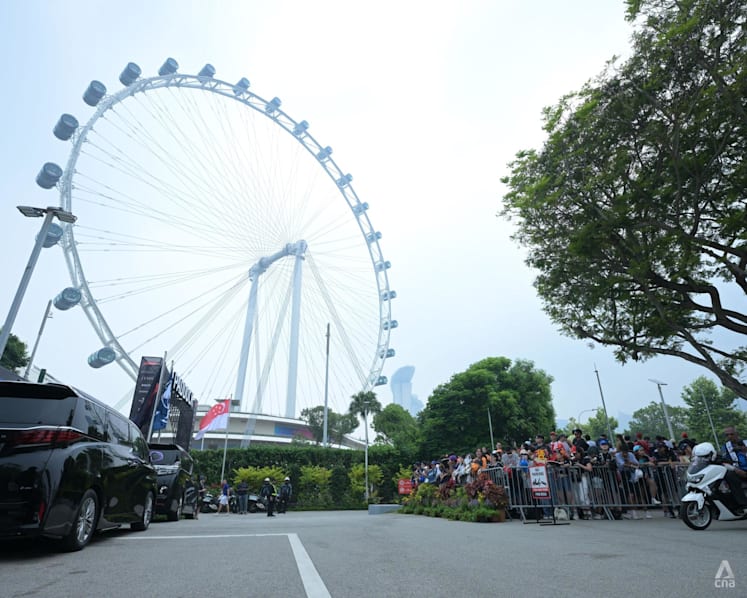
Air quality across Singapore remained in the unhealthy range on Sunday amid continued hazy conditions.
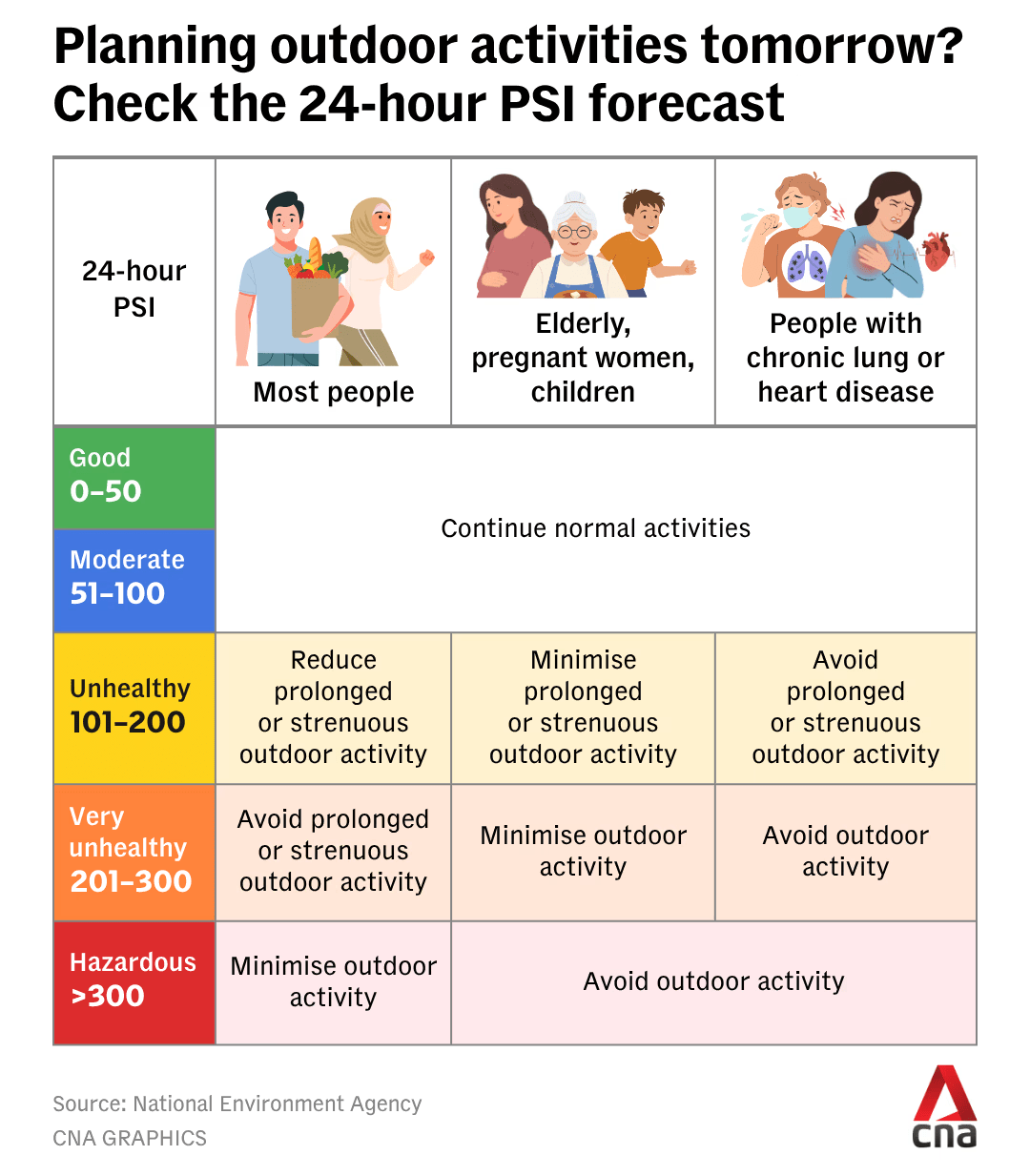
The National Environment Agency (NEA) said on Saturday that the 24-hour Pollutant Standards Index (PSI) was forecast to be in the unhealthy to high unhealthy range for the next 24 hours.
The 24-hour PSI reached new highs for this year's haze season on Friday, with the central region registering a reading of 192 at 5pm.
Singapore’s 28-agency Haze Task Force has said it is ready to roll out additional measures should the 24-hour PSI exceed 200.
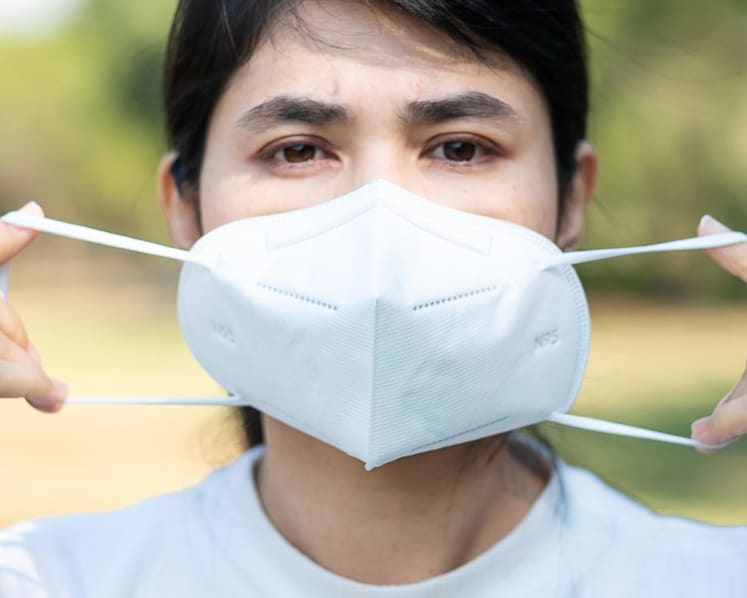
These include distributing N95 masks to eligible Singaporeans and setting up air-conditioned haze shelters at community clubs, as well as selected residents' committee and residents' network centres.
Healthcare institutions, including public hospitals, polyclinics and nursing homes, have activated haze preparedness measures, including using air purifiers, closing windows in wards and corridors, and reducing ambient temperature through portable air coolers, where appropriate.
The Ministry of Education (MOE) will consider closing schools when the air quality forecast for the next day is in the hazardous range with the 24-hour PSI exceeding 300.
Education Minister Desmond Lee said on Saturday that any decision to close schools would be announced by around 8pm the day before through schools and MOE's official channels.
He added that the ministry would continue monitoring the situation each day and assess whether schools should remain open the following day.
Meanwhile, Minister for Sustainability and the Environment Grace Fu said Singapore is prepared to help Indonesia in fighting forest fires wherever necessary amid the ongoing haze.
Indonesia is battling its most intense wildfires in 11 years, with super El Nino weather conditions parching the country's forests and fields.
Forestry Minister Raja Juli Antoni told Indonesian media last month that wildfires could go on until early November, with the rainy season expected to arrive late, as he urged people to stop using fire to clear land during an extended drought.