


Haze worsens overnight as air quality turns unhealthy across Singapore
Showers are forecast over Singapore and the surrounding region on Saturday, said NEA, although smoke haze could continue to be transported from Sumatra.

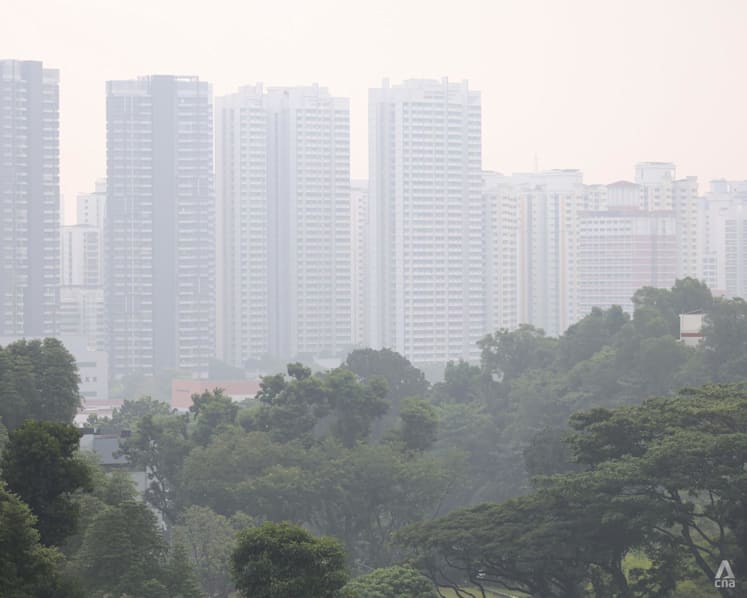
A view of the haze from Chinatown at 3.40pm on Oct 23, 2026. (Photo: CNA/Ooi Boon Keong)

This audio is generated by an AI tool.
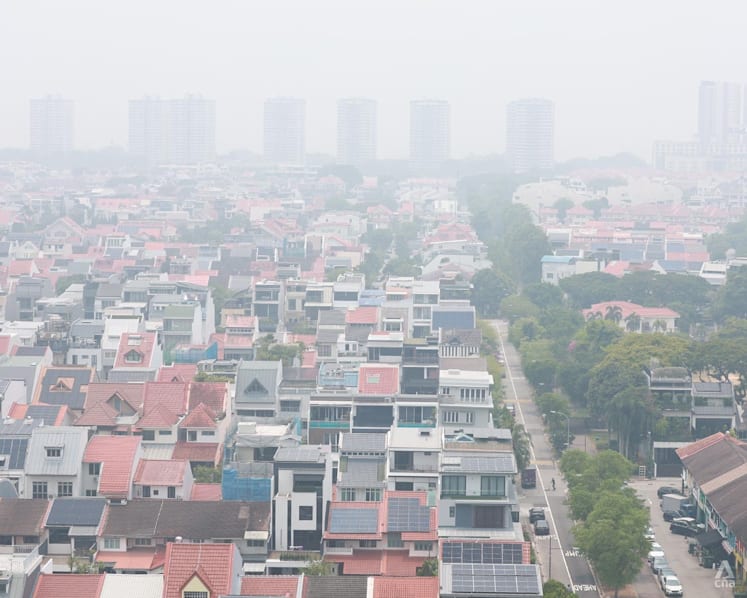
SINGAPORE: Air quality worsened overnight, with the 24-hour Pollutant Standards Index (PSI) reaching the unhealthy range across all five regions early on Saturday (Oct 24).
At 10am, the PSI ranged from 118 to 148, with the highest reading recorded in the west.
Hourly PM2.5 concentrations were also elevated islandwide, ranging from 70 in the south to 97 in the west.
In its forecast, the National Environment Agency (NEA) said the PSI for Saturday was expected to range from 90 to 140, spanning the moderate and unhealthy categories.





Air quality gradually deteriorated on Friday, when the western and central regions were the first to enter the unhealthy range.
NEA said on Friday that smoke haze from Sumatra had been observed drifting towards Singapore, while smoke haze was also detected over Kalimantan.
Dry conditions had persisted over Singapore, contributing to the deterioration in air quality.
On Saturday, showers are forecast over Singapore and the surrounding region, although smoke haze could continue to be transported from Sumatra under prevailing south-southeasterly or south-southwesterly winds.
Conditions could improve from Sunday, when winds are expected to shift to blow from the southwest or west, potentially reducing the amount of smoke haze transported towards Singapore.
Showers over Singapore and nearby areas could also help ease the situation.
However, the broader regional haze situation remains a concern.
According to the regional weather and haze assessment published on Friday, scattered hotspots were detected in southern Sumatra and Kalimantan, while moderate to dense transboundary smoke haze was observed over Singapore and parts of the surrounding region.
Related:
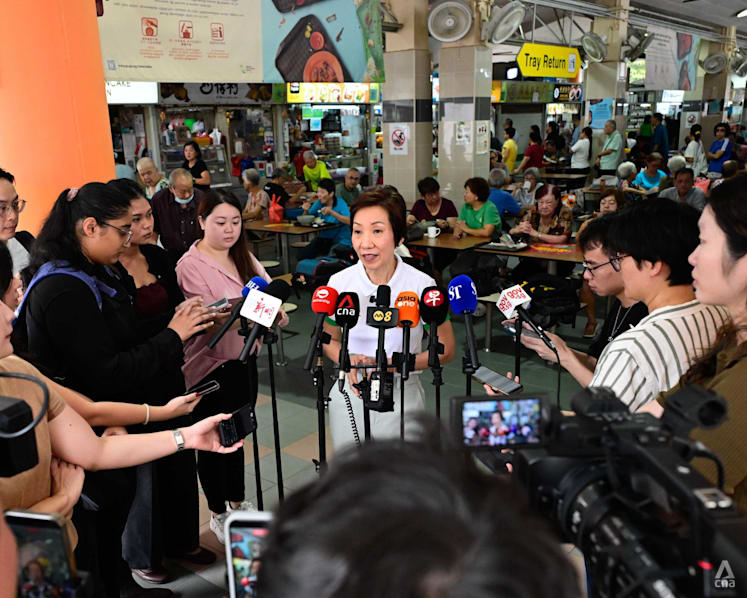

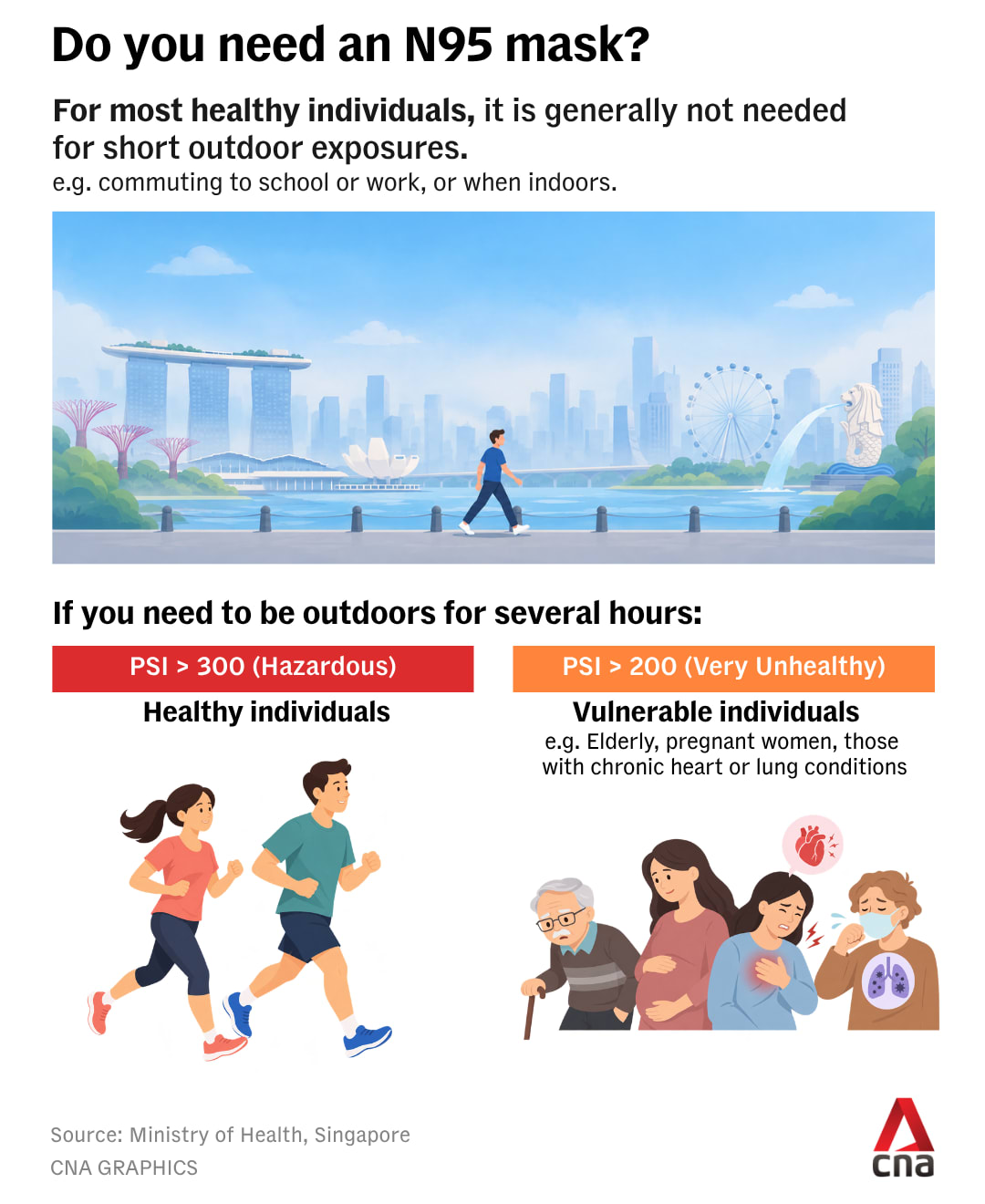
NEA has advised the public to refer to the 24-hour PSI forecast when planning outdoor activities and to check the latest 1-hour PM2.5 readings before undertaking immediate outdoor activities.
When hourly PM2.5 concentrations are in the elevated band, healthy individuals should reduce strenuous outdoor activities for the next hour.
Vulnerable groups, including children, elderly people, pregnant women and those with chronic heart or lung conditions, should avoid strenuous outdoor activities during that period.
For planning activities on Saturday, NEA advised healthy individuals to reduce prolonged or strenuous outdoor physical exertion, while elderly people, pregnant women and children should minimise such activities.
People with chronic heart or lung disease should avoid prolonged or strenuous outdoor physical exertion.
SINGAPORE STEPS UP ACTION AGAINST HAZE-LINKED FIRMS
The worsening haze comes as Singapore steps up efforts to identify and hold accountable companies that may have contributed to the fires.
On Friday, NEA issued notices to 10 Singapore-based companies under the Transboundary Haze Pollution Act, the first time it has done so since the law came into effect.
The companies, which are involved in the palm oil or forestry industries, have been asked to provide information on their corporate links, land concessions in Indonesia and measures taken to prevent and fight fires.
NEA is also seeking further information from 10 Indonesian companies that were issued notices over the past week.
Separately, the Ministry of Law announced plans to establish a specialist panel comprising legal, audit and investigative firms to examine companies potentially linked to the haze.
The panel will look into corporate structures, supply chains and business relationships across jurisdictions to help establish whether companies were involved in causing or condoning the fires.