



Singapore haze: PM2.5 readings remain in normal range across all regions
The 24-hour PSI is forecast to be in the moderate range on Sunday, between 51 and 70.
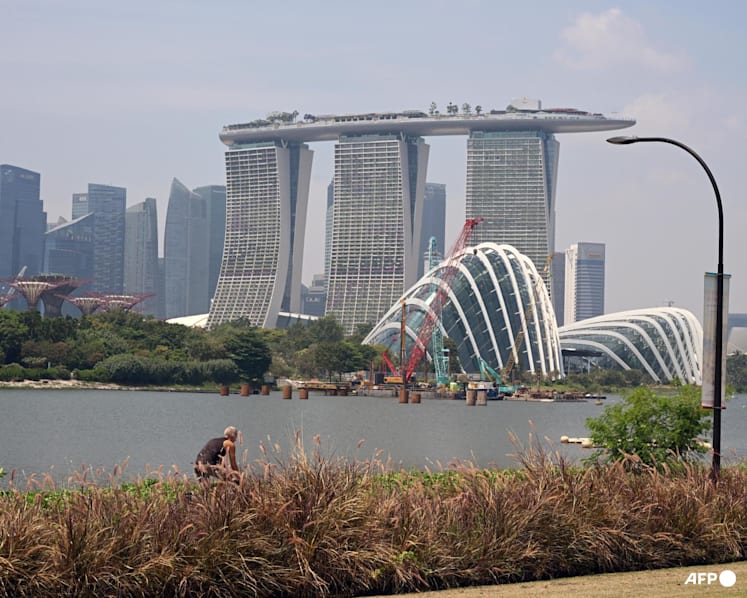
The city skyline is seen through clear skies on Oct 27, 2026, as haze conditions improve in Singapore. (Photo: AFP/Roslan Rahman)

This audio is generated by an AI tool.
Singapore: The 1-hour PM2.5 readings remained in the normal range across Singapore on Sunday (Nov 1), after briefly entering the elevated band in the western region earlier in the morning.
At 5pm, the hourly PM2.5 readings ranged from 15 to 41 across the five regions, all within the normal band.
The western region recorded elevated readings at 5am and 6am, reaching 59.
The 24-hour Pollutant Standards Index (PSI) ranged from 71 to 89 at 5pm, in the moderate range.





Air quality has remained in the good-to-moderate range since 11pm on Oct 25, following an earlier spell of hazy conditions.
Dry weather prevailed over many parts of the southern ASEAN region overnight, with scattered hotspots detected in Kalimantan, according to the National Environment Agency's (NEA) latest regional haze update on Sunday morning.
Moderate smoke plumes were observed from hotspots in southern Kalimantan and Sumatra, while a few air-quality stations in Sumatra reported unhealthy levels.
In the coming days, showers are forecast over some parts of Borneo, Sumatra, Java and Peninsular Malaysia. These could improve the hotspot and haze situation in affected areas.
However, conditions could remain elevated in areas experiencing prolonged dry weather, with a continued risk of transboundary haze.
The 24-hour PSI is forecast to be in the moderate range on Sunday, between 51 and 70.
NEA advises the public to use the 24-hour PSI forecast when planning outdoor activities and check the latest 1-hour PM2.5 readings for immediate activities.
Based on Sunday's PSI forecast, all members of the public can continue with their usual outdoor activities.
When 1-hour PM2.5 concentrations are in the elevated band, healthy individuals should reduce strenuous outdoor activities for the next hour.
Vulnerable groups, including children, elderly people, pregnant women and those with chronic heart or lung conditions, should avoid strenuous outdoor activities during that period.