



GovTech must keep renewing capabilities, will continue to support retrenched officers: PM Wong
Speaking at GovTech's 10th anniversary dinner, Prime Minister Lawrence Wong said that policymakers and technologists need to work together much earlier and more closely.
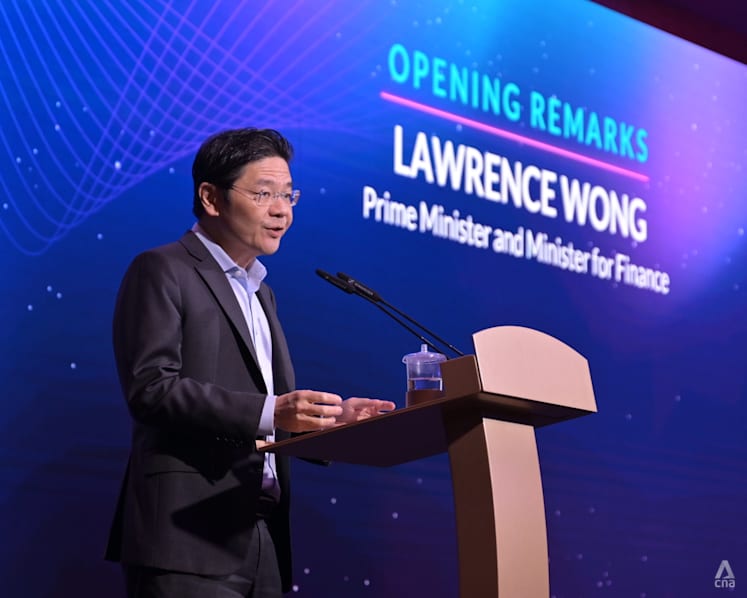
Prime Minister Lawrence Wong delivering his opening remarks during GovTech's 10th Anniversary Dinner at the Sands Expo and Convention Centre on Nov 5, 2026. (Photo: CNA/Raydza Rahman)

This audio is generated by an AI tool.


SINGAPORE: The Government Technology Agency of Singapore (GovTech) must continually renew its capabilities while remaining a place where people can do work that matters, said Prime Minister Lawrence Wong on Thursday (Nov 5).
Speaking at GovTech's 10th anniversary dinner at the Marina Bay Sands Expo and Convention Centre, Mr Wong also addressed the agency’s recent restructuring exercise that will let go of about 300 workers over two years.
“GovTech has recently gone through a restructuring exercise. I know it has been a difficult period for some officers, and we will continue to support the affected officers as they acquire new skills and prepare for new opportunities, whether within GovTech or outside,” said Mr Wong, who is also finance minister.
News of GovTech’s retrenchment exercise drew attention when announced in July as public sector layoffs in Singapore are rare. Before GovTech, the last publicly reported retrenchments in the civil service dated back to 2006 to 2010.





In his speech, Mr Wong said that GovTech’s work of bringing policy and technology together, changing how Singapore builds, modernising systems and strengthening cybersecurity, ultimately depends on people.
“We need people with deep expertise and a strong sense of public purpose. People who understand technology, but also understand policy and operations. And people who keep learning, because the technologies and skills we need will continue to change,” he said.
“GovTech must remain a place where such people can deepen their craft, take on difficult problems, and do work that matters.”
A TECHNOLOGICALLY STRONG PUBLIC SERVICE
Beyond renewing GovTech’s capabilities, there must also be stronger technological capabilities developed across the wider public service, said Mr Wong.
“When we established GovTech, we deliberately concentrated technology expertise in one organisation, so that we could quickly build up a critical mass of talent and capabilities. But the expertise cannot reside in GovTech alone. It really must be deeply embedded across the entire public service,” he said.
In the past year, the agency has been bringing its product and engineering capabilities closer to frontline agencies.
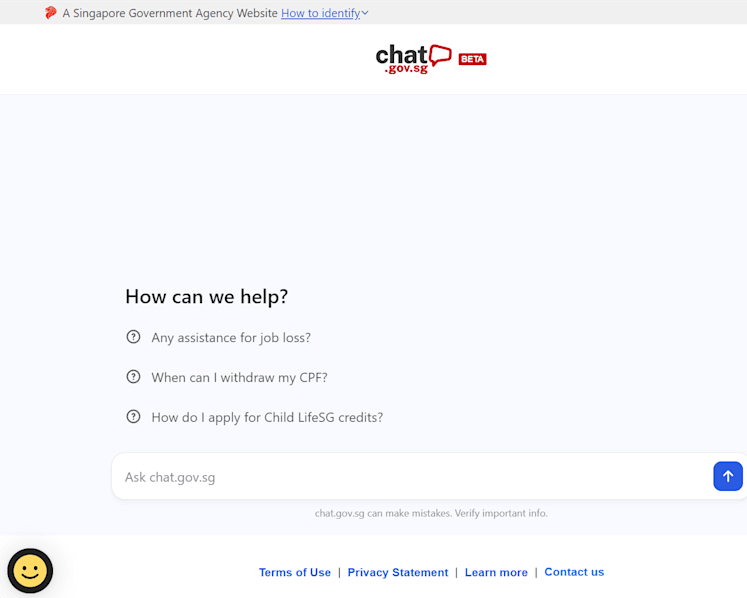
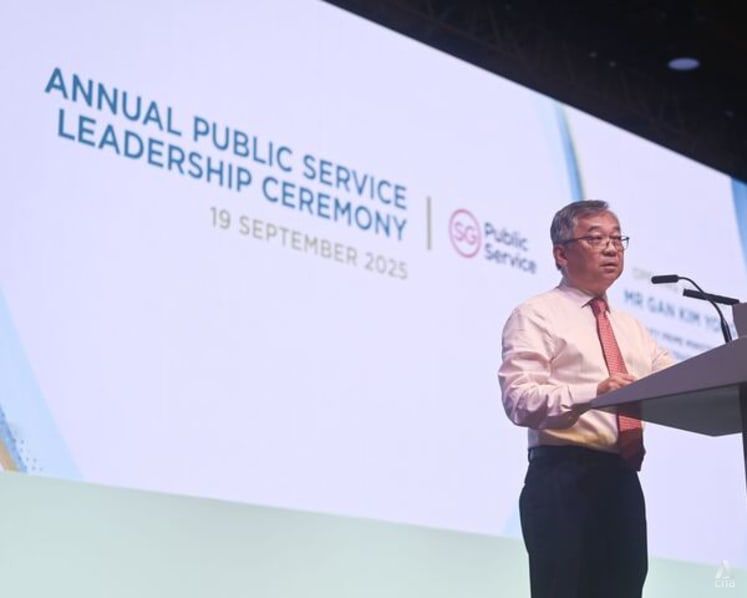
The government will build on such efforts to extend GovTech’s expertise and capabilities across the whole of government, he said.
“As we progressively build up these capabilities elsewhere, GovTech itself must continue to be a centre of excellence – setting high standards, and tackling complex technological challenges that individual agencies cannot easily address on their own,” he added.
The ultimate goal is not simply to have a strong technology agency, but to have a “technologically strong government”, said Mr Wong.
This means having a government where technology is integral to policymaking, where policymakers understand what technology can enable, where technologists understand the policy objectives and operational realities, and where both work together to deliver better outcomes for Singaporeans, he said.
CHANGES NEEDED
Mr Wong said that for a long time IT was treated as “something downstream" from policy, where policymakers decide what needed to be done and IT teams would be asked to build the system to implement it.
But there are limitations to this and the current approach is not good enough, added the prime minister.
He said that policymakers and technologists need to work together much earlier and more closely, and this requires changes on both sides.
“For policymakers, it means developing a better understanding of technology. Not so that everyone becomes a technology expert, but so that they understand what technology can and cannot do, and take these considerations into account when designing policies,” he said.
Mr Wong said that public service leaders are given time to deepen their understanding of technology. This is being done at the political leadership level, including dedicated sessions for ministers, he said.
The aim is not to master all the technical details, but to develop the instincts to ask the right questions, appreciate the possibilities and constraints, and understand how technology can help shape better policy choices, he added.
“For GovTech officers, it means going beyond implementing what policymakers ask for. We want you to be active partners in solving public policy problems,” said Mr Wong.
This means understanding the policy intent of decisions and bringing their expertise and judgment to the table early, he said.
“Do not be afraid to challenge established assumptions, or to question requirements that create unnecessary complexity. Suggest different approaches, and better ways of achieving the same objective.
“Sometimes, the best solution is not more sophisticated technology, but a simpler policy,” said Mr Wong.


GOVTECH OFFICERS “TRAILBLAZERS”: MR WONG
Mr Wong noted that traditionally, many government IT projects followed “a waterfall approach”, which included gathering the project requirements, seeking approval, procuring a vendor, building the entire system, launching it and then maintaining it.
“This approach works well for infrastructure projects, where the requirements can be clearly specified upfront. But software is different. Technology evolves quickly. Users’ needs change. And often, we only discover what works and what does not when people actually start using the product,” he said.
He called GovTech officers “trailblazers” for adopting a different approach, by building iteratively, putting products in the hands of users early, learning from feedback and improving continuously.
“We need to do more of such an approach, and we need to make it easier for teams across government to work in this manner. It means changing not just our technology practices, but also the processes that govern how projects are delivered – how we scope projects, fund them, procure them, and hold teams accountable for outcomes,” he said.
Such an iterative approach should not stop when a system is launched and should evolve with the needs of users, something that requires teams to take continuing ownership of these products over time, said Mr Wong.
In his speech, Mr Wong also touched on artificial intelligence (AI) helping officers across the public service develop better solutions.
“We are already harnessing AI tools across the public service, and we are encouraging officers to make use of them in their everyday work,” he said.
Many officers are currently using AI mainly as a chatbot, or to help translate, transcribe, draft and edit documents, said Mr Wong.
“These are useful starting points, but we can certainly go much further. We want to empower officers to use AI agents and tools to solve problems and improve the way work gets done,” he said.
He noted that the people closest to the work often know best where the frustrations and bottlenecks are, and where improvements can make the biggest difference.
“We are not there yet. To get there, we need to strengthen our data infrastructure, equip officers with the right skills and tools, and put in place the necessary safeguards,” said Mr Wong.