Changi Airport rolls out autonomous wheelchairs for transit passengers in Terminals 2 and 3
Airlines in Changi Airport handle about 2,300 wheelchair assistance requests each day, with four in five coming from transfer passengers.
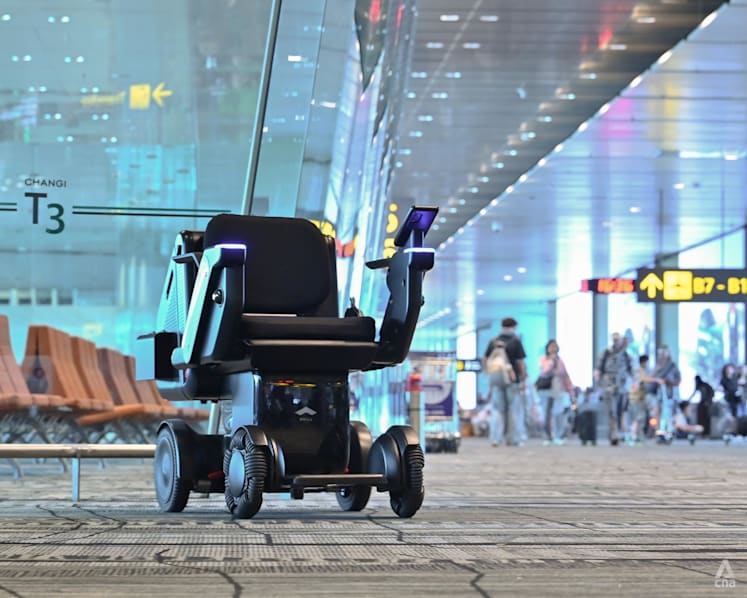
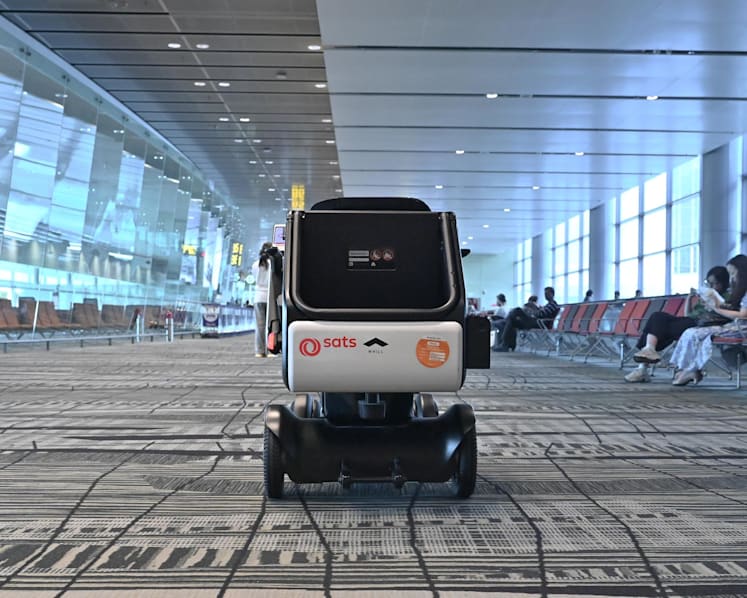
An autonomous wheelchair at Changi Airport Terminal 3 on Aug 4, 2026. (Photo: CNA/Alyssa Tan)

This audio is generated by an AI tool.


SINGAPORE: Changi Airport has introduced autonomous wheelchairs in the transit areas of Terminals 2 and 3 to help passengers with reduced mobility move between gates independently.
The airport and its ground handling partner SATS said on Tuesday (Aug 4) that the wheelchairs aim to reduce transit passengers' reliance on one-to-one staff assistance.
Nine autonomous wheelchairs are deployed in each terminal's transit area in this first phase, though they cannot yet travel between terminals.
The service complements existing options such as buggies, e-caddies and manual wheelchairs, freeing ground staff to focus on passengers who need higher levels of care and assistance, Changi Airport and SATS said.





The autonomous wheelchairs are currently available only to transit passengers on airlines served by SATS, and cannot be requested specifically when booking wheelchair assistance during ticket purchase.
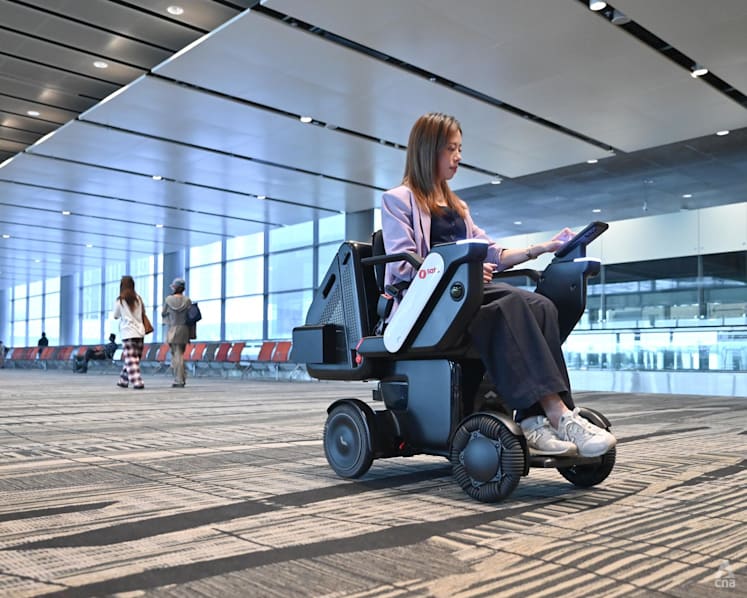
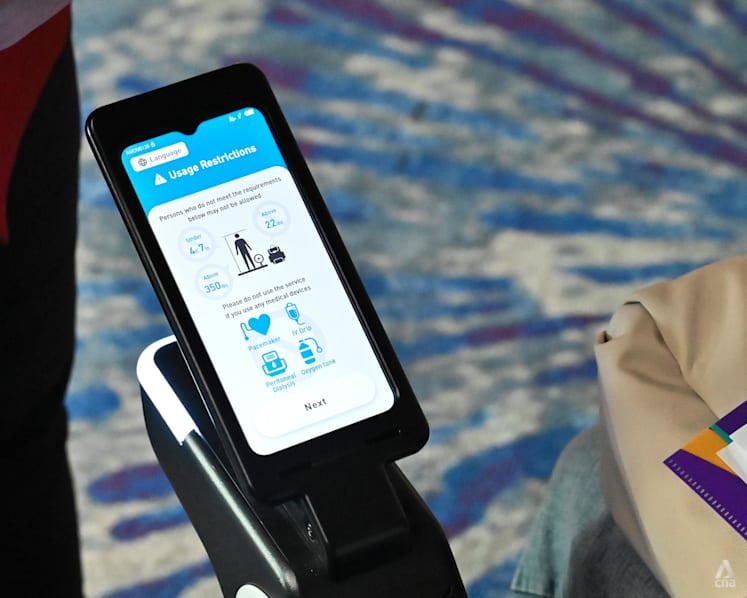
The service is suitable only for passengers with layovers longer than 90 minutes, and who need wheelchair assistance but can still walk short distances.
During a demonstration, the wheelchair slowed down in shopping areas and played music to alert nearby pedestrians. It also stopped automatically when its path was obstructed and signalled for people to move aside.
Demand for special assistance services is expected to grow as Singapore's population ages and air travel increases. Airlines at Changi handle about 2,300 wheelchair assistance requests a day, four in five of them from transfer passengers. Requests rose 20 per cent between 2023 and 2025.
PREDEFINED ROUTES
The wheelchairs can carry passengers weighing up to 136kg and travel at a maximum speed of 3.5kmh, slow enough for family members to walk alongside.
They move along predefined routes within departure transit areas, with each journey monitored by a SATS ground handling supervisor at a control centre. Sensors detect obstacles and pedestrian traffic along the customised routes.
Safety features include seatbelt monitoring, which stops the wheelchair from moving unless the seatbelt is fastened, an emergency stop button and an assistance call function.
A rear basket accommodates cabin-sized luggage up to 10kg, and a control panel lets passengers halt the wheelchair or request staff assistance.
The wheelchairs run on swappable batteries lasting up to seven hours per charge.
OPERATIONAL TRIALS
The rollout follows operational trials of 10 autonomous wheelchairs from March 2025 to June this year.
More than 13,000 passengers participated in the trials, which were conducted on predefined routes in the departure transit areas of Terminals 2 and 3, including journeys between boarding gates, waiting areas and gate-to-gate transfers.
Before the passenger trials, Changi Airport tested the wheelchairs' speed controls, obstacle detection and navigation performance to ensure they could operate safely in the airport environment.
It also organised learning visits and industry engagements to study how other airports use autonomous wheelchairs and assess their suitability for Changi.
Asked about plans to deploy more autonomous wheelchairs at the two terminals, Mr Edwin Tan, vice-president of SATS terminal services and its subsidiary Asia-Pacific Star, said 18 was a “comfortable number” for now.
“As we learn and grow, we may decide to add more … It’s still early days,” he said.