Why did Trump visit the Temple of Heaven? Beijing’s message in the venue choice
From “Mandate of Heaven” symbolism to hopes for a “good harvest” in trade, analysts say Beijing used Trump’s Temple of Heaven visit on Thursday (May 14) to send layered diplomatic messages.
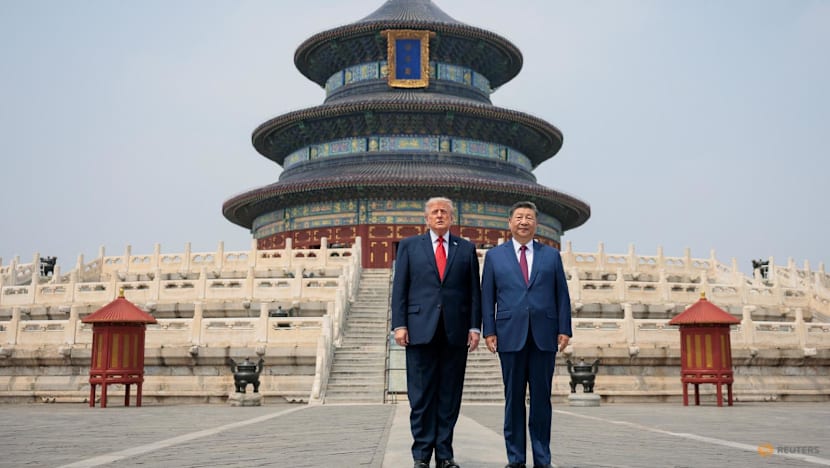
US President Donald Trump and Chinese President Xi Jinping stand together as they tour the Temple of Heaven in Beijing, China, on May 14, 2026. (Photo: Reuters/Evan Vucci)

This audio is generated by an AI tool.


Peace, prosperity, political legitimacy - and perhaps even “heaven’s will”.
There was no shortage of symbolism behind US President Donald Trump’s visit to Beijing’s Temple of Heaven on Thursday (May 14), analysts said - in what appeared to be one of the most carefully choreographed moments of his China trip.
Located in southern Beijing, the sprawling 270-hectare Temple of Heaven complex, or Tiantan in Chinese, dates back more than 600 years.
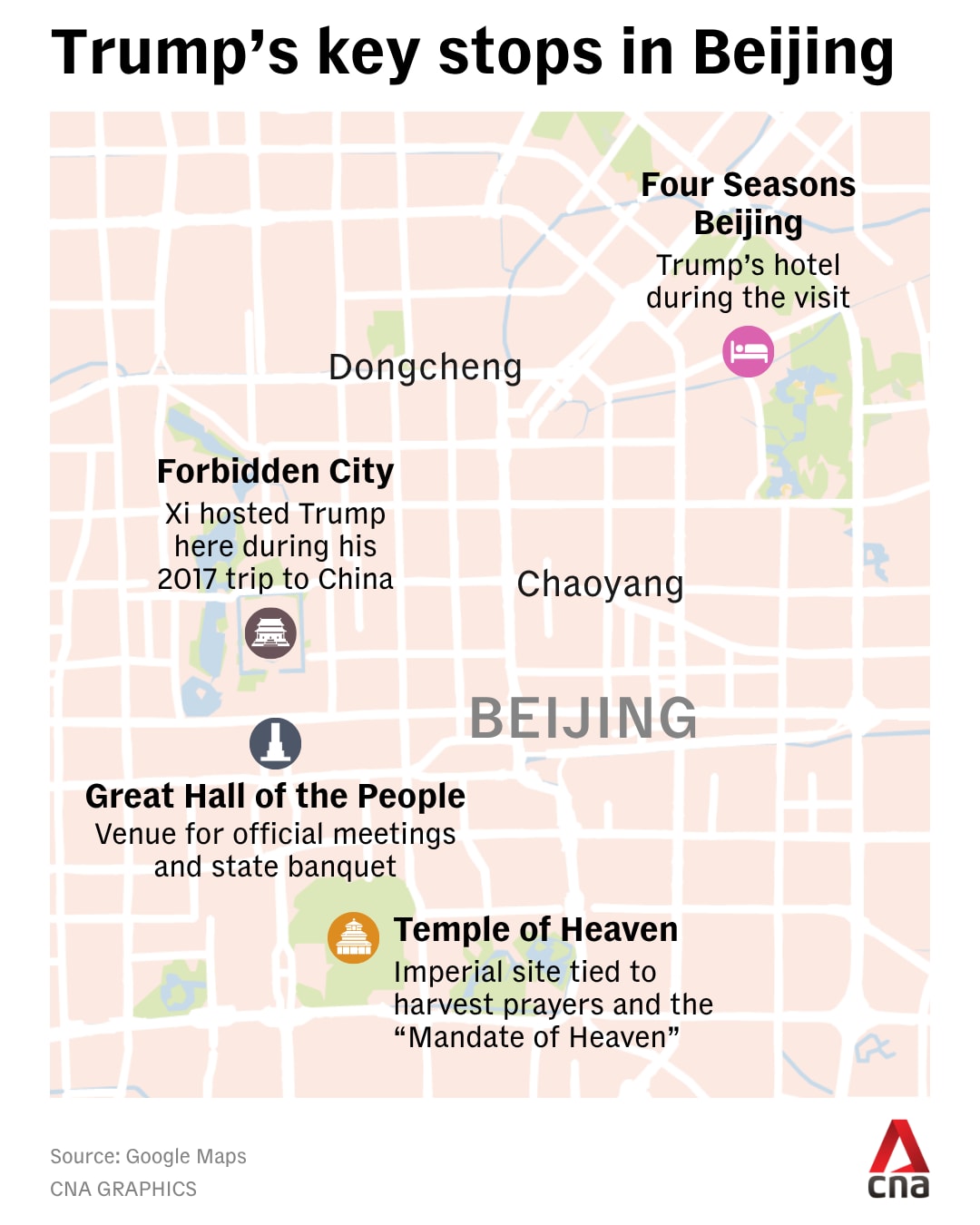
It was where Ming and Qing emperors had prayed for good harvests and carried out elaborate rites tied to imperial authority and cosmic order.





Trump is the second sitting US president known to have formally visited the Temple of Heaven, after Gerald Ford back in 1975.
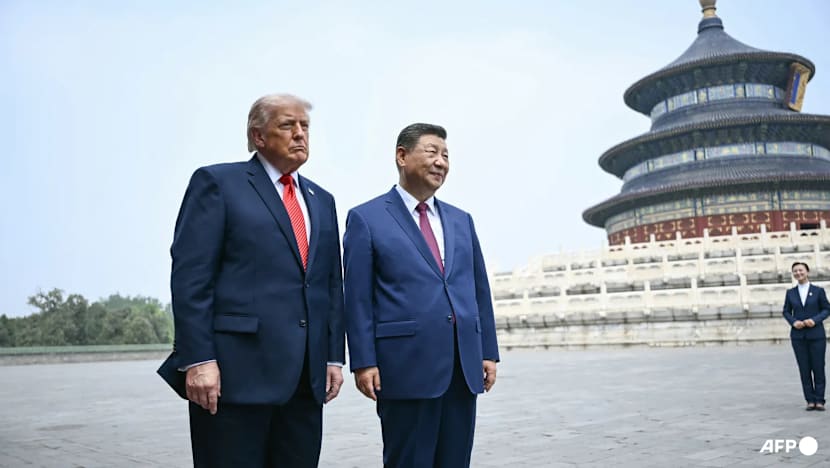
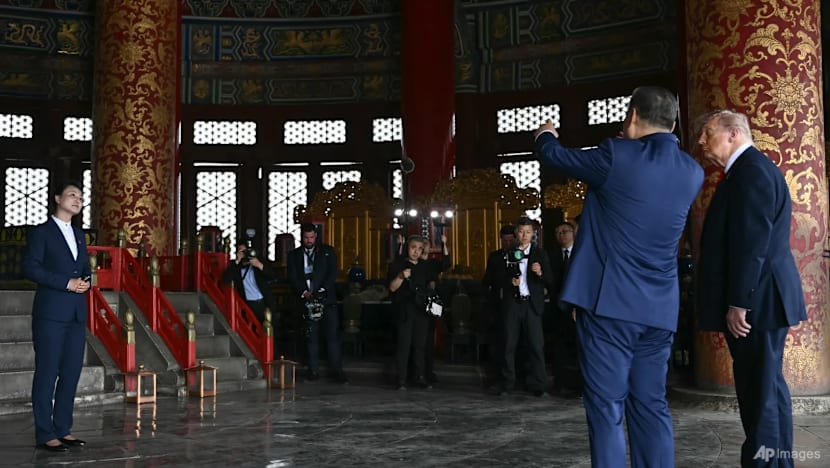
Trump and Xi posed for photographs together before touring the complex, according to Chinese state media reports.
During the visit, Trump also reportedly described China as “beautiful”.
The two leaders were also seen at the Hall of Prayer for Good Harvests before entering the historic complex.
Analysts told CNA that the visit carried meanings far beyond history or ceremony.
To some, the visit was about peace and coexistence while others said it echoed trade talks and hopes for another kind of “good harvest” in US-China ties.
Experts also said that the carefully selected venue’s layered symbolism may have been part of Beijing’s message to project harmony and stability at a time of heightened geopolitical tensions.
THE VENUE IS PART OF THE MESSAGE
Historic settings have long been part of Beijing’s diplomatic strategy.
Wang Di, an author and chair professor of history at the University of Macau, said the Temple of Heaven’s symbolism may have been deliberately layered.
Under the ancient Chinese concept of the “Mandate of Heaven”, rulers were believed to derive legitimacy from heaven and could retain the right to govern only if they maintained order and stability.
Traditionally, this was sometimes understood as “heaven’s will” - the idea that political authority ultimately came from a higher moral order.
Chinese emperors were also known as “Sons of Heaven” - serving as intermediaries between heaven and the earthly world.
The venue simultaneously projects China’s long history, cultural confidence, hopes for peaceful coexistence and the importance Beijing attaches to Trump’s visit, Wang said.
“Different people may interpret it differently,” said Wang, adding that such symbolic ambiguity may allow Beijing to project multiple messages at once - particularly when dealing with Trump.
During his first visit to Beijing back in 2017, Xi had hosted him inside the Forbidden City in what Beijing described at the time as a “state visit-plus” reception.
Analysts said such venue choices are rarely accidental and often form part of China’s broader diplomatic signalling, projecting different levels of warmth, symbolism and political importance.
MORE THAN A CEREMONIAL VISIT
The visit comes as tensions still remain high between Washington and Beijing over tariffs, trade, technology restrictions and Taiwan - as well as broader geopolitical flashpoints like the Iran crisis - all issues expected to feature prominently during the Trump-Xi meetings.
Victor Gao, chair professor at Soochow University in Suzhou, also vice president of the Centre for China and Globalisation, said Thursday’s visit reflected hopes for “peace” and “shared development”.
“I think our hopes are very simple. We hope for peace, and we hope for shared development,” Gao said.
Gao, a former diplomat and interpreter with China’s foreign ministry, accompanied former US secretary of state Henry Kissinger to the Temple of Heaven in 1985 and recalled Kissinger describing the site as representing “a kind of harmony between humanity, earth and heaven”.
He added that he hoped Trump would use this week’s visit to better appreciate the depth of Chinese tradition and history and conclude that “China and the United States working together is the right path”.
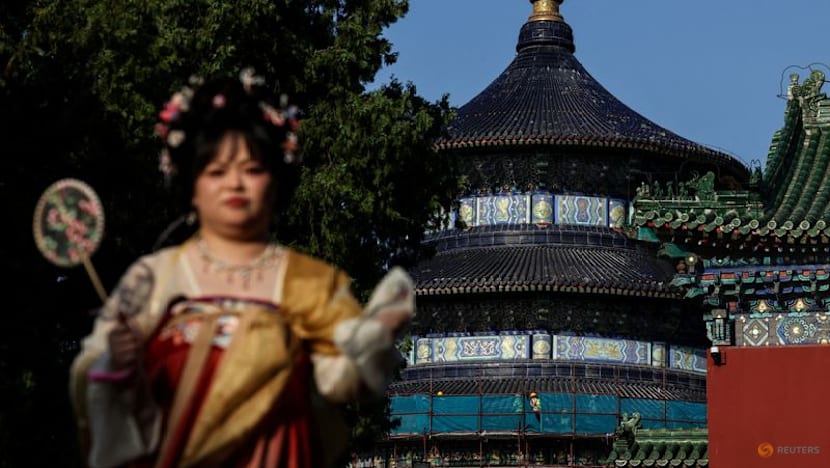
Sun Chenghao, senior fellow and head of the US-EU programme at Tsinghua University’s Centre for International Security and Strategy, noted that Chinese emperors once visited the Temple of Heaven to pray for abundant harvests.
Now, the world’s two largest economies could be looking for another kind of “good harvest”, Sun said.
“These include agricultural purchases, economic stability and easing tensions in the relationship,” he added.
Agricultural trade and exports, including soybeans, grains and meat, are expected to feature in discussions between Trump and Xi as the US president faces pressure from farmers ahead of the US midterm elections.
The choice of venue also conveyed “a message of civilisation and history”, Sun added - suggesting that Beijing views US-China ties not as a short-term transaction but as something that should be understood within “a longer historical and international order framework”.
Additional reporting by Lee Gim Siong