Taiwan says it was targeted last month in AI-driven hacking campaign
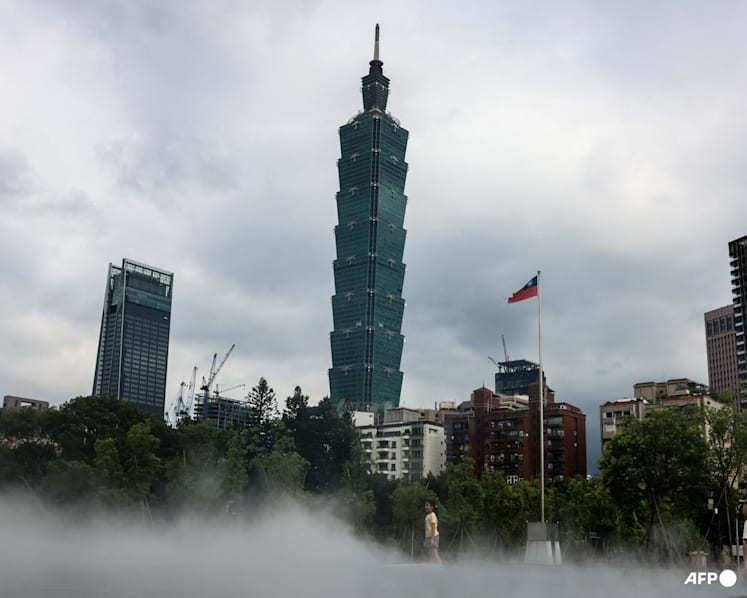
A mist installation is seen at Sun Yat-sen Memorial Hall with Taipei 101 in the background, in Taipei, on Jul 3, 2026. (File photo: AFP/I-Hwa Cheng)
TAIPEI: Taiwan detected artificial intelligence-assisted cyberattacks on government agencies last month coming from overseas, but the affected bodies successfully "handled" the incident, the Ministry of Digital Affairs said on Thursday (Aug 13).
In a statement, the Ministry of Digital Affairs said its cybersecurity monitoring units detected the "abnormal attack" targeting government agencies in July, and beginning Jul 20, its National Institute of Cyber Security issued a series of warning alerts while it investigated.
The investigation results showed the attacks displayed clear characteristics of an "overseas source", with hackers employing a hybrid approach that combined manual operations with AI agent-assisted attacks, such as Open Claw, it said.
"The relevant attack sources, methods and scope of impact have all been fully investigated, and the affected units have successively completed their handling," the ministry added.





In response to this new type of AI-derived cybersecurity threat, the government has established protective guidelines and strengthened system monitoring across agencies to block attacks early, it said.



ISRAELI FIRM'S REPORT
Taiwan's statement came a day after the Israeli cybersecurity company Dream said in a blog post that it had uncovered an AI-driven hacking campaign that stole credentials and other data from an unnamed government in Asia.
Dream said a team of AI agents worked together to extract scores of passwords from unidentified officials, steal personnel records from Taiwan's justice ministry, and scan its nuclear safety agency for vulnerabilities over the course of four days.
Dream, which said it was able to reconstruct the hacking campaign after recovering the agents' "complete operational workspace", declined to share the data or name the government when approached by Reuters, but the Financial Times, which was the first media outlet briefed on Dream's findings, identified the target agencies as Taiwanese.
GROWING THREAT
The threat of AI-assisted hacking campaigns has been growing for years but ramped up dramatically over the past few months after top AI labs released models, such as Anthropic's Mythos, which can rapidly conduct reconnaissance, identify vulnerabilities and take advantage of them.
Cris Thomas, a researcher who works as a security advocate at the code security company Semgrep, said the spy campaign was an illustration of just how quickly AI-assisted hackers could hit their mark.
Thomas cautioned against exaggerating the power of AI agents, however.
"There's still a human in there somewhere. Somebody had to choose who to attack, had to establish an objective and give it a directive. It's not totally 100 per cent autonomous. There was a capable operator in charge that did that," he added.