Lululemon apologises for featuring Japanese Taiko drum during promotional event in China
The event, held at the Great Wall in May, was meant to pay tribute to Chinese culture - but has been harshly criticised for “stirring up historical memories” at a site with “massive symbolic meaning”.
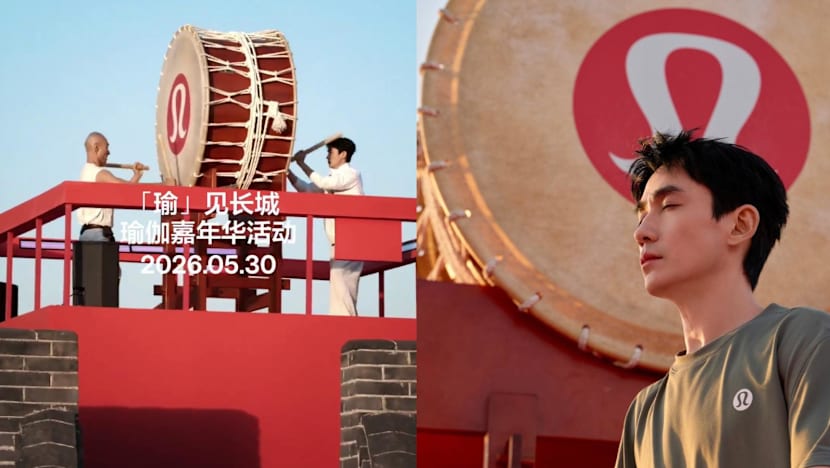
Popular athleisure apparel brand Lululemon had organised a yoga festival at a section of the Great Wall on May 30, where Chinese actor Zhu Yilong led attendees in a yoga and Tai Chi session and joined the HiiKo Drum Group in a traditional Chinese drum performance. (Images: Weibo/翼笙军, Instagram/zylong1988)

This audio is generated by an AI tool.
BEIJING: Popular athleisure apparel brand Lululemon has apologised for using a Japanese Taiko drum during a promotional event held at the Great Wall in May, which sparked fierce backlash from Chinese netizens.
The brand had organised a yoga festival at a section of the Great Wall on May 30, according to Chinese media reports.
Chinese actor Zhu Yilong, also a brand ambassador, led attendees in a yoga and Tai Chi session and joined the HiiKo Drum Group in a traditional Chinese drum, or Dagu, performance.
His performance caught the attention of Chinese musicians and netizens who challenged that the drum used had not been a traditional Chinese instrument - but rather a Japanese Taiko drum.





“Using a Japanese Taiko drum to showcase Chinese culture at a place like the Great Wall, which has massive symbolic meaning to the country ... would (not only) mislead the public, but also stir up historical memories of Chinese people,” said Chinese percussionist Xu Yang in a video on his Weibo page.
He added that it was not right to “appropriate or misuse other people’s culture”.
In a statement shared on its official Weibo account on Tuesday (Jun 16), Lululemon extended “sincere apologies to the public” as well as to Zhu.
The event “always intended to pay tribute to Chinese culture”, the statement read.
“Due to limitations in our understanding of the relevant professional knowledge, we failed to fully identify potential controversy in the early stages,” the company said, adding that it should have been more “prudent and thorough” with its planning.
“We will deeply reflect on and learn from this experience, and will approach future events and communications with a more rigorous attitude.”
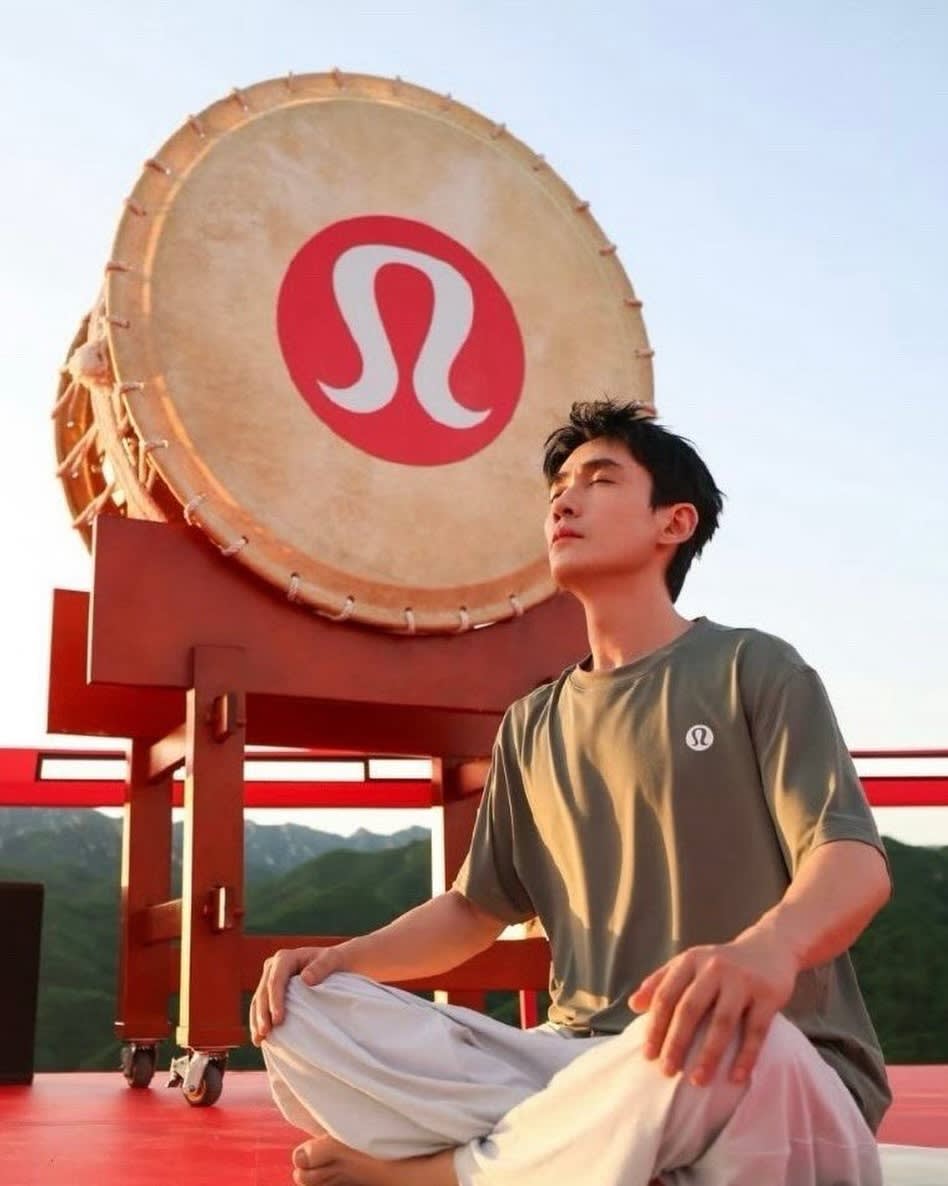
Zhu and the HiiKo Drum Group have also released apologies.
“Going forward, we will study and improve our professional knowledge more deeply, and humbly accept criticism and guidance from all sectors,” said the group's founder Ye Songyuan.
Zhu and his team “have always been committed to promoting traditional Chinese culture”, his studio said in an official statement shared on Weibo on Tuesday.
“No matter when, where, or under what circumstances, we uphold rigor and accuracy in cultural expression, safeguard traditional culture with our original intention, and remain firm inheritors of Chinese culture,” the statement read.
All related promotional content has since been removed, Lululemon said.
Online, netizens remained critical - with some questioning the delay between when the incident occurred and when official apologies were issued.
“(The controversy) has already been brewing and only now you chose to apologise,” wrote one user on Weibo, responding directly to Lululemon’s post.
“Does your team not surf the internet? Must (something) blow up only for you to respond?”
Other Weibo users noted other cultural controversies the brand has faced.
Founder Chip Wilson, an American-Canadian businessman, drew criticism for mocking Japanese customers’ pronunciation of the brand name and later came under fire for comments seen as body-shaming.
He later resigned from the company’s board in 2015.
This is also not the first time that a notable overseas brand has courted controversy and backlash in China.

Earlier this year, French fashion label Lemaire ignited a social media firestorm for featuring braided imagery - which Chinese netizens said evoked Qing-dynasty braids, a symbol of historical humiliation for ethnic Han Chinese.
It later issued an official apology on Xiaohongshu - expressing “sincere apologies” and said it would treat the incident as “an important moment for reflection”.
Last September, a promotional campaign by outdoor apparel brand Arc’teryx backfired after a collaboration with acclaimed Chinese artist Cai Guoqiang saw fireworks set off at the foot of the Himalayas in Tibet.
It sparked a probe by Chinese authorities over its environmental impact. Critics argued that the spectacle clashed with the company’s conservation-focused branding.