Japan’s yuru-chara mascots: Big business behind the cute faces
From boosting tourism to generating billions in sales, Japan’s mascots have grown into a powerful industry – but only a few become stars.
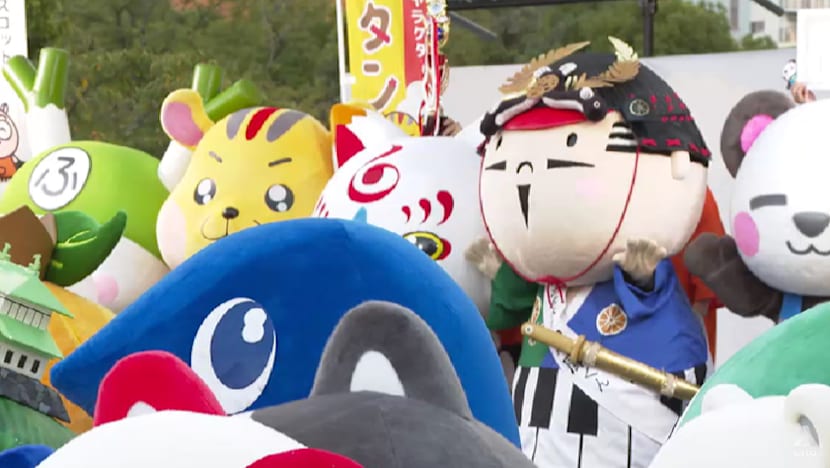
Japan has thousands of yuru-chara, each representing a region, promoting an event or championing a cause.

This audio is generated by an AI tool.




TOKYO: From cute and cuddly to wacky and weird, Japan’s mascots – known as yuru-chara – are everywhere.
The country has thousands of yuru-chara, each representing a region, promoting an event, or championing a cause.
They are also part of a multi-billion-dollar industry that has helped build business empires and put lesser-known Japanese locales on the map.
Their popularity has even spawned a nationwide contest – the Yuru-Chara Grand Prix – which began in 2011 after the devastating Tohoku earthquake and tsunami that year.
The event was aimed at helping to revitalise local communities and businesses, while lifting public morale during recovery.





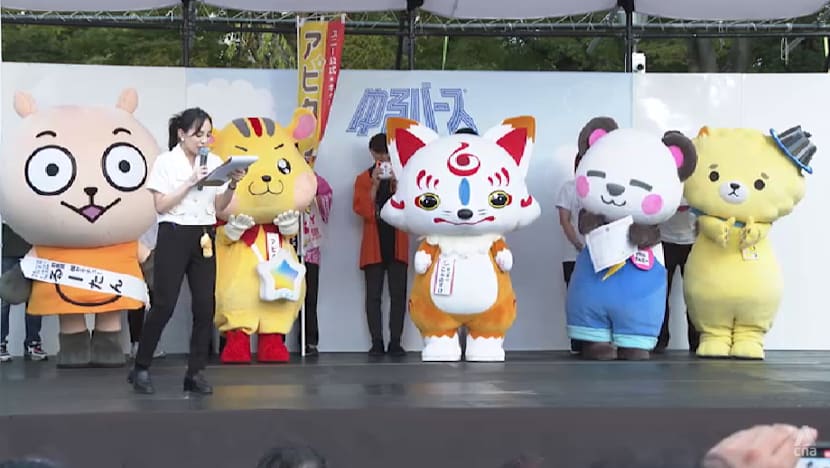
The contest’s last edition was in 2020, during the pandemic, but it was revived in 2023 under a new name – Yuruverse.
“After COVID-19 when we resumed as Yuruverse, corporate characters increased,” Kazuma Takenaka, executive director of the Yuru-Chara Grand Prix, told CNA.
At these events, yuru-chara gather to perform, interact with fans and compete for votes – all for a shot at success.
FRIENDLY “SALES PARTNER”
One of the contenders in the 2025 edition was Watapi - a round, orange bear created to promote Watahan, a Nagano-based retail chain.
Launched about a decade ago, the mascot has steadily climbed the popularity rankings.
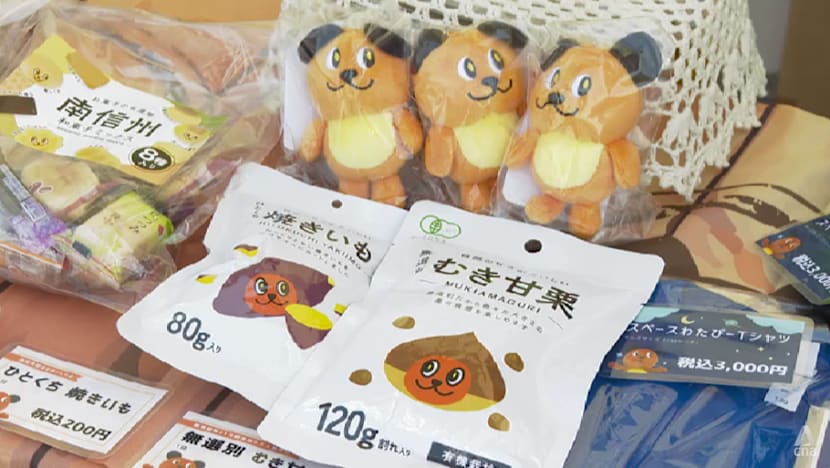
“Those who do not know Watahan supermarket learn about us through Watapi and our holding company. It’s such an excellent sales partner,” said Naoko Tabara, a sub-unit manager at Watahan.
For many businesses, successful mascots like Watapi generate publicity and revenue for the brands they represent.
A few, however, have gone on to generate massive economic impact.
KUMAMON: FROM MASCOT TO MEGASTAR
Kumamon is one of the most recognisable mascots in Japan. It won the Yuru-Chara Grand Prix in 2011, helping propel it to national fame.
The wide-eyed black bear from Kumamoto Prefecture, on Japan’s southwestern Kyushu island, is a constant presence across the region.
Appearing on signboards, shopfronts, local products and souvenirs, the character has helped draw visitors off the usual tourist trail.
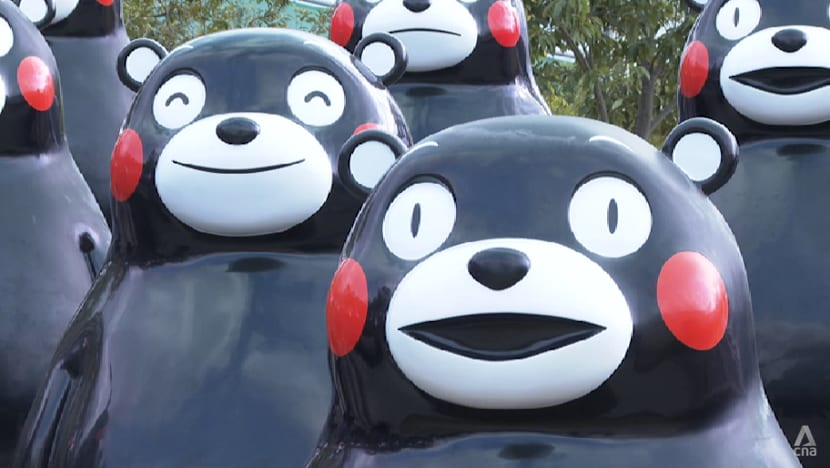
Sales of Kumamon-branded goods added up to about 1.62 trillion yen (US$10 billion) from 2011 to 2024, said Kumamoto governor Takashi Kimura.
“Soon it will reach 2 trillion yen. I want to look more into overseas expansion and take it to a higher level,” he added.
Yet, merchandise sales are not the main goal. Instead, Kumamon is used to promote the region.
Businesses are allowed to use the mascot’s image for free, as long as it is used to market the prefecture or local products.

TAKING MASCOTS GLOBAL
Kumamon’s influence extends even beyond Japan.
“We promote exchanges with France … We want to be more active in East Asia, Southeast Asia. This financial year, we launched Kumamon's world tour,” said Takeshi Yamada, director of the prefecture’s Kumamon division.
“It has been 15 years since Kumamon became our mascot. We hope for it to continue to grow as a beloved character for 100 years.”
It is not the only mascot making waves.
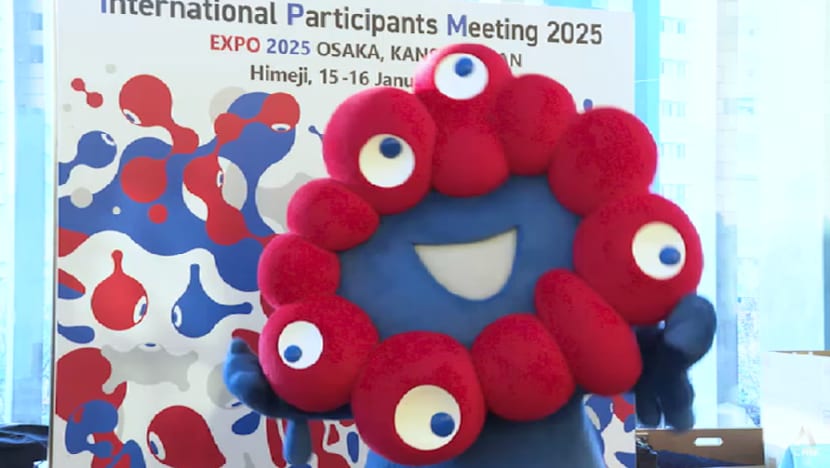
Another recent breakout is Myaku-Myaku, the multi-eyed mascot of the Osaka World Expo 2025.
Its unusual design has turned it into a cultural talking point, spawning collaborations and bringing in about 124.6 billion yen as of end-October.
But successes like Kumamon and Myaku-Myaku are rare.
“New characters continue to be created. On the other hand, there are those that tried to survive but could not. It’s about budget, about (shortage of) people. It’s a challenge to keep on attracting fans,” said Yuru-Chara Grand Prix’s Takenaka.