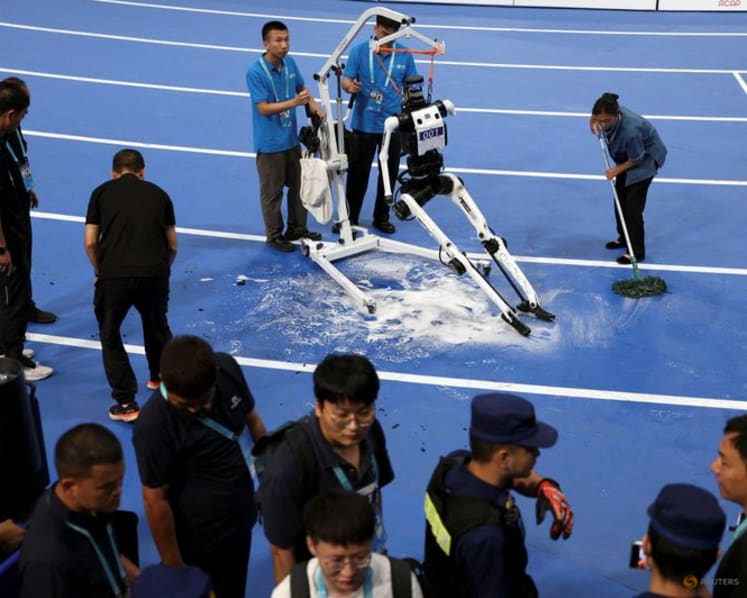
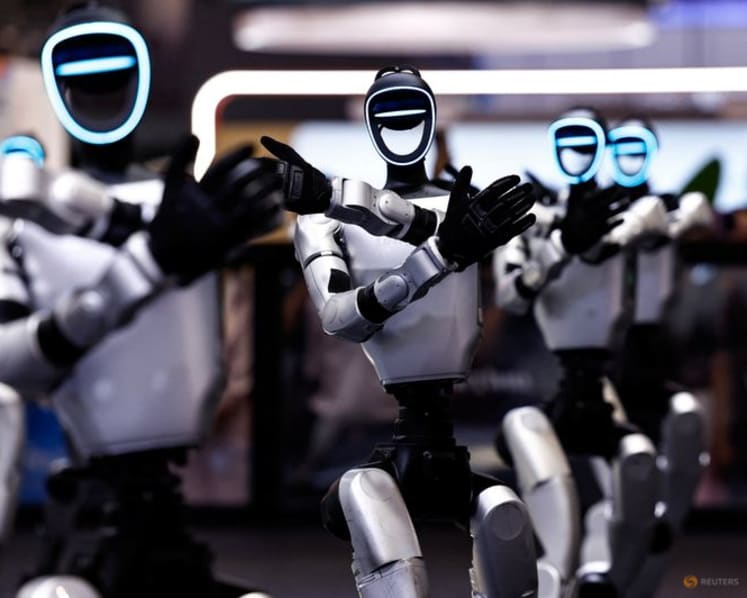
Chinese humanoid robot sets new 100m sprint record at Beijing Games
The new 8.86-second sprint mark beat the previous robot record of 9.39 seconds. It's also faster than Jamaican Usain Bolt’s 100m world record time of 9.58 seconds.
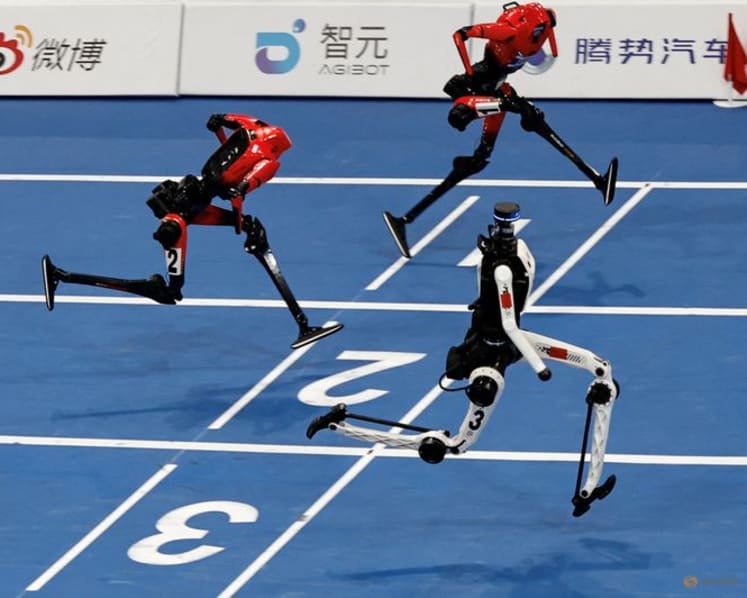
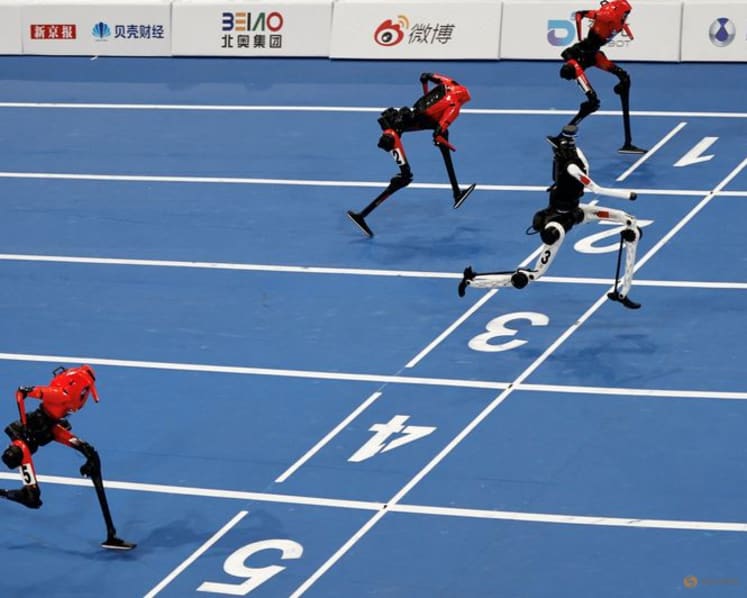
A Tiangong Ultra humanoid robot crosses the finish line in 8.86 seconds, next to Honor humanoid robots, during a 100m large-size group semifinal race, at the 2026 World Humanoid Robot Games at the National Speed Skating Oval in Beijing, China, on Aug 25, 2026. (Photo: Reuters/Tingshu Wang)
BEIJING: A Chinese humanoid robot set a new 100m sprint record of 8.86 seconds in Beijing on Tuesday (Aug 25), beating its robot competitors - and the fastest recorded human time.
The race was part of China’s World Humanoid Robot Games, an Olympic-style competition now in its second year in Beijing. The event is also a showcase for China’s rapid advances in robotics amid an intensifying technology rivalry with the US.
The previous robot record of 9.39 seconds had been set just three days earlier, on Saturday.
For comparison, the men’s 100m world record is 9.58 seconds, set by Jamaican sprinter Usain Bolt in 2009.





Experts are amazed to see such progress in the humanoid robot industry.
“This is a significant milestone - not simply because the robot ran faster than a human, but because of what it takes to make a bipedal robot run at this speed,” said Dennis Hong, a professor of mechanical and aerospace engineering at the University of California, Los Angeles.
“As speed increases, balance, control, impacts, actuator performance, and mechanical robustness all become much more challenging,” said Hong.
The record-breaking robot fell after hitting the finish line, a padded barrier, with sparks flying from its waist.
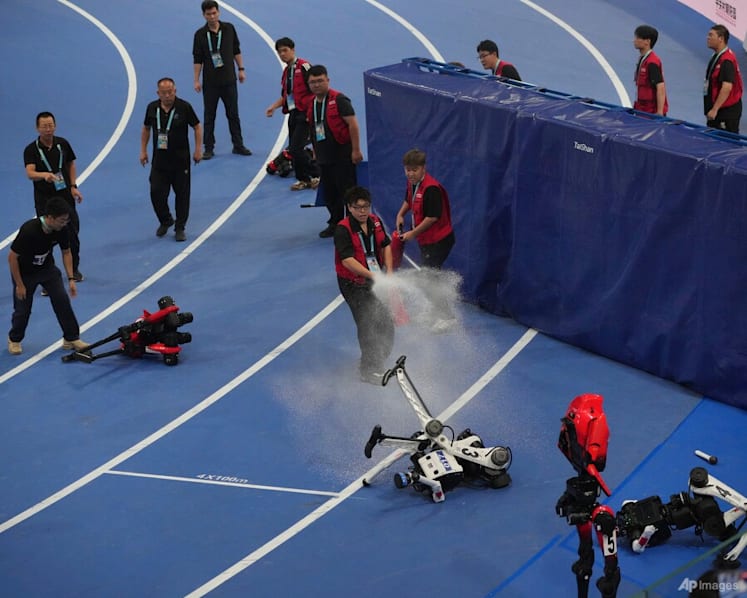
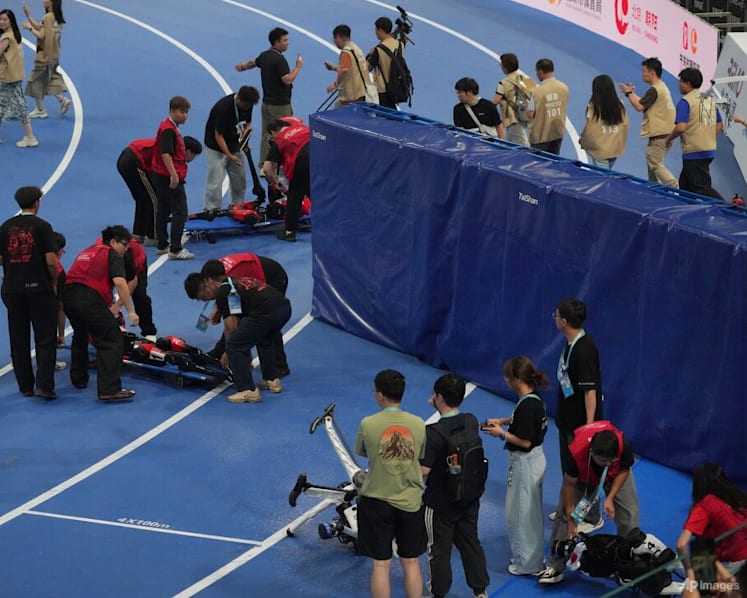
Hong pointed out that the fall leads to more meaningful and difficult questions: whether robots can move and stop safely, recognise unexpected obstacles, recover from mistakes and continue working, the capabilities that ultimately make them more useful.
The Games feature over 1,300 competitions involving more than 2,000 robots in 51 events like running, long jump and table tennis, as well as ballroom dancing.
Unlike the traditional Olympics, the robots also compete in teams in real-world scenarios, including household tasks, hotel services and emergency response.
“'Housekeeper' and ‘caregiver’ robots are still in the pilot and validation phase,” China's official newspaper People's Daily said on Monday, “(but) challenges are precisely where the focus of development lies … China's robotics industry is evolving toward higher quality and innovation.”