They come with tools and wait to be chosen. Inside one of China’s ‘gig stations’
Thousands of state-backed “gig stations” have sprung up across China, linking workers - many older and shut out of stable jobs - to low-paid manual work. This report focuses on those pushed into it, rather than those drawn to the broader gig economy.

This audio is generated by an AI tool.


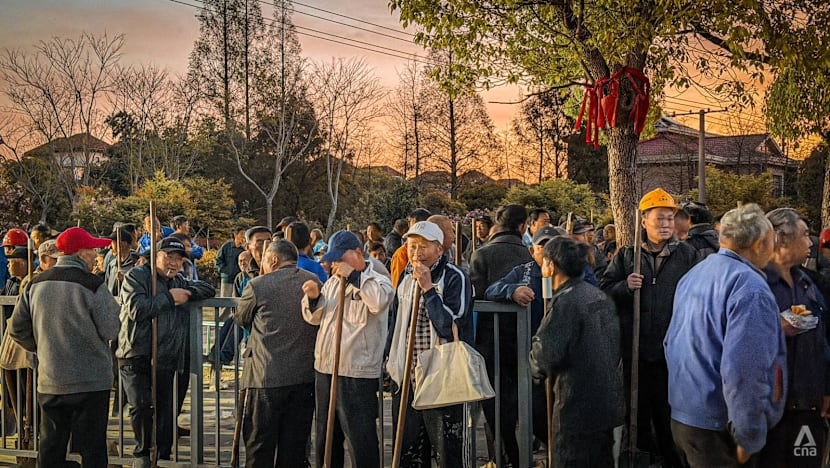
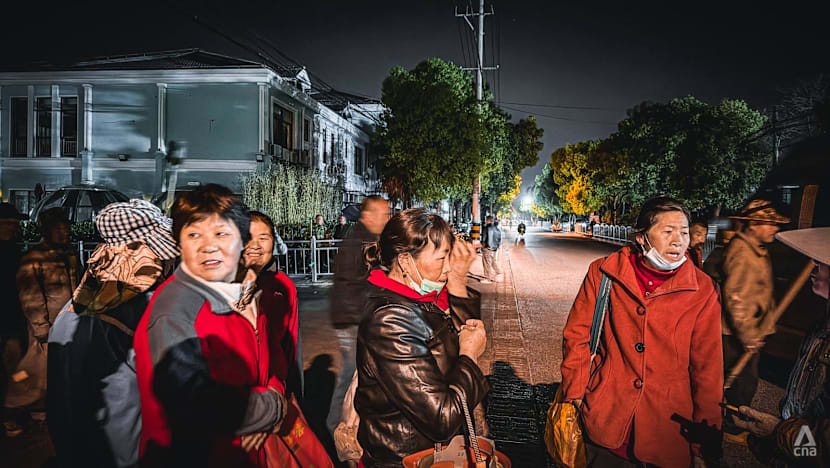
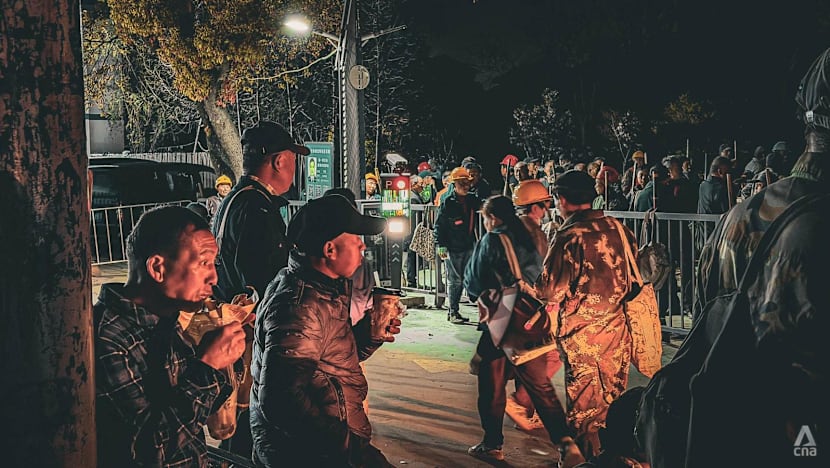
SHANGHAI: Before dawn in Xinqiao, a town on Shanghai’s southwestern fringe, hundreds of people gather outside a nondescript building, pressing against metal railings.
Mostly in their 50s and 60s, they stand shoulder to shoulder in the dark, lit by harsh fluorescent lights from the entrance and the dim orange glow of nearby street lamps.
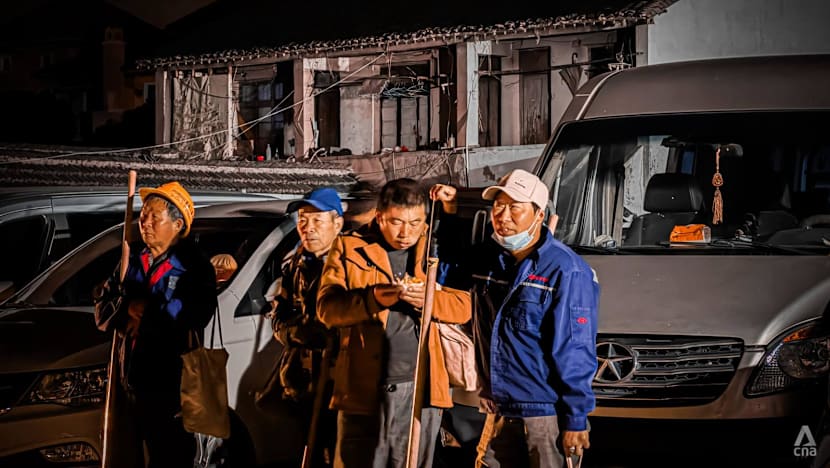
Many of the men grip wooden-handled shovels and spades. The women mostly carry tote bags with cleaning supplies and rags. Some wear yellow hard helmets.
All have brought their own tools.





Above the entrance, a large sign on the building’s facade identifies the site as a “gig station”, or “ling gong yi zhan” in Chinese.
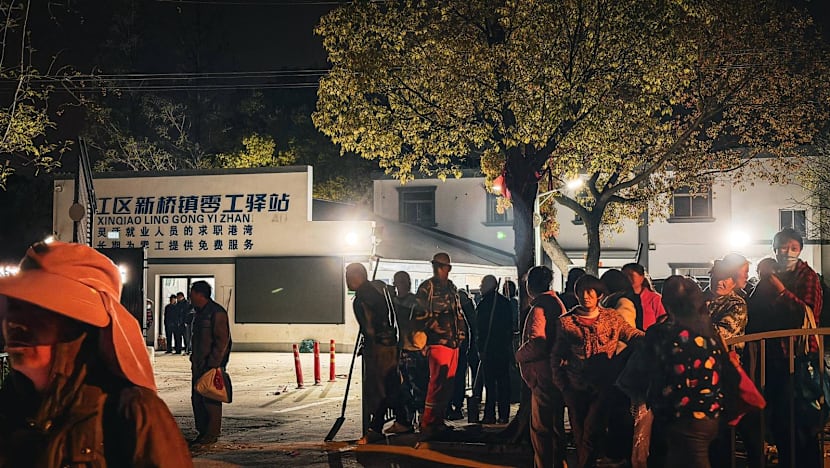
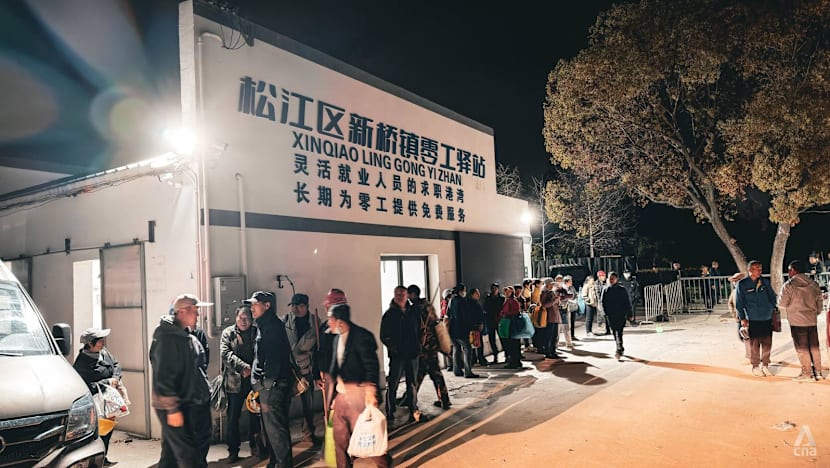
This is one of around 9,000 government-backed sites rolled out across China, according to a State Council report released in late 2025.
Most of them were built in the past three years as part of a rapid nationwide rollout to formalise casual labour, serving as hiring points where day labourers look for short-term, ad hoc jobs.
The aim is to bring order to a segment of a vast and fragmented gig labour market that now exceeds 240 million, accounting for around 30 per cent of China’s workforce, according to official data.
But they are also absorbing a growing pool of people pushed out of more stable work - from construction sites hit by the property downturn to factories that have automated or relocated.
For many of them, gig work is not about flexibility, but about what remains. CNA spoke to workers at these stations about how they ended up here - and what lies ahead.
“HARDEST WORK FOR THE LOWEST WAGES”
Xu, 66, was among those waiting for work at the Xinqiao gig station.
He joins the line every morning, hoping to be picked for whatever work comes - be it landscaping, rubbish clearance, ditch digging or tree planting.
Most of those in the queue had no certifications, according to labour market researchers and the workers themselves.
Skilled tradesmen - electricians, welders, carpenters - could command 400 to 500 yuan (US$59 to US$73) a day, the workers said, but they rarely came to the station, finding work instead through WeChat groups and word of mouth.
The people who stood here offered physical labour.
"The dirtiest, hardest work for the lowest wages," said Xu, who was only willing to provide his surname.
"In China, it's only people our age who do this. Young guys won't touch it. This is the very bottom tier of migrant workers."
Xu arrived in Shanghai from Zhoukou in Henan province about a decade ago, after spending 20 years in a factory back home.
At his age, factories were no longer an option, Xu said - describing how hiring cutoffs had dropped to between 40 and 45. At the same time, he wants the freedom to return home at short notice for family obligations. He has been coming to this gig station for the past four to five years.
On a good day, Xu earns 200 yuan. Sometimes it falls short - 180 or 160 yuan. He had gone three to five days without work before. Rent alone was 50 yuan a day.
"Whether you find work or not, whether you earn money or not - 50 yuan a day is the absolute minimum just to exist," he told CNA.


As the sun begins to rise at the Xinqiao site, vans pull into the area and foremen step out to scan the crowd. They call out the job and the number of people needed.
Some workers had already secured a spot the night before, having contacted foremen in advance through WeChat; they were there simply waiting to be picked up.
For the rest, selection was visual - those who looked younger and stronger tended to be picked first, Xu said. The chosen workers clamber on board with their tools. The vans pull away. Those not picked stay behind the railings.
It was five in the morning. Xu gave the situation another hour.
"If the bosses have found their people and driven off … then that's it.”
LIMITED OPTIONS, RISING PRESSURE
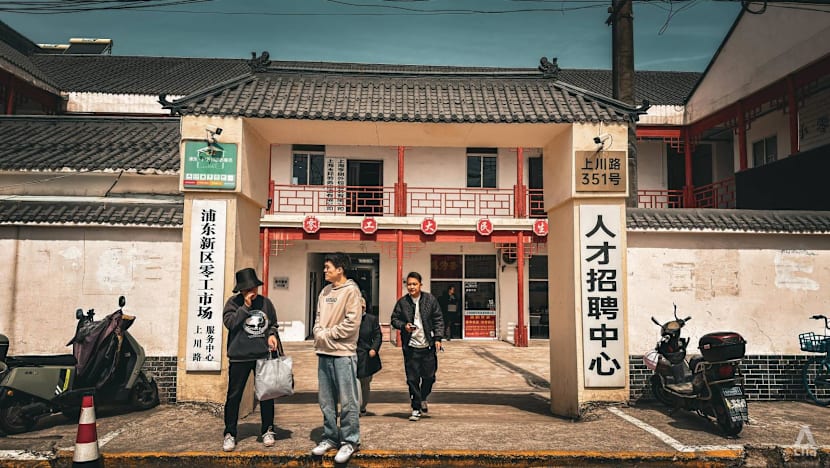
Elsewhere in Shanghai, on Shangchuan Road in Pudong, a different model was at work.
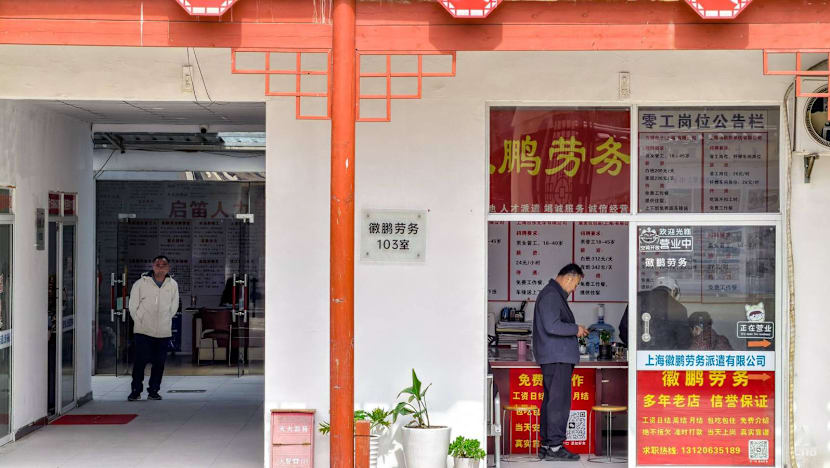
The site is a government-run gig service centre - a larger, indoor facility that houses public job-matching services, alongside private labour agencies. Tu Keliang manages one of those agencies, a small labour dispatch storefront inside the centre.
Tu's business is matching workers with factory and service-sector jobs, charging a 300 yuan agency fee - payable only if the worker is hired.
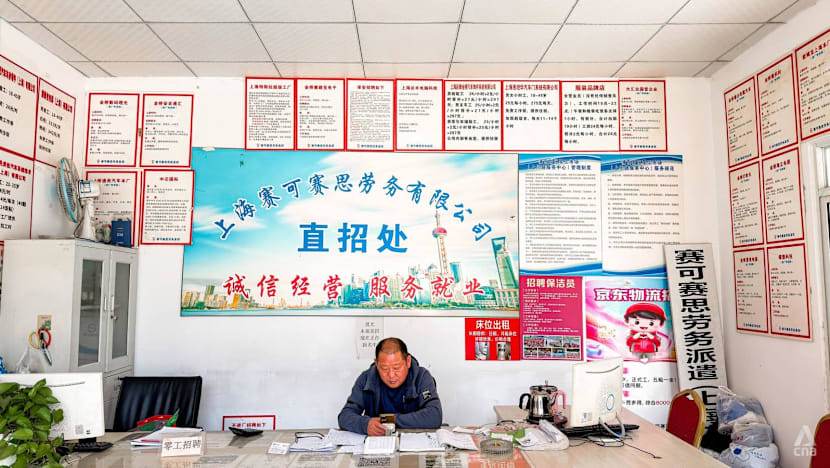
Walk-ins had dropped sharply from the previous year, said Tu. He attributed it to Shanghai's cost of living, estimating that a worker earning 6,000 yuan a month would keep less than half after rent, food, and utilities.
At daily wages of 160 to 200 yuan, reaching 6,000 yuan a month would require maximum output. "And that already means working yourself to the bone," Tu said.
Factories that once carried permanent headcount had switched to hourly workers, Tu said, quipping that social insurance was expensive.
Companies tend to adjust their hiring in response to policy, taking on workers only when there is demand and holding back when work dries up, he added.
“Once this batch (of workers) is done (with the work) - then what?" he said. The workers would most likely return to the station and wait again, with no guarantee of when the next job would come, Tu added.
There is also the age wall. According to Tu, companies typically will not take workers aged over 45, even if they possess a valid certificate.
"When younger workers enter even these lower-threshold sectors, they raise the level of competition," Zhao Litao, a senior research fellow at the National University of Singapore's East Asian Institute (EAI), told CNA.
"Because they are often more adaptable or physically capable, they crowd out older workers."


As the conversation continued at the gig service centre, a 47-year-old man walked in looking for an electrician's position. He had worked on construction sites since he was 19, held a valid certificate, and had just left Yangshan Port because the night shifts were destroying him.
Almost simultaneously, a recruiter entered, looking for an electrician for an office building. He looked at the jobseeker and shook his head. "He's a bit too old," he said. "Better if they're around 34, 35.”
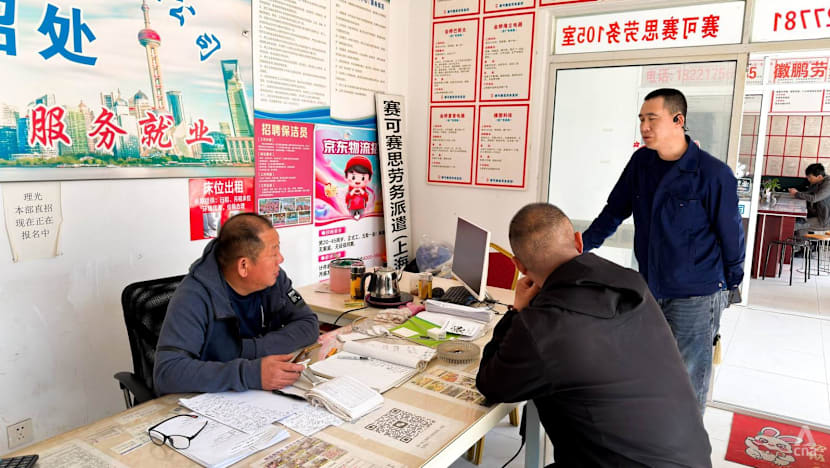
A few minutes later, a 38-year-old woman with a middle-school education came in asking for work.
Tu ran through options - electronics plants, an automotive company - but each came with conditions. One wanted workers aged under 35. Another's cutoff for women was 40.
"I've worked at all of them. I've been inside those places," the woman said, adding that she wants to find something “suitable” without elaborating.
She previously left over the working conditions, and was also hoping for better pay.
Tu told her to lower her expectations and be realistic. The market had shifted.
"Wages right now are around 6,500 yuan, 7,000 yuan at a good company. Don't think you're going to get what you got a few years ago,” Tu said.
“Who doesn't want higher wages? We want higher wages too. But you can't get them (now) - that's the issue.”
A food delivery driver who had drifted into the office turned to the woman. "I've been looking since last year - all the way to now, and I still haven't found anything suitable,” he said.
“Don't think about blindly chasing money. Nobody's talking about making tens of millions here.”
ORGANISING THE INFORMAL WORKFORCE
Informal hiring markets have existed on Chinese street corners for decades. But formalisation at this scale is recent - and has coincided with a contraction in the industries that once absorbed low-skilled migrant labour.
Cross-province migration has fallen steadily, from 78.67 million in 2014 to 68.4 million in 2024, according to the National Bureau of Statistics’ annual migrant worker survey.
Station managers and labour researchers told CNA that more workers were turning up at the stations than in previous years, and that the profile was consistent: predominantly older migrant workers - men in their late 50s and 60s, women in their mid-40s to 60s; most with no post-secondary education.
Sun Zhongwei, a professor at South China Normal University who studies China's labour markets, identified at least four main groups of people who end up at the gig stations.
They are: farmers arriving during the agricultural off-season; long-term gig workers who had always operated in this space; construction workers displaced by the property downturn; and factory hands pushed out by automation or relocation to cheaper inland provinces.
"The gig market population has always been large," he told CNA. "But many of the people we see today were actually in construction before."


The nationwide build-out of gig stations has been driven by a cascade of national directives.
A 2022 directive first instructed local governments to build standardised gig stations using employment assistance funds.
Follow-up directives in 2023 and 2025 pushed for standardisation and required gig markets to provide free services regardless of hukou - China’s household registration system that classifies Chinese residents as rural or urban, and has historically tied access to public services such as healthcare, education and housing to a person's registered location.
The 2026 national government work report pledged to expand social insurance coverage for flexible workers, while provincial-level plans in the likes of Beijing and Heilongjiang explicitly listed gig market construction as a policy priority.
"Gig stations effectively socialise part of the labour market infrastructure - matching, welfare support, even temporary shelter - while leaving firms to benefit from labour flexibility," EAI’s Zhao said.
Nearly nine in 10 employers in China use flexible workers primarily to cut costs, according to a survey of more than 6,000 employers across 22 provinces conducted in 2023 and 2024 by the State Council's Development Research Centre.
Shanghai has 10 gig stations across at least five of its districts. The most recent, Pujiang station in Minhang district, opened in April 2025.
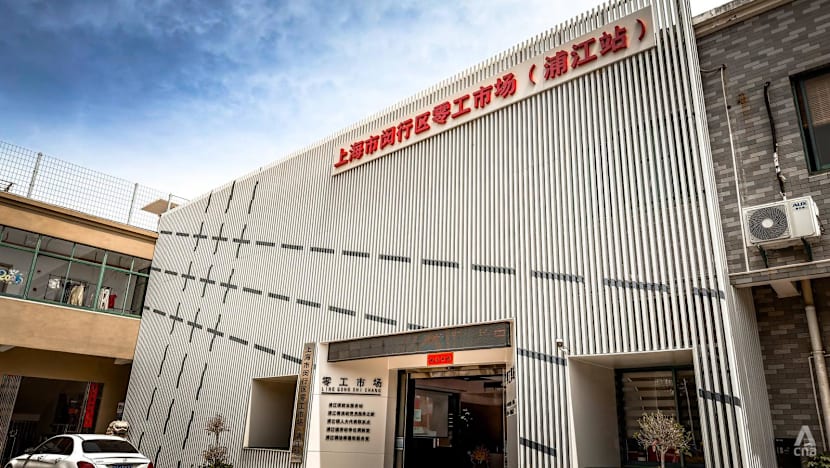
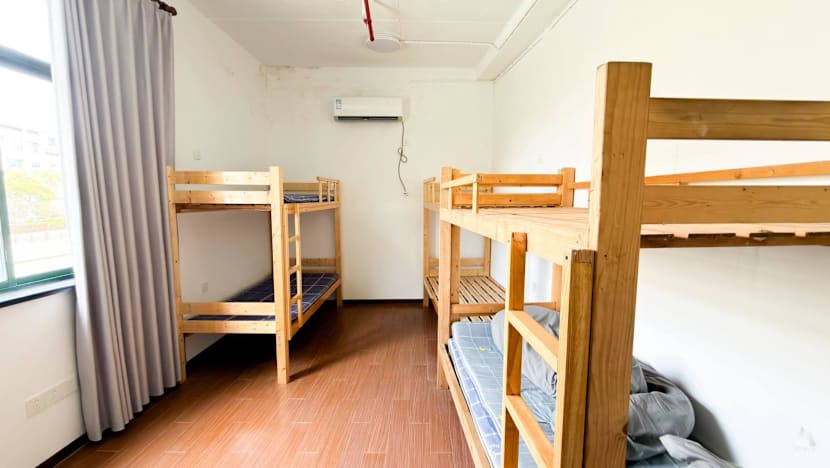
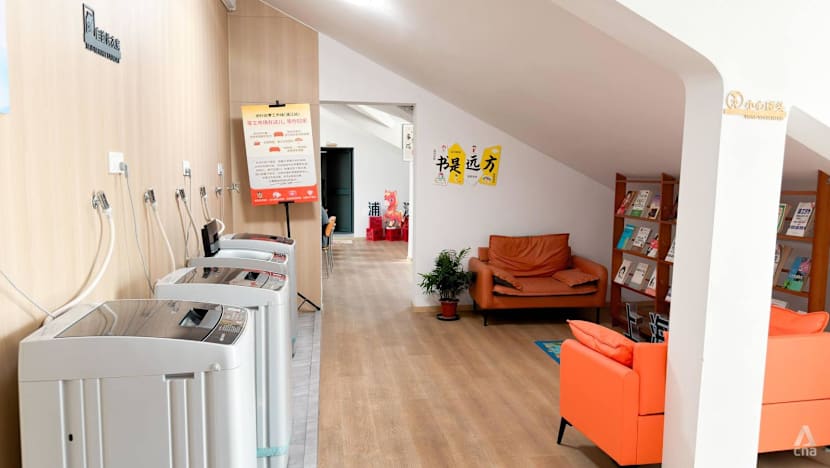
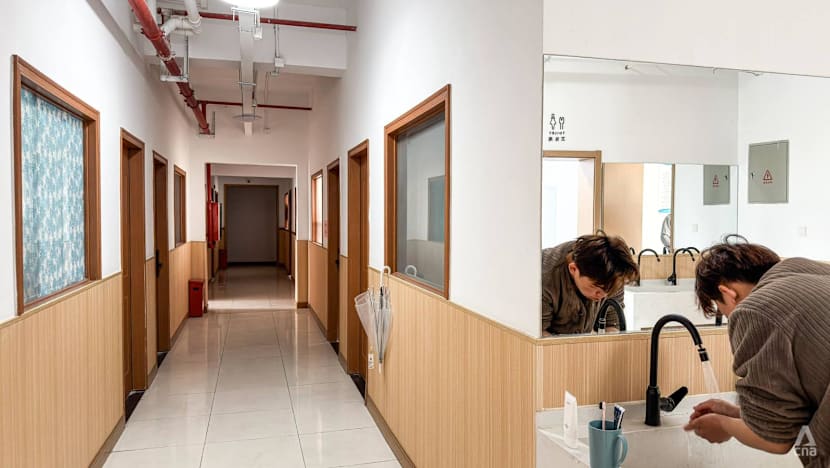
Covering around 1,200 square metres, it integrates employment services, skills training, a legal rights office, and dormitories where workers can stay at no cost for three to seven days.
"When they're looking for work, I try to recommend a job as quickly as possible," said Yu Xuandong, the party branch secretary who manages Pujiang station.
The trade union established there was designed to follow workers through what Yu called "the full life cycle" - from the job search to the work itself, then to the dismissal and back again.
In practice, numbers at Pujiang were modest. Of the roughly 5,000 people who registered in the station's first year, about 2,400 were matched with potential employers.
Only around 500 actually started working - whether in gig jobs, short-term stints, or longer-term positions.
Yu attributed the low ratio partly to the limited scale of the employers the station worked with, and partly to the broader economic environment.
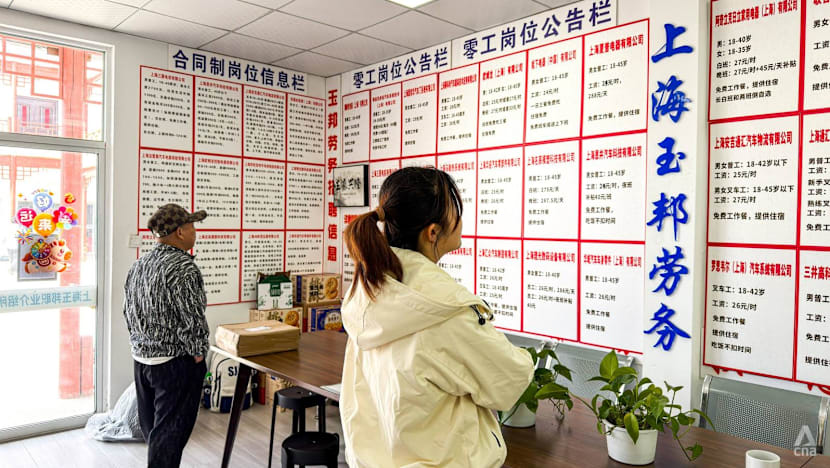
At the Shangchuan Road centre in Pudong, a government platform offers free job matching, a mediation room and shared apartments for migrants who arrive with nothing.
"The idea is to help them get through the immediate financial crunch first," said Chen Mei, a staffer. "Once they have income, they can make better choices."
WHAT THE BOOM REVEALS
Analysts said physical gig markets are where the flexible labour overflow ends up, as the platform-based jobs that once served as an easy entry point - food delivery, ride-hailing - are saturated.
EAI’s Zhao described a pattern of cascading displacement.
"Older workers are pushed out of factories, then out of construction, and now face pressure even within the informal labour market," he said.
The gig stations organise them, he noted, while also shifting policy attention towards a group that had been largely invisible as the spotlight stayed on youth unemployment.
Sun from South China Normal University noted that the workers at physical gig stations had largely been bypassed by the platformisation that transformed other parts of the gig economy.
Attempts by local governments to build digital matching platforms for this group, Sun said, had not succeeded.
Many older workers could not use digital platforms, he explained, and employers hiring casual labour were often in too much of a rush to register online.
The matching had to happen simultaneously, in person - and that’s where the physical stations come in.
"There's a job, such-and-such work, will you do it? One day, two days, this much money. If yes, let's go," Sun said. "There's no prior search process."


For the people at the gig stations, the most immediate danger is not unemployment but injury.
China's basic medical insurance system covers 95 per cent of its population, according to 2024 data from the National Healthcare Security Administration published in July 2025, and most gig workers carry at least the rural resident tier - pension and medical coverage paid in their home provinces.
But almost none have work injury insurance at their place of employment. China's work injury regulations require a formal labour relationship, which casual day labour does not establish, Sun said - leaving this group structurally excluded.
Many gig jobs last as little as half an hour - such as carrying bricks, clearing debris and moving furniture.
Sun said employers saw no reason to buy insurance for such brief engagements.
"The whole process might take half an hour," he said. "They're not going to buy insurance for that."
Xu, the migrant worker seeking physical gig work at the Xinqiao site, is a case in point. He has no social insurance in Shanghai. No contract. No pension contributions.
There is an option for workers to pay into Shanghai's employee social insurance as flexible workers. But they would have to cover both the employer's share and their own.
For someone earning 200 yuan a day with no guarantee of work tomorrow, this would be tantamount to, as Sun put it, "asking someone who can barely survive to save”.
An occupational injury insurance pilot, initially targeting platform workers like delivery riders, covered 23.25 million people across 17 provinces as of October 2025, according to a State Council report.
Authorities announced in March that it would be expanded nationwide. But the workers at physical gig stations, who are not attached to any platform, remain largely outside its reach.
Sun said the existing legal and institutional framework for protecting these workers is "a blank slate”.
"Their desire to work should be respected - you can't simply strip them of or restrict their employment rights," he said.
"But the protections during their labour process need to be strengthened."
Without coverage, the consequences fall on the workers themselves.
"Some elderly workers just endure it and don't seek medical care," Sun said. "It becomes serious. Some even lose their lives."
Urban pension schemes require 15 or more years of cumulative contributions. Workers in their 50s and 60s with fractured employment histories would not qualify.
When they are no longer able to do physical gig work, many return to their villages, relying on a rural pension of about 100 to 200 yuan a month - funded from state coffers - supplemented by subsistence farming and support from their children, if any.



"We must acknowledge that these stations are objectively better than the alternative of a cold, informal street corner," EAI’s Zhao said.
“They are a tangible improvement in the daily life of someone who would otherwise be completely exposed."
The underlying economy they serve, while largely invisible, is essential, he added.
"The contribution of these older workers is undervalued, but without (this labour force and the stations that organise it), the urban maintenance of China's cities would simply stop."
Neither Zhao nor Sun believe the gig stations can alter the broader trajectory of China’s labour market.
China's social security system is still designed for an industrial-era labour market based on stable employment," Zhao said.
"Gig stations do not solve the underlying problem, but they help manage its consequences."
Yet the pattern may not hold as younger generations come of age, suggested Sun from South China Normal University.
Those born in the 1990s and 2000s would likely not stand in these queues when they grow old, he said.
"They'll just take their thousand-something yuan pension and maybe go fishing,” he remarked.
But the current cohort - born into scarcity, conditioned to labour - would keep going as long as their bodies allowed, Sun said.
"Their work ethic, their frugality - it hasn't changed," he said. "Labour is an instinct."
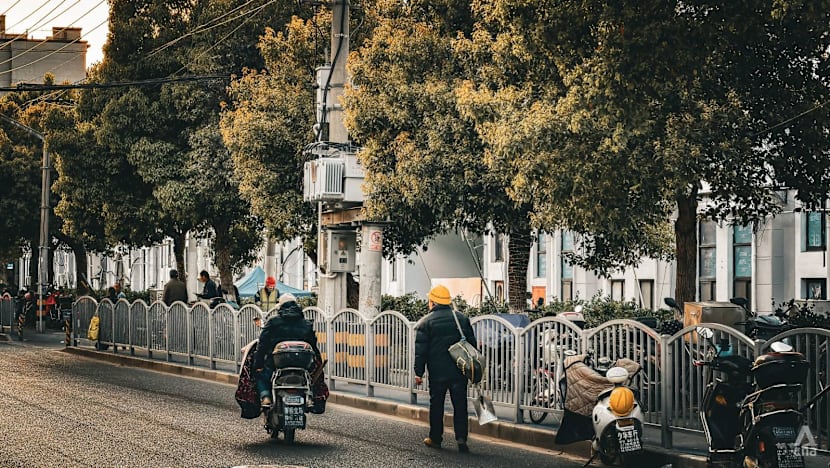
Back at the Xinqiao gig station, the crowd had thinned by sunrise, with most of the vans gone, although around 100 workers still stood in line.
Xu, the migrant worker, was not picked that day.
He picked up his tools and walked back to his rental room in a building right beside the station. With no plans for the rest of the day, Xu said he would do some laundry, scroll through his phone, and sleep.
"Can't even make 200 yuan (a day)," he had said earlier, watching the crowd thin out.
"I'm just someone whose lot in life is (to earn) hundred-something."
Tomorrow morning, though, he will be back.