‘Everyone wants to come to China now’: Chinese universities draw more foreign students beyond Western countries
Foreign student enrollment rates in China are recovering post-pandemic, driven by rising demand from Asia and Africa as students are drawn by lower costs, scholarships and shifting global dynamics.

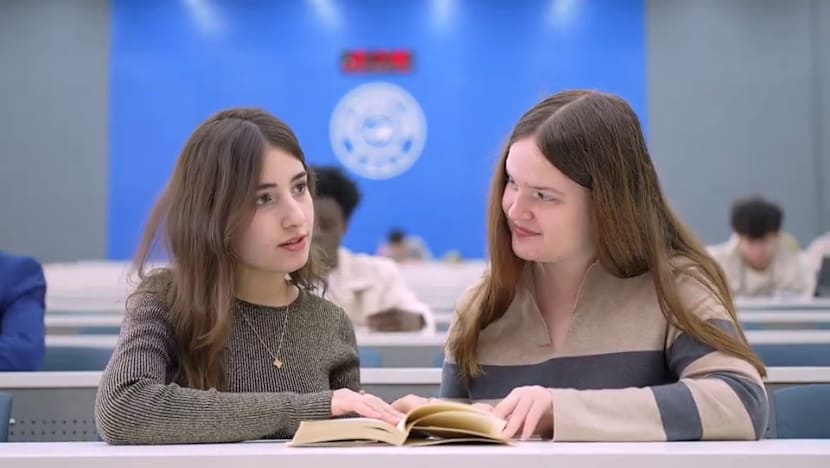
(From left) Nazrin Allahverdiyeva from Azerbaijan, Precious Oulwafunmilayo Ajayi from Nigeria, and Jojo Hwang from South Korea are among the many international students currently studying in China. (Photos: CNA/Nazrin Allahverdiyeva, Precious Oulwafunmilayo Ajayi, Jojo Hwang)

This audio is generated by an AI tool.


SINGAPORE: When Nazrin Allahverdiyeva, 19, attended her first class at China Medical University (CMU) back in 2024, she recalls not being able to “understand anything”.
“I felt so dumb,” said the student from Azerbaijan, a transcontinental country bordered by Russia, Georgia, Armenia and Iran.
Her experience was made more daunting given CMU’s reputation as one of China’s leading medical schools. Founded in 1931 in the northeastern province of Liaoning, the prestigious public university has long been regarded as a key training ground for many Chinese medical professionals.
Yet even some of her local coursemates struggled to keep up, she said.





“Can you imagine - if Chinese students couldn’t understand classes, I wouldn’t be able to,” Allahverdiyeva said.
She said her language skills have since advanced significantly, and she is now pursuing her five-year degree in clinical medicine, adding that she can follow lectures and communicate effectively in Chinese during practical sessions and anatomy classes held in local hospitals.
Interest in Chinese universities back home in Azerbaijan has grown in recent years, said Allahverdiyeva.
“Everyone wants to come to China now. When I chose to study in China, it wasn’t popular back then,” she said, adding that there were other foreign students in her cohort - “mostly from African countries”, as well as some from Iran.
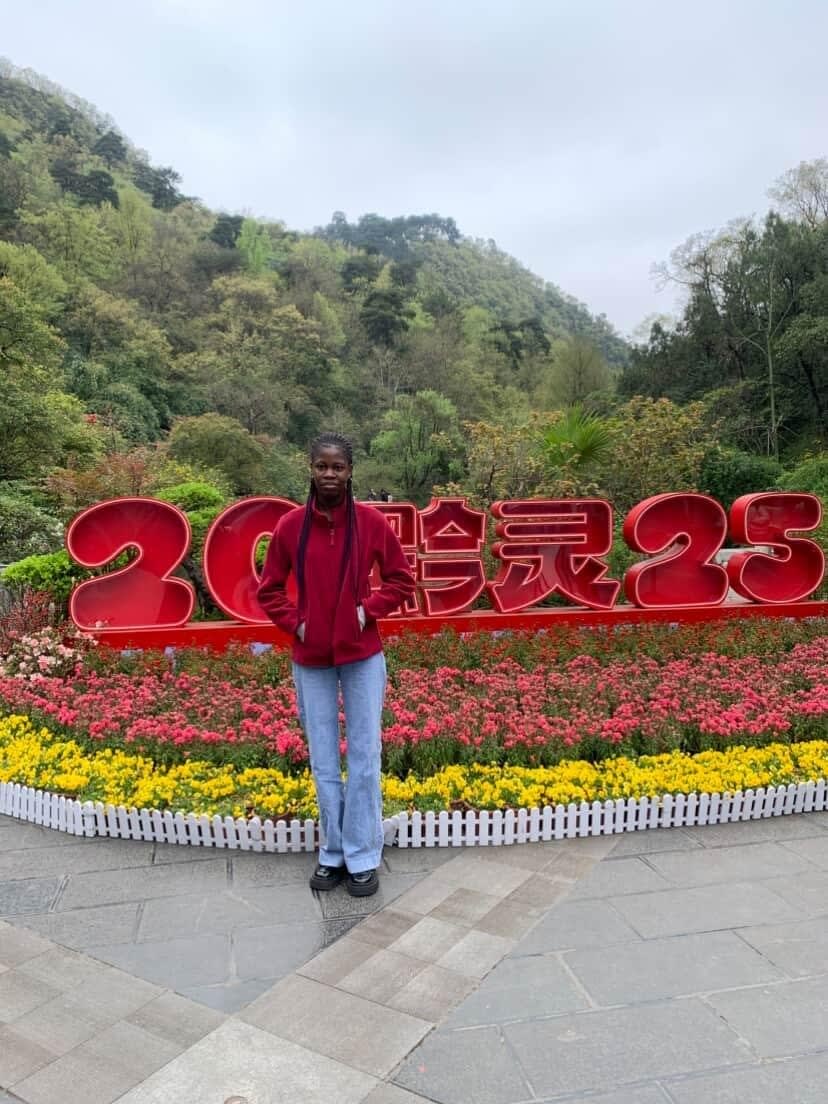
Another foreign student drawn to China is Precious Oulwafunmilayo Ajayi, 21, a Nigerian student on a partial scholarship at the Xi’an University of Architecture and Technology, where she is pursuing her bachelor’s degree in Applied Chinese since February last year.
“It was always my dream to travel to China,” Ajayi said, adding that her decision to study in China was shaped by her love for Chinese language and culture, especially entertainment.
“When I found out that there were scholarships for foreigners like me, I was extremely happy,” she said, adding that she hopes to find work in China after graduation - with her sights set on Shanghai.
CHINA’S NEW FOREIGN STUDENT BASE
China enrolled 380,000 international students from 191 countries and regions during the 2024-2025 academic year, according to figures released by the Ministry of Education (MOE) - marking a rebound from pandemic-era lows of around 255,720 in 2021.
Asian and African students led enrollment gains, MOE said, making up around 61 per cent and 16 per cent of the cohort respectively - driven by affordable STEM programs and Beijing’s expanding global influence.
For instance, the number of African students in China has risen from just over 27,000 in 2012 to more than 81,000 in 2018. More recent figures show about 61,500 African students during the 2024-2025 academic year, reflecting a partial recovery after pandemic-related disruptions.
Within Asia, countries such as India, Indonesia, Vietnam and Thailand have emerged as key sources of students, reflecting both geographic proximity and growing education links with China.
Statistics provided by the Chinese Embassy in Vietnam showed that there were about 11,300 Vietnamese students studying in China in 2020 - with that number nearly doubling to 23,500 in 2023.
Pakistan is another notable example. According to the Pakistani embassy in Beijing, there were nearly 29,000 Pakistani students registered in China as of December 2025, almost double the 15,654 figure recorded in 2015.
Among them is 26-year-old Umm E Ruman from Karachi, currently pursuing a master’s degree in Clinical Medicine at Bengbu Medical University in Anhui province.
Ruman has been studying in China since 2019 and said choosing China was already “a trend” among her peers back home at the time.
“Tuition fees used to be cheap, but now with the Pakistani rupee’s devaluation, it’s more or less the same cost now,” Ruman added.

At the same time, the share of students from Europe and the US has edged down.
European students made up 16.1 per cent of international enrolment in 2016, compared with about 15.6 per cent in 2026.
The proportion from the Americas has also declined, with students from the region and Oceania accounting for just 7.1 per cent of the total between 2024 and 2025, according to official data.
A March 2026 report by the non-profit US-China Education Trust estimated that fewer than 2,000 American students are now studying in China each year - a sharp drop from about 11,000 in 2019.
The report attributed the decline to reduced US federal funding for China-related programmes, concerns among students about career prospects in government, and mounting pressure on US universities to scale back engagement with China.
It also noted that many American students and scholars are deterred from studying in China because they believe it will hurt their chances when applying for US government jobs in future.
“What we are seeing is a proportional shift,” said Wang Xiaokai, a senior education consultant, who noted that a clear shift is underway - with more students from across Asia and Africa choosing Chinese universities over institutes in the West.
“China has become more attractive to students from Southeast Asia and Africa, including countries under the Belt and Road Initiative (BRI),” Wang said, referring to Beijing’s ambitious infrastructure project promoting global trade and linking Asia, Europe, and Africa through land and sea routes.
“So relatively, the share of students from Europe and the United States has declined,” he added.


Geopolitical factors are also at play, said Wang, with students from Europe and the US becoming more cautious about studying in China - following measures by President Donald Trump’s administration which include visa processing delays, travel restrictions placed on several Asian countries and the revocation of more than 6,000 student visas for alleged violations in 2025.
Benjamin Mulvey, a lecturer in equitable education systems and policy at the University of Glasgow noted that the "rise in geopolitical tensions between Western countries and China" has made academic collaboration more difficult.
It also affects "student exchanges and study abroad programmes," Mulvey told CNA.
LOWER FEES A MAJOR DRAW
Cost is often the most important factor for students choosing where to study - and in China’s case, its relative affordability is a major draw, said Wang, the education consultant.
China offers a growing number of reputable universities at a fraction of the cost of traditional destinations such as the US, the United Kingdom and Australia.
Tuition fees are comparatively low, especially for self-funded students, he added.
He also noted that China’s STEM programmes are particularly strong, with many universities offering “excellent courses” in fields such as economics, law and medicine at competitive prices.
For example, international students studying clinical medicine at a top Chinese school like Tsinghua University pay between 40,000 and 70,000 yuan (around US$10,236) per year - significantly lower than tuition at institutions such as Harvard Medical School, where fees start at US$76,828 annually.
“Even the more expensive programmes in China are still cheaper for many international students,” Wang said.
For some foreign students, the cost difference is stark.
Jojo Hwang, a South Korean student at Sun Yat-sen University in Guangzhou, said her annual tuition is roughly equivalent to what her younger brother pays for just one semester back home.
“International students do pay more than local students in China, but it’s still much cheaper than studying in South Korea,” she told CNA, adding that she pays about 26,000 yuan a year, compared with around 6,000 yuan for local students.
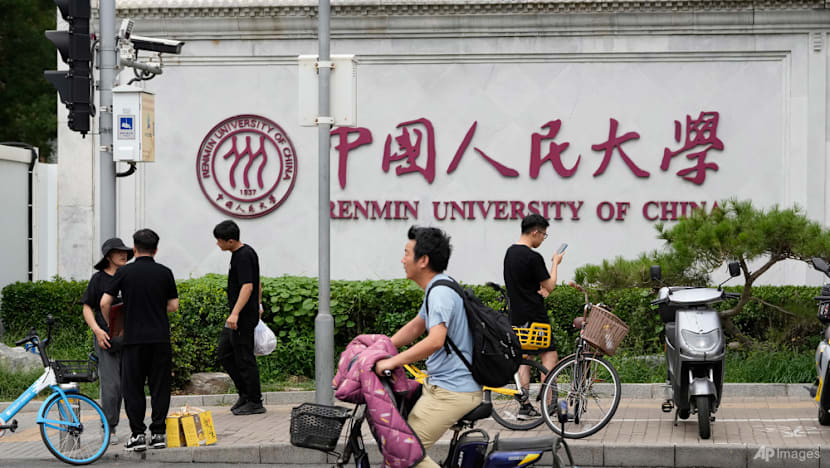
Beyond cost, China’s growing global influence is also shaping student choices, said Mulvey from the University of Glasgow.
“Chinese state and private enterprises are major economic actors across Asia and Africa,” Mulvey said, adding that “an understanding of China - its economy, language and culture - is increasingly seen as valuable” for many graduates.
Lower living costs and relatively less stringent visa requirements also add to China’s appeal, Mulvey said, noting that some programmes do not require standardised English tests such as the International English Language Testing System (IELTS) - taken by millions annually to test listening, reading, writing and speaking skills.
“This makes studying in China a more accessible option for many,” Mulvey added.
“NOT FOR THE WEAK”
Studying abroad can be tough on any student - and despite China’s growing appeal as a higher education hub, international students still face challenges - with language barriers and culture shock being the most significant.
Experts note that foreign students in China are often housed separately from local students - limiting opportunities for interaction and deeper engagement.
Adjusting to daily life presents another hurdle. Beyond language, international students, like all visitors, must navigate China’s highly complex and localised digital ecosystem.
“There are digital tools students need to learn - like WeChat and Alipay. Otherwise, even paying for things can be difficult,” said education consultant Wang.
Financial constraints also add to the pressure. Many foreign students are not allowed to work in China, noted Nigerian student Ajayi, whose scholarship covers tuition and accommodation but not living expenses.
“International students are not allowed to work,” she said, adding that she depends on her family back home for her monthly allowance.
"It is rather hard."
“Studying in China is not for the weak,” Ajayi added.
“I would tell international students who are planning to come to China to be ready to work hard.”