



Analysts react to BOJ decision to keep rates steady

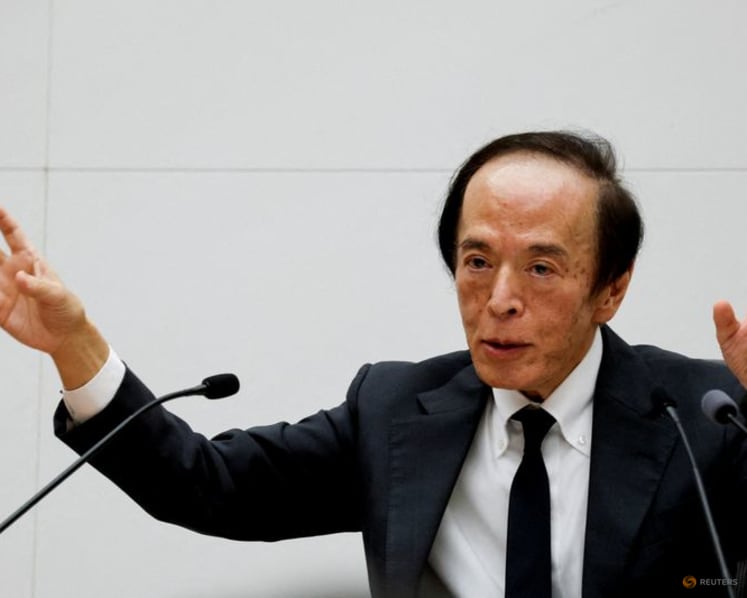
The Bank of Japan kept interest rates steady on Friday, but revised up its inflation forecast and stressed anew its readiness to continue pushing up borrowing costs to forestall mounting inflation risks.
The central bank decided to maintain its short-term policy target at 1.25 per cent by an 8-1 vote. Board member Hajime Takata dissented to the decision.
Governor Kazuo Ueda will hold a news conference at 3.30pm to explain the policy decision.
COMMENTS





KAZUTAKA MAEDA, SENIOR ECONOMIST, MEIJI YASUDA RESEARCH INSTITUTE, TOKYO:
"The outlook report suggests the BOJ has become more focused on upside risks to both inflation and economic activity as it struck a more upbeat tone on exports and capital spending driven by AI-related demand.
"Although its inflation forecasts remain broadly consistent with the 2 per cent target, the BOJ seems increasingly conscious of the possibility that inflation could overshoot.
"Rather than sticking to the previously assumed six-month interval between hikes, it may now be contemplating increases every three months, making the December meeting a credible opportunity for the next rate hike."
DAVID CHAO, GLOBAL MARKET STRATEGIST FOR ASIA-PACIFIC, INVESCO, SINGAPORE:
"My take-away from the initial report is the hawkish outlook on inflation, which sets the stage for a potential rate hike in December... all eyes will be on Ueda during this afternoon’s press briefing and whether he will tilt hawkish or dovish and any indication on how much higher rates can go.
"The surprise news announcement is that the BOJ has decided to expedite its ETF sales, without trying to destabilise the market. While this may initially spook markets, I actually think this is a positive development since the BOJ feels confident enough with the economy and market."
SHOKI OMORI, CHIEF JAPAN FIXED INCOME STRATEGIST, DEUTSCHE SECURITIES, TOKYO:
"By judging that underlying inflation has reached 2 per cent, the BOJ has changed what it is trying to do: it is no longer a central bank trying to get to its target, it is one trying to keep inflation from running away from it.
"That is a different reaction function, and the market should price in it as one. The 8-to-1 vote, with Takata calling for a hike, reinforces the point.
"For rates, that shifts the debate from when the next hike comes to where the policy rate stops."
MASATO KOIKE, SENIOR ECONOMIST, SOMPO INSTITUTE PLUS, TOKYO:
"The ETF was the surprise. I was a little taken aback by that, but its weight is still small, so while it may have some impact on today's stock market, it is something that can be absorbed over the medium to long term without major disruption.
"On prices, the BOJ's language that interest rates are broadly consistent with its outlook, together with the upgraded CPI forecasts in the Outlook Report, was largely as expected. But it allowed the BOJ to strengthen its rate-hike bias and hawkish stance more than before.
"This can be taken as a signal toward a December rate hike, in the sense that the 2 per cent inflation target has been achieved.
"The key points to watch in Ueda's news conference are his explanation on ETFs and his comments on the 2 per cent target."
TOHRU SASAKI, CHIEF STRATEGIST, FUKUOKA FINANCIAL GROUP AND FORMER BOJ OFFICIAL, TOKYO:
"Speeding up ETF sales is a bit surprising. It's unhealthy for the central bank to hold such a big amount of stocks, but I'm not sure if the timing was good in this risk-off environment. I'm a bit worried about the reaction in the Japanese stock market going forward.
"Then in terms of monetary policy, the BOJ said that the underlying CPI inflation is at a level that is generally consistent with the price stability target of 2 per cent. They have been saying the underlying CPI is approaching the 2 per cent target.
"So, the BOJ sounds a little bit soft, probably compared to the market expectation. In the end, this nuance of wording toward the underlying inflation and also just one dissident gives a somewhat less hawkish impression.
"Probably Ueda-san will try to drive safely, especially in regard to the stock market reaction in the afternoon. So if the stock market decline is relatively large, Ueda-san cannot be so hawkish. His tone could be a bit dovish."
HIROFUMI SUZUKI, CHIEF FX STRATEGIST, SMBC, TOKYO:
"Board member Takata dissented, but this is unlikely to be a major market catalyst. The BOJ also announced a revision to the pace of its ETF sales. However, with the disposal of its ETF holdings still expected to take 43 years, the impact on financial markets is likely to be limited.
"A significant shift from its previous assessments, however, was the BOJ's recognition that underlying inflation, excluding temporary factors, had reached its 2 per cent target.
"Recent developments in France and declines in US equities have contributed to a tightening of global financial conditions. USD/JPY has also responded with yen appreciation at times, leaving the BOJ under no pressure to rush into a rate hike."
MASAHIKO LOO, CHIEF FIXED INCOME STRATEGIST, STATE STREET INVESTMENT MANAGEMENT, TOKYO:
"A boring hold, but an important shift in the Outlook Report. The BOJ's recognition that underlying inflation is now around 2 per cent brings its assessment closer to the reality that conventional inflation measures have already been around or above target for much of the past four years.
"Taking its cue from the Fed and ECB, the BOJ has little reason to rush, particularly with US midterm elections potentially adding volatility across currencies and bonds. Ueda can stay data-dependent, keep every meeting live and preserve the next hike for around the turn of the year.
"The surprise was the acceleration in ETF disposals. Cutting the estimated unwind from 112 years to 43 years is substantial, and at least puts completion within a human investment horizon. But 43 years is still extremely gradual, with annual sales amounting to only around 0.1 per cent of market turnover. The message is consistent with the broader normalization story: the BOJ is becoming more willing to unwind its legacy balance sheet, but remains determined to do so without disrupting markets."