Rain, rising rivers hamper Nepal tunnel rescue as missing toll tops 3,000
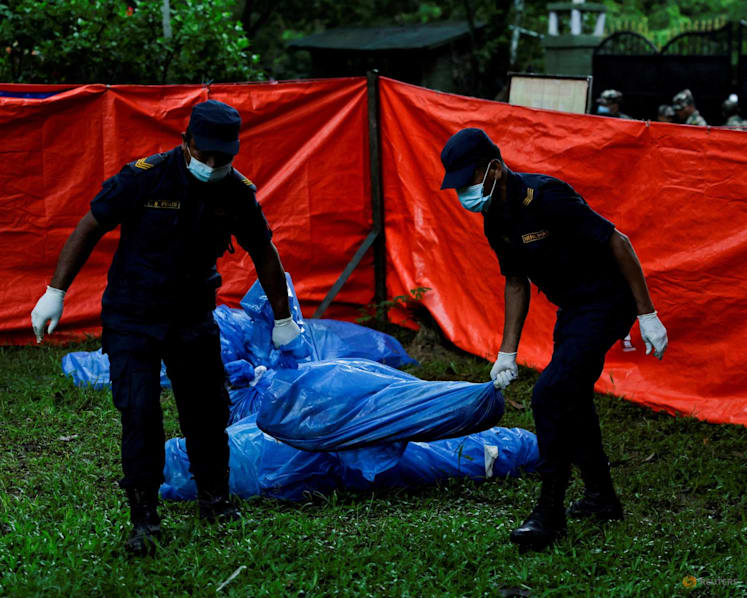
The overall death toll in Nepal and China has risen to 750, with more than 3,000 people missing.
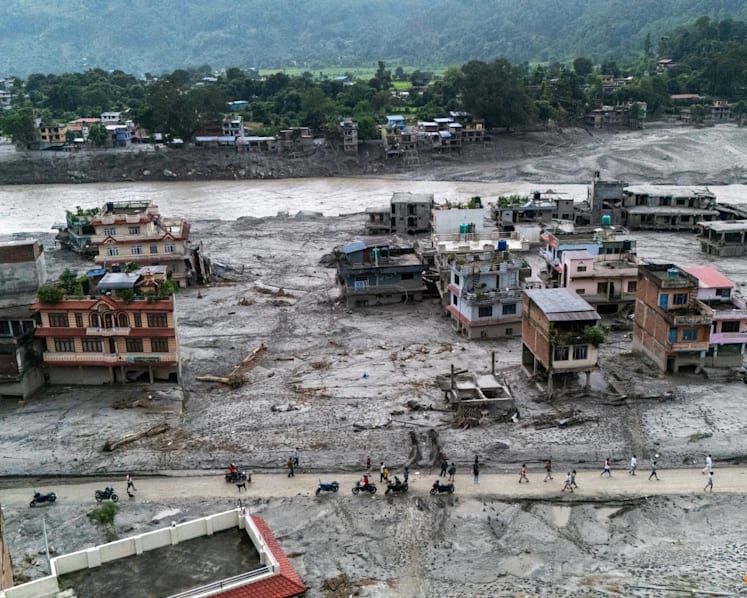
A drone view of people walking on a road and houses in mud, following deadly flash floods and mudslides at Devighat, Nuwakot district, Nepal, Aug 29, 2026. (Photo: Reuters/Athit Perawongmetha)
KATHMANDU, Nepal: Nepal warned Sunday (Aug 30) of rising flood waters and urged rescue teams to exercise caution, as efforts to retrieve victims from areas devastated by a deadly, tsunami-like wall of water and debris entered a fifth day.
"We have received information that the flood flow in the Bhotekoshi River in Rasuwa has increased further," the National Disaster Risk Reduction and Management Authority (NDRRMA )said in a warning issued at 7.20 am (1.35am GMT).
"Therefore, all personnel engaged in search, rescue, and relief operations, those in riverside areas, and everyone else in affected areas including Rasuwa, Nuwakot, Dhading, and Chitwan are requested to exercise caution."
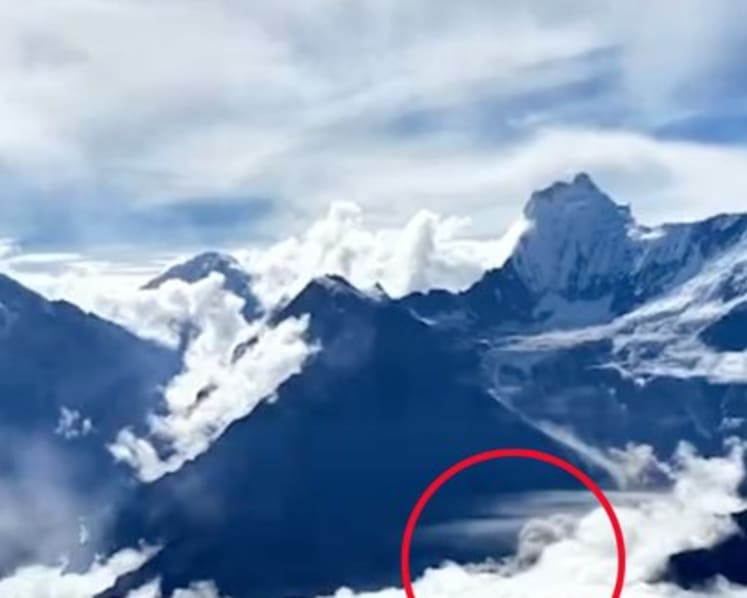
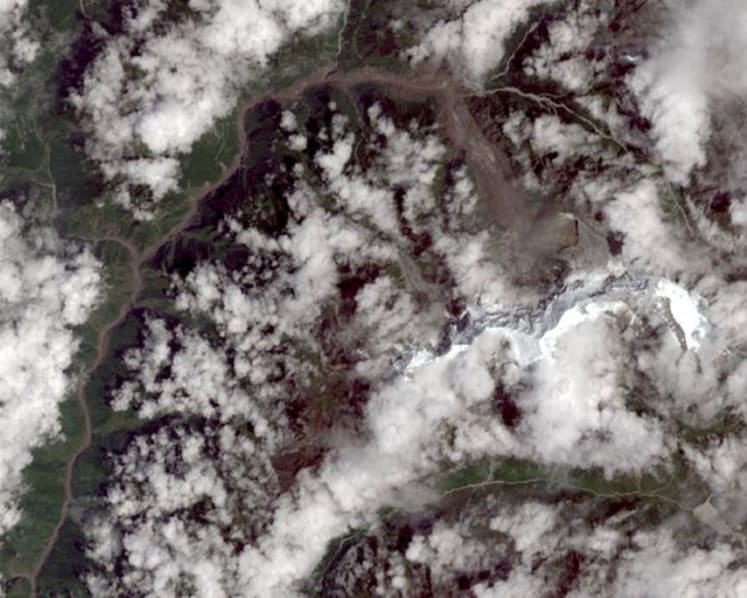
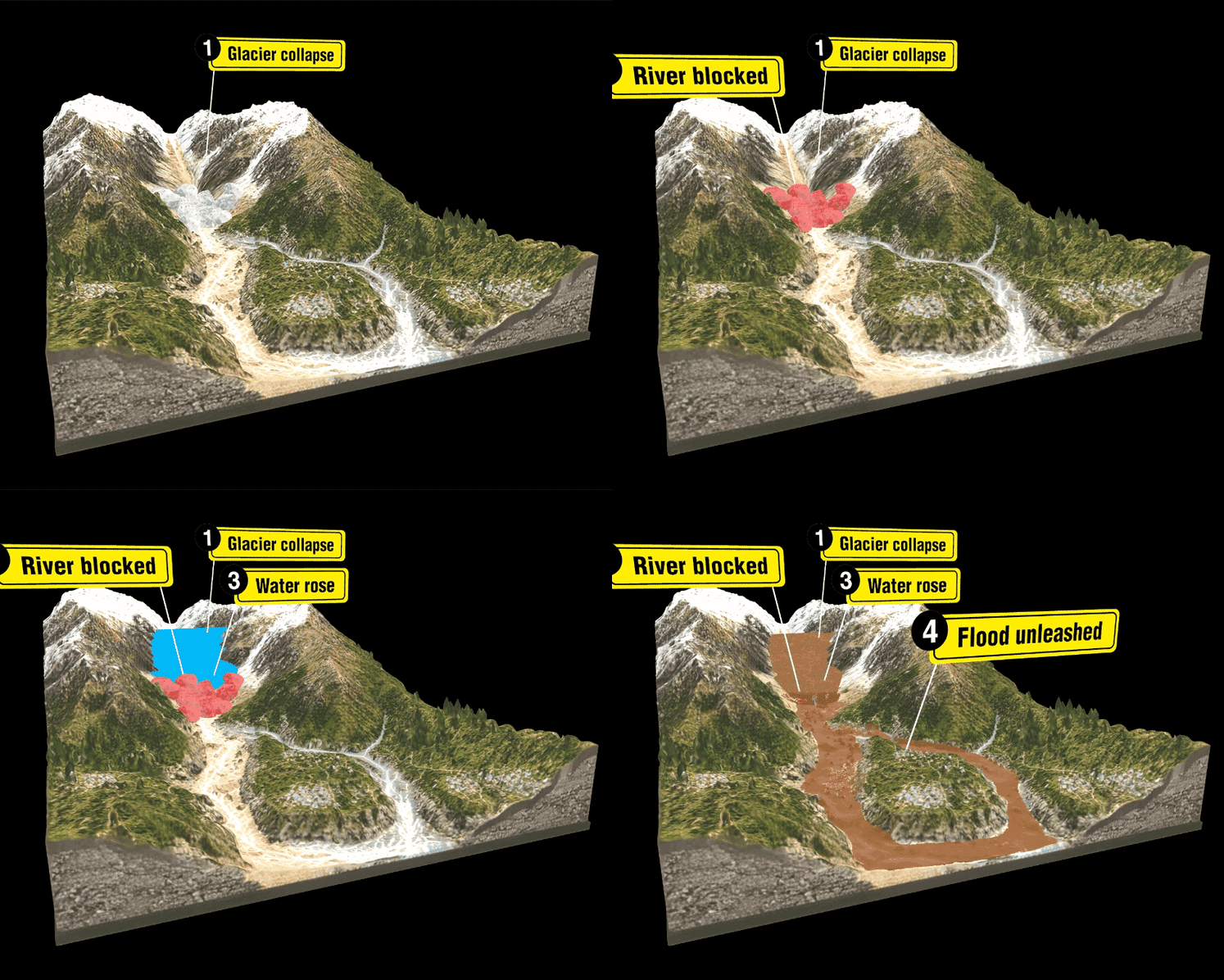
The US Geological Survey said the disaster on Wednesday morning on the China-Nepal border was caused by a glacial collapse, sending a wall of water and debris downstream.





Figures from Nepal and China put the total death toll at 750, with 3,044 people missing. Some of the dead were possibly swept downstream as far away as India.
Chinese state media earlier confirmed 16 dead in Tibet. Of the 546 people missing, 261 were foreign nationals, CCTV said, including 104 from Nepal, 49 from India, 33 from Latvia and 18 from the United States.
The disaster, which struck the China-Nepal border Wednesday morning, was caused by a glacial collapse, sending a wall of water and debris downstream, the US Geological Survey said.
TUNNEL RESCUE
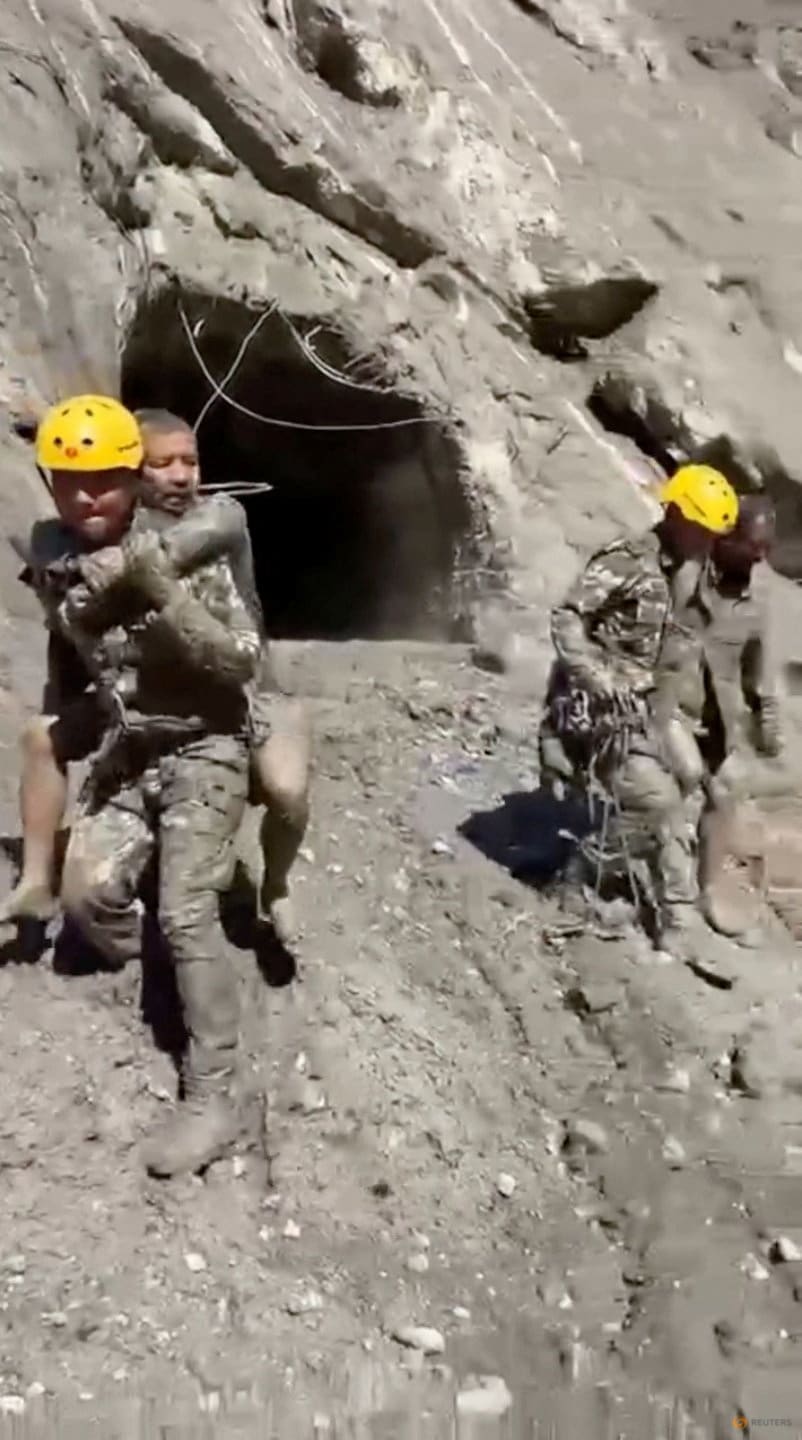
The Nepali army was working on Sunday to rescue workers who are believed trapped in a tunnel at the Trishuli 3A hydroelectric site after they successfully inserted a pipe into the passage.
Teams had "started sending air through the small opening", Nepali Home Minister Sudan Gurung said in a statement. But efforts were hampered on Sunday by rains and rising river waters, with Nepal's disaster authorities urging rescue teams to exercise caution.
More than 100 workers may still be alive and trapped inside such tunnels, with rescue efforts focused on the Trishuli 3A and 3B sites.
While the exact cause of the collapse is unclear, climate change is causing glaciers to melt worldwide, increasing the risk of such disasters.
"The sudden glacial collapse and flash flood is a devastating reminder of how fragile these mountain environments can be", UN climate chief Simon Steill said in a statement.
"NOTHING LEFT"
Survivors face an agonising wait to learn the fate of missing relatives, and the prospect of rebuilding their lives from nothing.
"All the settlements near the river were swept away," Buddhi Ram Dangol told AFP in Nepal's Nuwakot district. "There is nothing left."
At an army base serving as a key rescue hub in Bidur, relatives crowded around lists of rescued people pasted on a wall.
"I have come here looking for my son," said Kalka Sharda, scanning the list in desperation.
In an area home to vast energy infrastructure projects, Nepal's disaster authority listed 933 hydropower workers among the missing, along with 517 foreigners, including trekkers and Hindu pilgrims to Tibet's sacred Mount Kailash.
The Isha Foundation, led by Indian guru Sadhguru, said in an Instagram post on Saturday that 80 members had been on a group trip in the area.
"At this time, there seems to be no encouraging indications of survivors at the immigration office area."
"ENORMOUS" TRAUMA
The United States and Canada said it would provide US$3.6 million each in humanitarian aid to Nepal.
The UK has offered US$6.8 million in aid while the UN released US$2.5 million in emergency funding.
The European Union on Friday promised US$2.3 million and the International Federation of Red Cross and Red Crescent Societies (IFRC) said it had allocated more than US$1 million and launched an emergency appeal for US$31 million.
Nepal's economy is already under pressure, with limited resources to respond to a disaster of this scale with Foreign Minister Shisir Khanal saying the reconstruction bill could run into "billions of dollars".
He appealed for specialised assistance, including heavy-lift drones and technology to help locate people who are trapped.
Khanal also called for forensic testing kits to identify bodies and freezer units to store them, saying bodies that have been in water could decompose at a faster rate.
The deluge of ice and mud caused huge lakes, and one of these formations has become a risk of further floods.
The Chinese and Nepali foreign ministers spoke Saturday and discussed sharing satellite and hydrological data, both sides said.
In Tibet, where Chinese authorities are the only source of information, rescue operations were temporarily paused at the hardest-hit area of Gyirong over the risk of more flooding from a newly formed lake.
But state broadcaster CCTV said late Saturday that the lake was "discharging naturally" and had been "essentially drained", citing China's ministry of water resources.
A total of 2,141 rescuers were near the Gyirong site, the Xinhua state news agency reported, including the more than 500 in the worst-hit area.