From Jakarta to Klang Valley, why is it so hard for Southeast Asia to fight this invasive catfish?
The suckermouth catfish originating from South America is swarming waterways in parts of Southeast Asia.
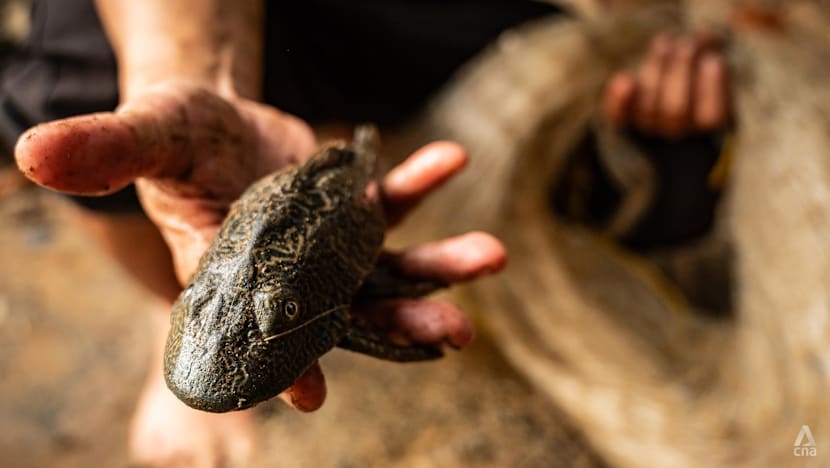
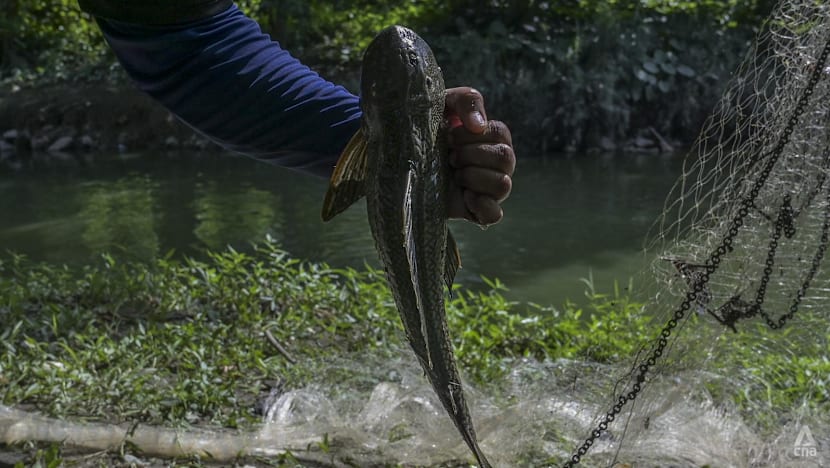
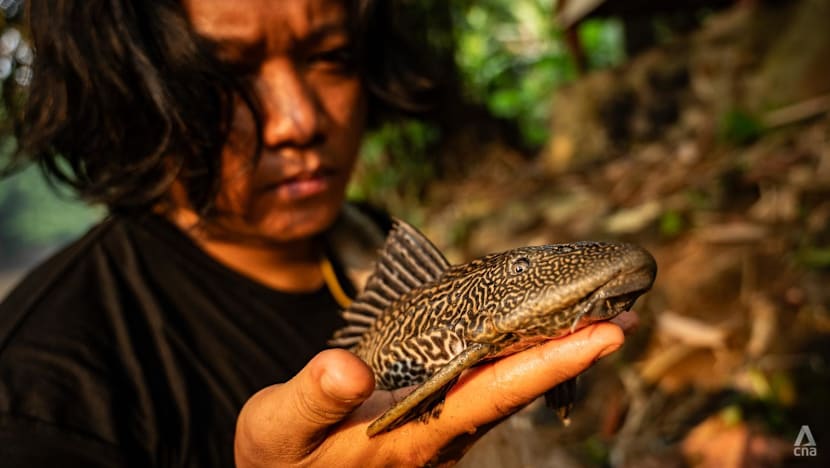
A freshly caught suckermouth catfish, an invasive species originally from South America. It is known in Indonesia as sapu-sapu. (Photo: CNA/Wisnu Agung Prasetyo)

This audio is generated by an AI tool.




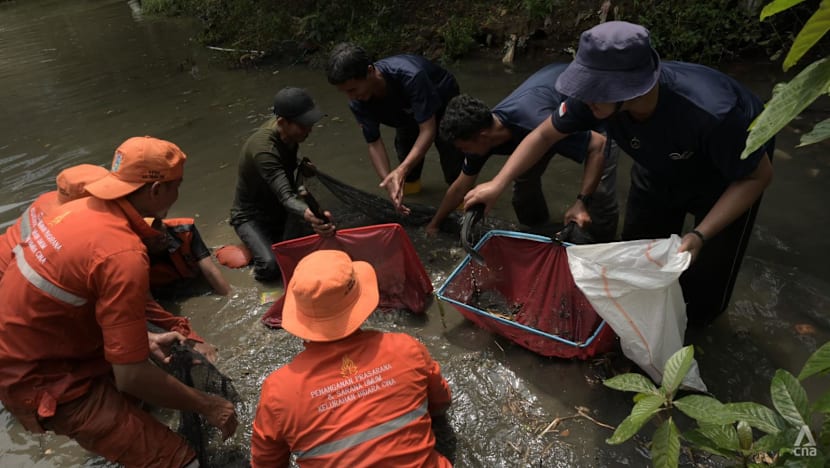
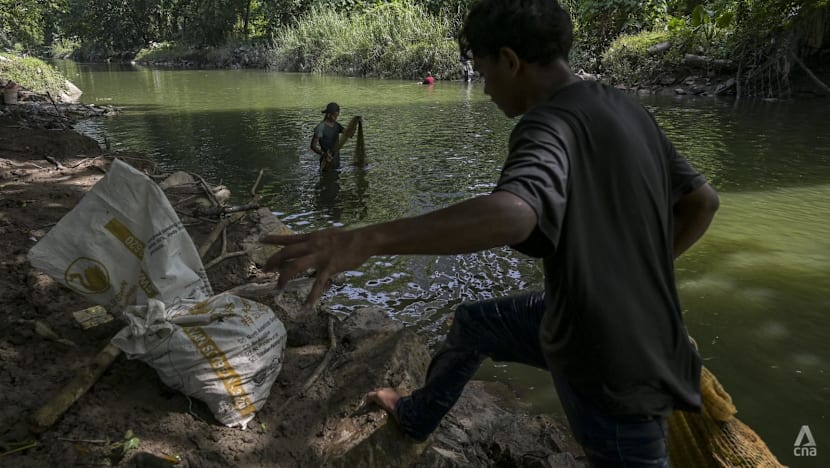
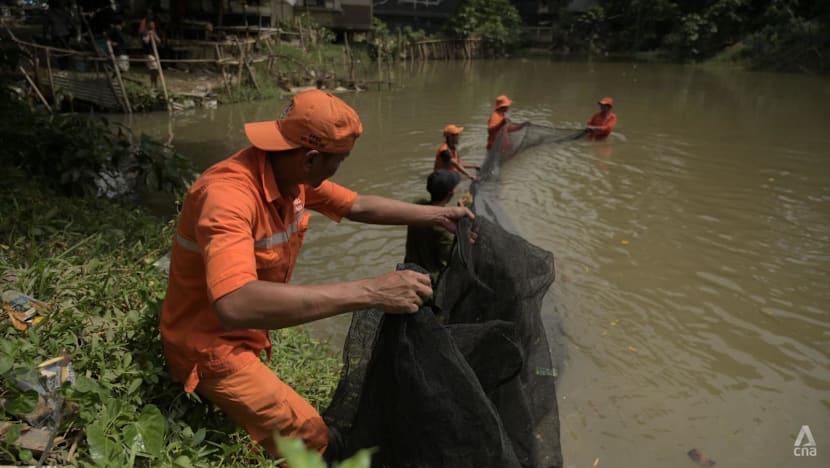
JAKARTA/KUALA LUMPUR: A crowd gathered by the rubbish-strewn banks of the Ciliwung River as workers from the Jakarta Environmental Agency cast their nets into its neck-deep, milky-brown water.
Moments later, the nets came up heavy, drawing cheers from about two dozen men, women and children from the neighbourhood.
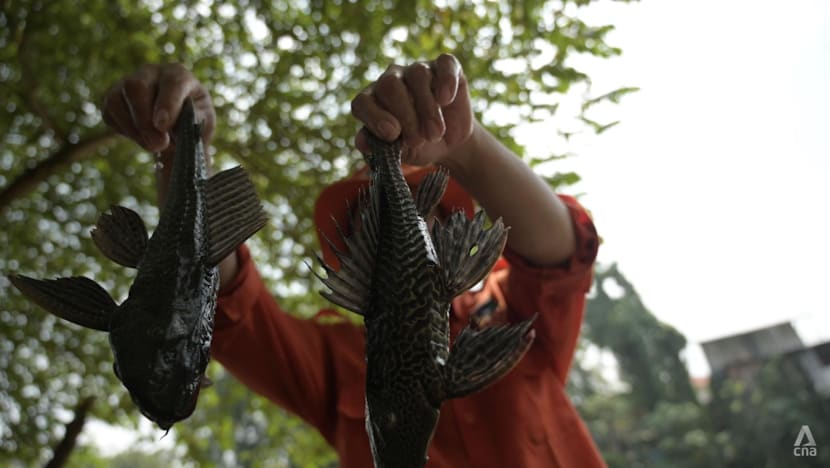
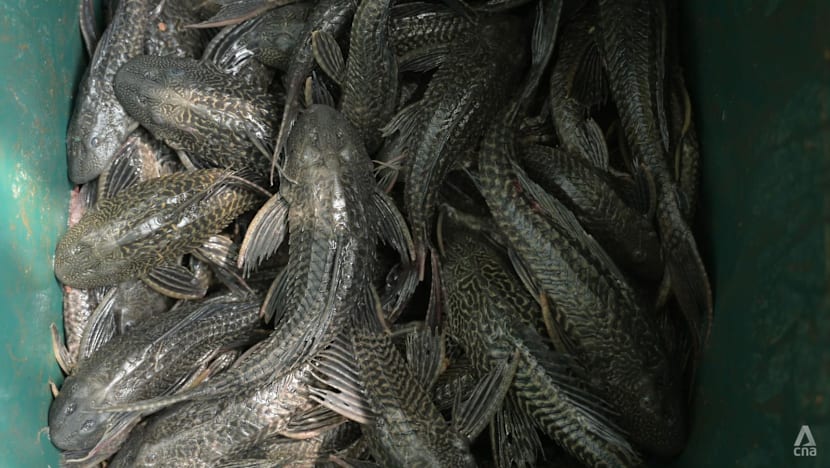
In just two hours on Thursday (Apr 30) morning, the workers netted more than 200 fish. All of them were suckermouth catfish, known as sapu-sapu (broom) in Indonesia and "janitor fish" in some other Southeast Asian countries.
The fish, belonging to the Pterygoplichthys genus, are native to the tropical waters of South America half a world away.
But the bottom feeder has become the dominant – sometimes, the only – species in nearly all of Jakarta’s polluted rivers, lakes, reservoirs and canals, sharply reducing populations of native fish such as the Asian redtail catfish, spotted barb and striped snakehead.
“People here first noticed the presence of sapu-sapu back in the 1980s,” local resident Baharuddin, 69, told CNA. “Back then, it was easy to find other types of fish. But now, this part of the river is 100 per cent sapu-sapu.”





The infestation is not unique to Jakarta.
In the Philippines, the janitor fish has spread across waterways around Manila, including the Pasig River and Laguna Lake, driving out native species and altering local ecosystems.
Meanwhile in Malaysia, it has taken over parts of the Klang River and other waterways in Kuala Lumpur and Selangor.
In 2024, the country’s Department of Fisheries estimated that three varieties of suckermouth catfish made up 80 to over 90 per cent of the fish population in the Klang Valley. The authorities warned that native aquatic life there could soon disappear.
Earlier this month, Fisheries Department director-general Adnan Hussain said despite extensive efforts by the authorities to control the problem, it has “reached a critical level”, with suckermouth catfish “among the most destructive”.
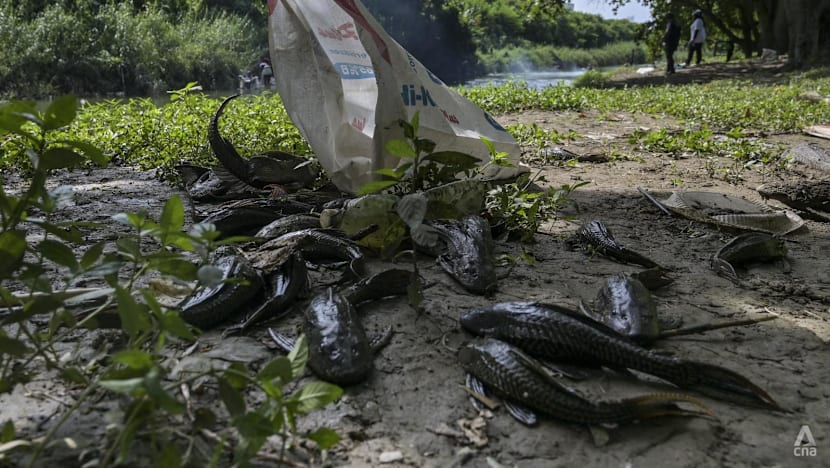
In Jakarta’s polluted waters, some areas have recorded infestations reaching 100 per cent, according to a 2025 paper by Indonesia’s National Research and Innovation Agency (BRIN). Even in the relatively cleaner waters of West Java – where the city’s 13 rivers originate – the fish’s prevalence ranges between 20 and 30 per cent.
Against this backdrop, the Jakarta administration has launched a citywide crackdown.
Since Apr 17, municipal workers in bright orange jumpsuits have moved from one waterway to another, netting as many fish as possible. In just over a week, more than 10 tonnes of the invasive species have been caught and culled.
A similar effort is underway in Malaysia, and authorities and non-governmental organisations have removed more than 100 tonnes of suckermouth catfish since 2021.
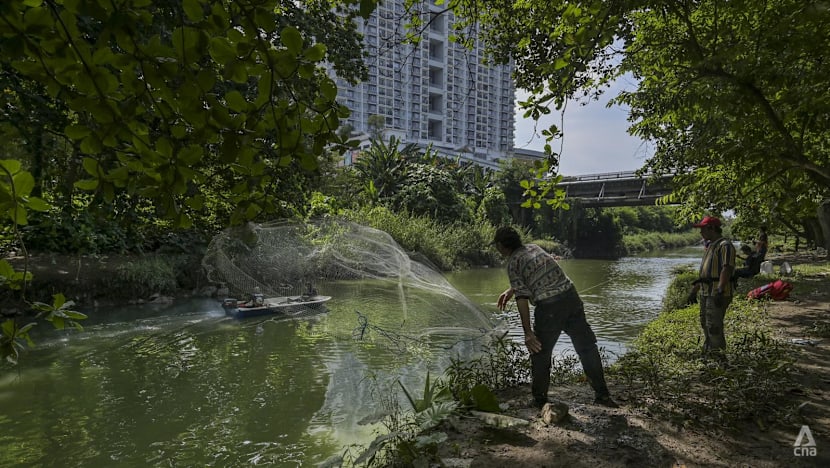
Both countries’ battles with the suckermouth catfish highlight the challenges posed by alien invasive species around the world.
The global economic cost of alien invasive species exceeds US$423 billion annually, an inter-governmental body estimated in 2023.
More than 37,000 alien species have been introduced by human activities to regions around the world, the Intergovernmental Platform on Biodiversity and Ecosystem Services’ (IPBES) Invasive Alien Species Report found.
Besides affecting native species and local ecosystems, scientists have said invasive species can also cause deaths – such as when invasive mosquito species spread deadly diseases like malaria and dengue.

Getting rid of them once they are established can be immensely difficult, as is the case with suckermouth catfish.
Experts have questioned the effectiveness of mass capture, noting that the species reproduces rapidly — laying hundreds of eggs at a time — and has few natural predators in Southeast Asian waterways.
“Controlling suckermouth catfish through mass capture … is only a temporary solution,” Mahawan Karuniasa, a lecturer at the University of Indonesia's School of Environmental Science, told CNA.
Instead, he said, the focus should shift to tackling the pollution that has decimated native species, along with stricter measures to prevent the introduction and spread of alien species.
FROM AQUARIUMS INTO THE WILD
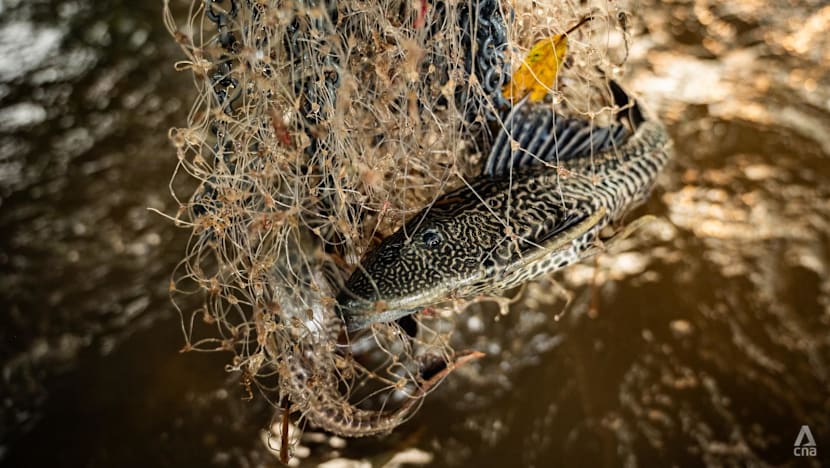
Covered in spots and with the ability to scrape algae off aquarium glass — hence the name janitor fish — the armoured catfish has been popular with hobbyists for decades.
Strong demand led pet stores across Southeast Asia to breed them in nurseries, some located close to waterways.
“Either they escaped during floods or due to poor biosecurity practices, or were deliberately released by pet owners who no longer wanted them. The suckermouth made its way into rivers and lakes, where it quickly adapted and faced no natural predators,” said Mahawan.
With the ability to reproduce rapidly, an aggressive streak towards other species and bodies covered with thick, armour-like plates that few predators can penetrate, the janitor fish soon outcompeted native aquatic life.
It also has the unusual ability to absorb oxygen directly from the air, rather than relying solely on its gills. This allows it to survive in murky, polluted waters where oxygen levels are low.
“Their regional dominance demonstrates their extraordinary evolutionary adaptability and tolerance to severe physicochemical stress,” Nur Azalina Suzianti Feisal of the Management and Science University in Selangor, told CNA.
Azalina, who heads the university’s Centre of Climate Resilience and Strategy, said these traits have enabled the species to thrive in degraded urban waterways where native fish cannot survive.
Experts warn that the species poses a significant environmental threat. Janitor fish burrow into riverbanks and riverbeds, accelerating erosion and destroying aquatic plants as well as the nesting grounds of other species.
As bottom feeders, they also ingest large amounts of heavy metals from contaminated sediments, raising risks for humans and animals that consume them.
“Our research reveals that their gastrointestinal tracts trap extraordinary concentrations of toxic metals, particularly lead and arsenic,” Azalina said.
Fears over contamination have discouraged commercial fishing and consumption of the fish, unlike the case with some other invasive species in Southeast Asia such as the tilapia — native to Africa and the Middle East — and the red devil cichlid from Central America.
Even in less polluted waters, the perception that janitor fish are unsafe to eat persists.
“People here think sapu-sapu is poisonous. If they catch them, they just throw them away,” said Jakarta resident Arief Kamarudin, 35, noting that the fish’s tough exterior is another deterrent.
“They can really hurt your hand if you’re not careful. With all that effort for not much meat, people would rather not eat sapu-sapu — even now, when other fish are becoming harder to find.”
LOCALS FIGHT BACK
Yet, its lack of commercial value has not stopped some people from taking matters into their own hands.
In 2022, a group of Malaysians formed the Malaysian Foreign Fish Hunting Squad (SPIA) with the aim of ridding Klang Valley's waterways of invasive ornamental species such as the suckermouth catfish, peacock bass and African catfish.
Almost daily, dozens of volunteers fan out across the valley, descending on rivers and canals where they can haul in up to half a tonne of bandaraya (Malay for "city", alluding to the fish's role as municipal cleaners) fish, as the suckermouth catfish is known in Malaysia.
“My hope is that everyone — not just owners of ornamental fish — takes care of our ecosystem,” SPIA founder Mohamad Haziq A Rahman told CNA during a hunting session in Puchong, Selangor on Tuesday (Apr 28).
“Don’t release these (invasive) fish, as the impact is that our local species will go extinct.”

Around 20 people participated in the session, scouring a tributary of the Klang River for the invasive species. By the end of the event, they removed about 2,500kg of bandaraya fish from the location.
Haziq said SPIA often works with local governments, universities and corporations as part of their social responsibility initiatives. Collaboration with the Kuala Langat Municipal Council on Apr 28, for instance, has allowed participants to earn RM1 (US$0.25) for every kilogramme of suckermouth catfish they catch.
But more needs to be done as these removal operations require considerable funds and equipment, including boats and trucks. “The main factor is manpower. If more people are involved, that is already a huge help to us,” he said.
In Jakarta, Arief has been educating the public about the dangers janitor fish pose to the environment on TikTok since 2019. He has more than 380,000 followers.
“Many people don’t know that sapu-sapu is invasive. Many don’t know that they are not originally from Jakarta,” said Arief, who lives by the Ciliwung, the Indonesian capital’s biggest river.
“Many people also don’t know that sapu-sapu are threatening local species and must be eradicated from Jakarta’s lakes and rivers.”
Arief regularly produces short videos of himself on his inflatable raft, casting nets into the Ciliwung, to show people ways to catch and dispose of the invasive catfish as well as find its nesting grounds.
“My personal best is 70 sapu-sapu in a single cast,” he said.
Meanwhile, several universities and community-based organisations have been collecting native fish from the Ciliwung River to be rescued and bred ex situ in hopes that they can be reintroduced back into the wild one day.
These efforts have not only raised public awareness but also helped spur action at the policy level in Jakarta.
Responding to growing concern among residents over the spread of janitor fish in their neighbourhoods, Jakarta Governor Pramono Anung ordered the city-wide hunt for janitor fish.
The governor has not set a timeframe or target for the programme, adding that it will run for as long as necessary.
POPULATIONS TEND TO REBOUND QUICKLY
While the city governments and volunteers have successfully removed tonnes of the fish, these efforts are often localised and temporary, experts said.
“Populations tend to rebound quickly. At present, there is limited evidence of sustained population reduction at the ecosystem level, although localised improvements may occur after intensive removal,” said Azalina of Selangor’s Management and Science University.
The researcher called on environmental management agencies across the region to prioritise targeted culling programmes for suckermouth catfish.
“Concurrently, there is an urgent need for strict public health campaigns to discourage marginalised communities from consuming these fish, alongside enhanced regulatory oversight, and public education to stop the ongoing release of ornamental fish into freshwater systems,” she added.
In Indonesia, the Jakarta government's practice of disposing of the janitor fish by burying them alive drew concerns from the Indonesian Ulema Council, or MUI, over its cruelty. City officials have since pledged that all fish will be dead before burial.
Some people have proposed turning janitor fish into compost or animal feed, like what Thailand has done, or as charcoal, like what Brazil has done.
But Yusli Wardiatno, a professor in maritime and fisheries at Indonesia’s Bogor Institute of Agriculture (IPB) is against these proposals.
“Health risks remain even when the fish are processed into non-food products such as feed, fertiliser, or industrial materials. Heavy metals can potentially re-enter the food chain or be absorbed by plants through fertilisers if the processing is not thoroughly clean,” he said, as quoted by the IPB’s website.
Pollution must first be controlled in Southeast Asia’s waterways, some of which have become highly toxic, experts said.
“Then we can safely dispose of sapu-sapu carcasses or turn them into products of commercial value without posing risks to people’s health or the environment,” said Mahawan.

Indonesia must also tighten its biosecurity measures, controlling the import and sale of foreign species that may cause harm to endemic species, he added.
This is what Australia has done with the cane toad, which became a pest after it was first introduced in Queensland in 1935 to protect sugar cane plantations from beetles.
The poisonous amphibian has since spread to three other states in Australia and has been linked to the decline and extinction of several native species.
Mahawan said countries must keep tabs on all alien animals and plants that could pose a threat to native species. “If (a foreign species) is released into the wild, whether by accident or not, early detection and rapid response is paramount,” he said.
“Steps must be immediately taken to stop (the foreign species) from reproducing, spreading and eventually dominating the local ecosystem. When that happens, the time, cost and effort required to reverse the damage can be far greater.”