Indonesia’s finance minister Purbaya seeks to defend country’s policies after complaint by Chinese firms
In a letter to Indonesia President Prabowo Subianto, Chinese businesses said policy shifts on mining, export earnings and enforcement have raised costs and uncertainty.

This audio is generated by an AI tool.
JAKARTA: Indonesia has sought to defend its tougher approach to natural resources and foreign investment after a Chinese business group complained to President Prabowo Subianto that rising costs, stricter enforcement and alleged misconduct by officials were hurting Chinese-backed companies in the country.
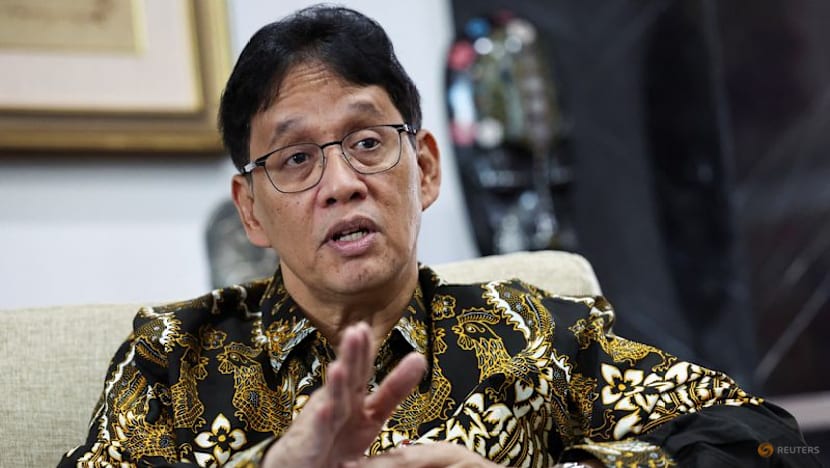
Finance Minister Purbaya Yudhi Sadewa said Jakarta would prioritise national control over its minerals, including in planned changes to mining royalties.
“It’s fine with the minerals, they’re ours,” Purbaya told news outlet Kompas.com in Jakarta on Tuesday (May 12).
He added foreign investors could look elsewhere if Indonesia’s policies no longer suited their business interests.
“If others want to move, they can just look for minerals somewhere else,” he said.
Purbaya’s comments came after the China Chamber of Commerce in Indonesia (CCCI) sent a letter to Prabowo saying Chinese-invested companies had recently faced “excessively stringent regulation, over-enforcement, and even corruption and extortion” by authorities.
In the undated letter, a copy of which was seen by CNA, the chamber said these problems had “severely disrupted normal business operations” and “directly undermined long-term investment confidence” among Chinese companies in Indonesia.
The CCCI said Chinese firms had long supported Indonesia’s government and invested in line with local laws, while contributing to economic growth, jobs, industrial development and social responsibility programmes.
But it said the business environment had become increasingly difficult as Jakarta tightened control over mining, export earnings, forestry enforcement and work permits.
Indonesia has tightened controls over its mineral sector in recent years under its downstreaming policy, including a 2020 ban on raw nickel ore exports aimed at boosting domestic processing and value-added industries.
The Associated Press reported that the ban attracted extensive Chinese investment in nickel refining, helping lift the country’s share of global nickel production from 31.5 per cent in 2020 to 60 per cent in 2024.






ROYALTIES, NICKEL CURBS AND ENFORCEMENT CONCERNS
CCCI said Chinese companies had been hit by repeated increases in taxes and fees, as well as fines of up to tens of millions in US dollars.
“Taxes and fees, including mineral resource royalties, have been raised repeatedly, accompanied by intensified tax inspections and even hefty fines amounting to tens of millions of US dollars, creating panic among enterprises,” it said.
Purbaya rejected suggestions that the government had already imposed higher mining royalties or additional levies, saying the changes were still being planned.
“There aren’t any yet. They haven’t been imposed, it’s just a plan,” he said.
The chamber also criticised a plan requiring natural resource exporters to keep 50 per cent of their foreign exchange earnings in Indonesian state-owned banks for at least one year, saying it would create uncertainty and “severely harm corporate liquidity and long-term operations”.
Purbaya said exemptions had been prepared for some companies, including those that do not borrow from Indonesian lenders.
“As far as I know, there are exceptions for companies that don’t borrow money in Indonesia,” he said.
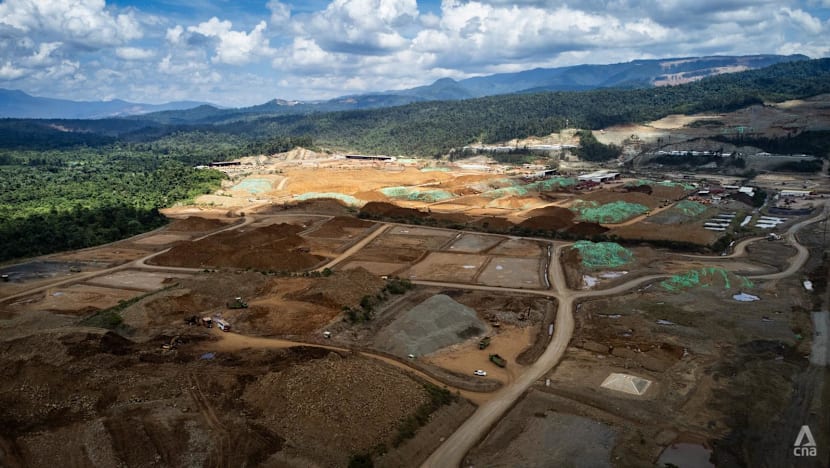
CCCI also raised concerns over sharp cuts to nickel ore mining quotas, saying quotas for large mines had been reduced by more than 70 per cent, equivalent to a 30 million tonne drop in output. It warned the cuts could disrupt downstream industries such as new energy and stainless steel.
The chamber criticised forestry enforcement, saying a special task force had imposed a record US$180 million fine on a Chinese-invested company for allegedly lacking a valid permit to use forest areas.
The complaint comes as Indonesia steps up action against illegal forestry and mining activity. The Jakarta Post reported that the government has been conducting a broad crackdown since early this year, reclaiming more than 5.88 million hectares of land, with seized assets and fines across forest areas valued at 371.1 trillion rupiah, or about US$21.1 billion.
CCCI said several major Chinese-invested hydropower projects had also been suspended after Indonesian authorities accused them of damaging forest land and worsening floods.
It said work permit approvals had become more complicated, costly and restrictive, including rules tying foreign technical and managerial staff to specific work locations, making it harder for companies to move skilled workers between projects.


The chamber said Indonesian authorities were also considering additional measures, including new export duties on some products, the removal of electric vehicle incentives and cuts to tax relief for special economic zones.
It also pointed to a revision in Indonesia’s benchmark pricing system for nickel ore, saying the Energy and Mineral Resources Ministry had changed the formula by including cobalt, iron and other associated minerals in the calculation for the first time.
“The abrupt enactment of these policies has led to a 200 per cent surge in comprehensive nickel ore costs,” it said.
The chamber said Chinese companies, which it described as the largest investors and operators in Indonesia’s nickel industry, were facing higher production costs, wider operating losses and supply-chain imbalances.
It warned the situation could hurt existing projects, future investment, exports and more than 400,000 jobs linked to the nickel industry.
In a broader criticism, CCCI said recent policies lacked stability and continuity, while enforcement standards in taxation, environmental protection and forestry were opaque and gave officials too much discretion.
It also said normal appeal channels were “blocked”, government departments delayed responses, and some issues could only be resolved through “third-party intermediaries charging exorbitant fees”.
ISSUE GOES BOTH WAYS, PURBAYA SAYS
Purbaya said the dispute should be seen as a two-way issue, adding that Indonesia had also complained to China about the conduct of some Chinese companies operating in the country.
“I have also complained to them. Many Chinese businesspeople here are doing illegal business. I asked for it to be fixed, and they promised to issue a warning,” he revealed.
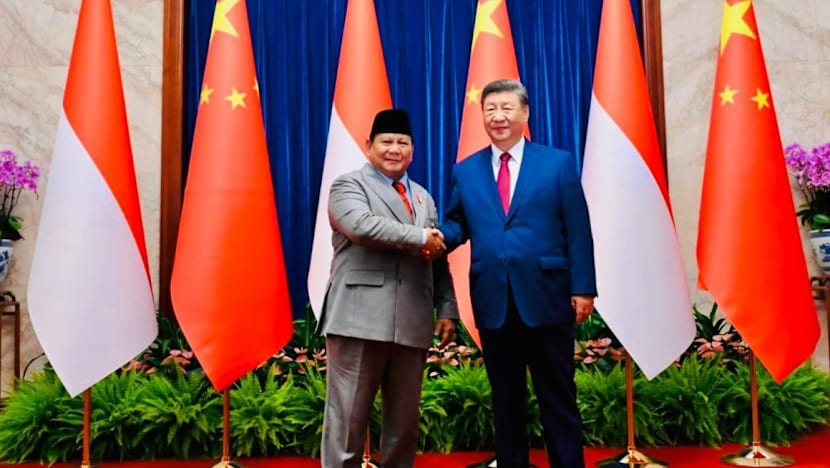
He emphasised the investment relationship between Indonesia and China remained fundamentally sound.
“So it is actually two-way. There is no problem,” Purbaya said.
Energy and Mineral Resources Minister Bahlil Lahadalia said he had not received a copy of the CCCI letter, but had spoken with China’s ambassador to Indonesia about mineral policy, including the revised nickel pricing formula.
“Some have communicated with me. The ambassador has also spoken with me. I have given a proper explanation,” Bahlil said.
China is one of Indonesia’s biggest foreign investors, along with Singapore, Hong Kong, the United States and Japan.
Indonesian business leaders and investment officials urged the government to treat the letter as input rather than confrontation.
Deputy Investment and Downstreaming Minister Todotua Pasaribu said the concerns were a normal part of investment dynamics and could help Indonesia improve its investment policy.
“If there are comments about challenges in this country and they provide input to the government, we consider that something positive,” he said.
Erwin Aksa, deputy chairman of the Indonesian Chamber of Commerce and Industry (Kadin), said businesses needed regulatory certainty, cost efficiency and room to plan.
“Kadin sees the input from the China chamber as something normal in the dynamics of investment and international trade relations,” Erwin told news portal Bisnis on Wednesday.