



India’s Visakhapatnam looks to Singapore for ideas to tackle water shortages amid data centre expansion
A Singapore-inspired water management approach could offer a way forward as billions of dollars in data centre investments raise concerns over the city’s strained water supplies.
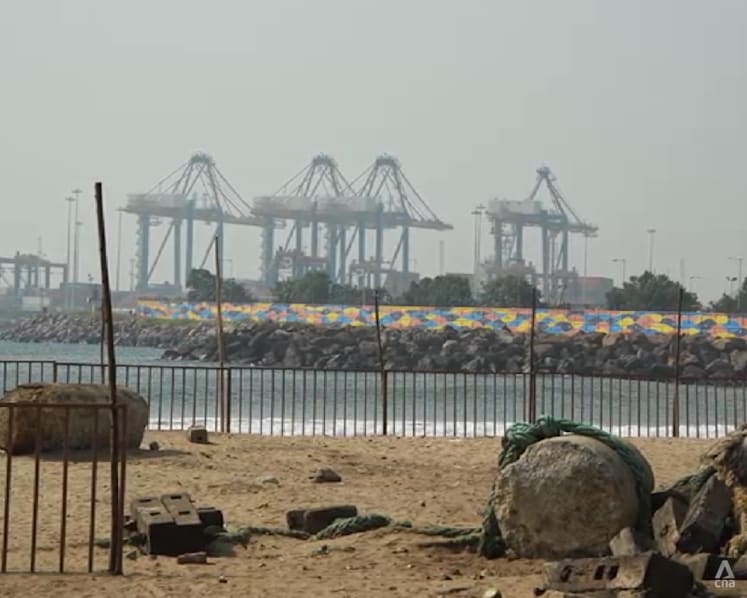
India's coastal city of Visakhapatnam is facing concerns over water security amid billions of dollars in planned data centre investments. (Image: CNA)

This audio is generated by an AI tool.


VISAKHAPATNAM, India: Billions of dollars in planned data centre investments are raising concerns over water security in India’s coastal city of Visakhapatnam, where some neighbourhoods are already grappling with shortages.
The city, also known colloquially as Vizag, is at the centre of Andhra Pradesh’s ambitions to become a global data centre hub, with technology giant Google’s parent company Alphabet having committed to invest US$15 billion over five years from 2026.
But the investment, part of a broader push by the state to develop at least 6.5 gigawatts of data centre capacity, is raising questions over whether the city’s infrastructure can keep pace.
The state government is considering adopting elements of Singapore’s water management model to secure its supplies, according to the Vizag Development Council.





GROWING WATER CONCERNS
Construction of Google’s planned artificial intelligence hub is underway, with state officials saying that the investment will transform the local economy and create high-value jobs.
But residents have expressed mixed feelings about the development, particularly over the demand for water needed to cool data centres.
“Drinking water isn’t sufficiently available here. There are a lot of industries here including a huge pharmaceuticals industry. So, there’s already a crisis here,” said student Vamsi Kumar.
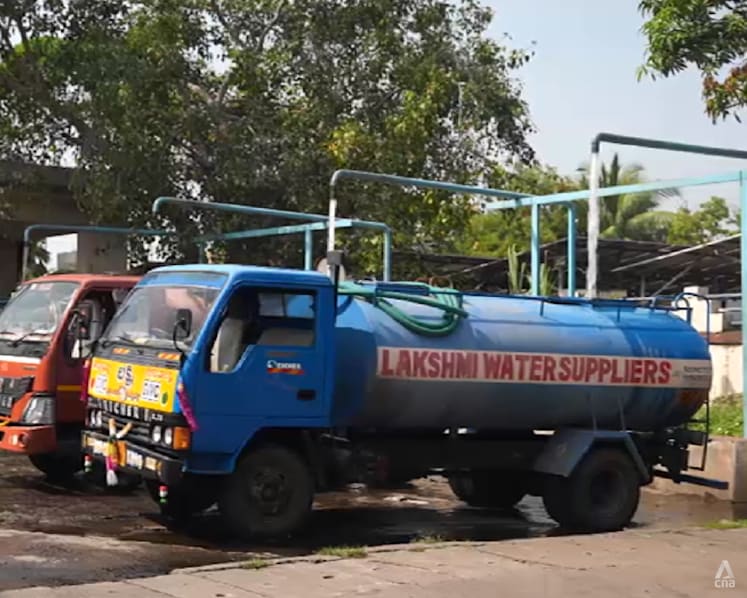
According to local reports in September, several residential communities in Visakhapatnam’s Madhurawada area were receiving municipal water only once every two or three days, forcing residents to rely on private water suppliers.
A rainfall deficit and declining reservoir levels have worsened the situation, with borewells drying up in some areas.
Andhra Pradesh Chief Minister N Chandrababu Naidu has said the city's proposed data centre projects could require about 100 billion litres of water.
The state’s minister for information technology, electronics and communications Nara Lokesh said data centres will receive water through dedicated industrial pipelines rather than drawing from the city's existing supply.
He has assured residents that drinking water and irrigation needs will be protected.
Google said in a statement that its project would be developed in line with applicable laws and would use "advanced air cooling to protect vital local water resources".
LOOKING TO SINGAPORE FOR A SOLUTION
Drawing inspiration from Singapore’s approach to water management, the Vizag Development Council has recommended measures including building new reservoirs, recycling water, constructing desalination plants and sourcing water from outside the region.
The council’s president O Naresh Kumar said the proposed approach could help the city prepare for prolonged dry spells.
"So, in case there's an El Nino, or a super El Nino and a monsoon failure for two months, we are prepared. Currently, we are not prepared," he said.
The city currently relies on reservoirs, but the council is also proposing a Singapore-style smart metering system to monitor consumption and detect leaks.
"We need a pilot project to implement in four or five cities. And if we can see results and show that what Singapore can do, Vizag can do," he said.

WATER SECURITY AT A COST
While desalination and water recycling could help increase water supply, such solutions bring another challenge.
Experts say desalination is energy-intensive, adding to the electricity demand needed as the city expands its data centre infrastructure.
“If you try to solve the water problem, you require more power,” said India’s former power secretary EAS Sarma.
“That has to be tackled, and that means extra investment. And that extra investment money has to be raised from a taxpayer or electricity consumer.”
Industry bodies say the federal government should step in and work with Andhra Pradesh’s state government to fund the infrastructure needed to support the planned developments.
They add that the city’s ambitions to become a global data centre hub must be balanced with stronger water conservation efforts to ensure the economic benefits reach local communities.