‘On the verge of closing down’: India’s aviation industry under strain as fuel costs surge
The Federation of Indian Airlines has sought government support, warning of flight suspensions if the sector does not receive fuel tax relief.

This audio is generated by an AI tool.


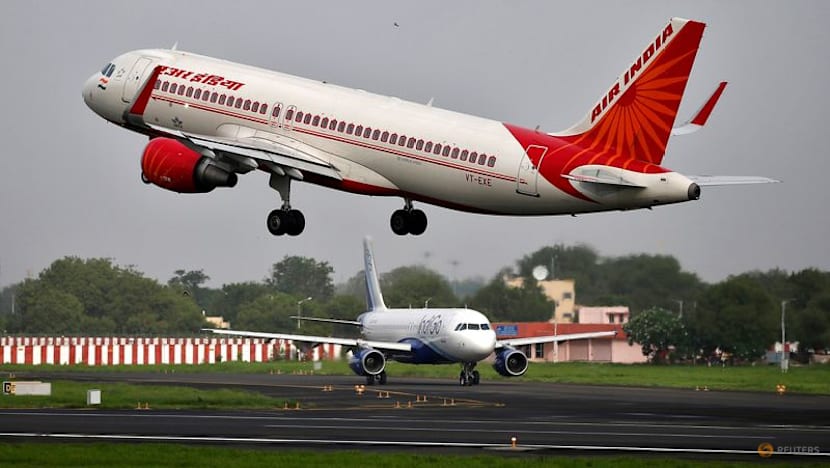
MUMBAI: India’s aviation sector is facing intensifying pressure, with major carriers warning of severe financial stress driven by rising fuel costs and prolonged flight routes amid tensions in the Middle East.
The Federation of Indian Airlines – representing carriers that include Air India, IndiGo and SpiceJet – has sought government support, saying the industry is under extreme strain.
In a letter to the country’s civil aviation ministry dated Sunday (Apr 26), the federation warned that the industry is “on the verge of closing down or of stopping its operations”.
It is seeking a return to COVID-19 era cost caps on aviation turbine fuel and a reduction or deferment in taxes.
DOUBLE WHAMMY
India, which imports about 88 per cent of its crude oil, is particularly vulnerable to global price shocks.
International oil markets have been thrown into turmoil by the Iran war, which is squeezing energy supplies and compounding the financial pressure on airlines.
Jet fuel alone accounts for nearly 40 per cent of airline costs.
The Indian airlines said the situation has made both international and domestic operations largely unviable, resulting in significant losses for the aviation sector this month.





Key flight corridors in the region remain disrupted as well, leading to longer flight times and higher operating costs for Indian carriers, which rely heavily on these routes.
Pakistan closed its airspace to all Indian carriers in April last year, following terror attacks in India-administered Jammu and Kashmir that sparked the fiercest exchange of military action between India and Pakistan in decades.
“It is like a double whammy of impact … on the aviation sector. The sector is already impacted due to the hold on Pakistan airspace, and now with the Middle East crisis, a lot of the international traffic seems to be impacted,” said Sonam Srivastava, founder and CEO of Mumbai-based investment firm Wright Research.
“More than two to four hours have been added to many western routes, which increases the fuel cost.”
Ratings agency ICRA has downgraded its outlook for India’s aviation sector, pointing to rising costs, airspace closures and depreciation of the rupee.
Analysts say these pressures are worsening existing challenges such as high taxes, staff shortages and supply chain disruptions.

COPING WITH OTHER CHALLENGES
India’s aviation sector is dominated by two carriers: Air India and IndiGo, which control about 90 per cent of the market.
Both are navigating their own difficulties.
Air India continues to deal with the aftermath of last year’s deadly crash in the western Indian state of Gujarat that killed 260 people, as it awaits the final investigation report.
The airline, which has been trying to turn itself around since its privatisation by the Tata Group in 2022, reportedly posted a loss of more than US$2 billion in the last financial year.
“The crash played a big part in Air India's transformation going a few steps back. We hope the accident report, the final report comes out soon (and will be) something Air India and the entire aviation community can learn from and move ahead,” said Vishal Mehra, host and producer of aviation podcast The Indian AvGeek.
Earlier this month, Air India’s CEO Campbell Wilson, whose term was set to end next year, resigned after nearly four years in the role. The airline said he will remain in the position until a successor is appointed.
Meanwhile, IndiGo has faced operational challenges of its own.
The low-cost airline cancelled thousands of flights in December last year, largely blaming crew shortages as it worked to comply with stricter regulatory requirements.
However, there are signs of optimism.
Willie Walsh, an industry veteran and director general of the International Air Transport Association (IATA), is set to take over as IndiGo’s CEO in August – a move analysts say could strengthen the airline’s global ambitions.
“This is exactly the kind of experience that IndiGo desperately needs right now, especially as it looks to expand across the world,” said Mehra.
“Of course, it won't be a bed of roses for Willie Walsh – I'm sure he knows that.”
Despite the mounting challenges, industry watchers say opportunities remain strong, with India continuing to be one of the fastest-growing aviation markets globally.