Cambodia’s crackdown on scam centres leaves trail of stranded victims as criminal groups switch tactics
Cambodia says it is carrying out its toughest crackdown yet on online scam centres, with hundreds of facilities targeted. In the first of a two-part series, CNA goes on the ground to find victims stranded and signs of operations shifting into smaller urban sites, while experts warn that the criminal networks behind the industry remain deeply embedded.
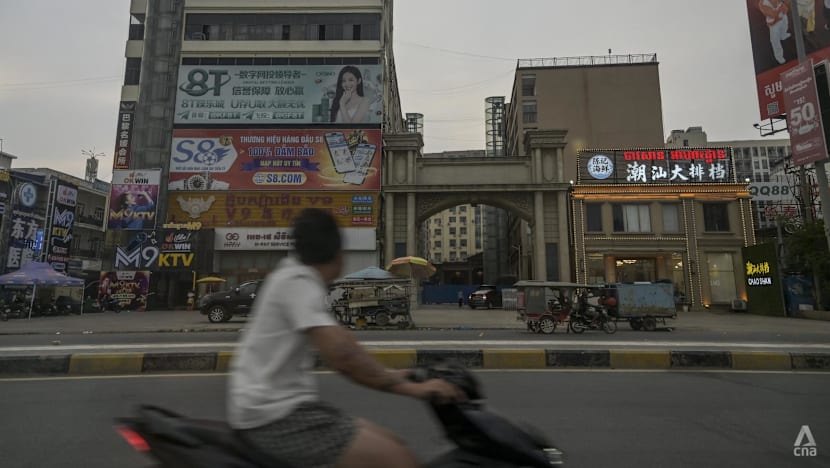
A man rides past an array of advertising for illegal online gambling sites in Bavet, Cambodia, in May 2026. (Photo: CNA/Fadza Ishak)

This audio is generated by an AI tool.


PHNOM PENH: Abdul’s plan was to teach English in a Bangkok school. His family in Uganda sold what land they had on the promise of greater opportunities far across the Indian Ocean in Southeast Asia.
A few months later, as he was being dragged through a dark jungle with men armed with machetes and arrows, the future he had imagined was disappearing from view.
Desperate after teaching job promises had fallen through and on the premise of starting a simple data entry job in Cambodia offered by online recruiters, Abdul was taken on a harrowing journey.
He was bundled into multiple vans across Thailand, wrenched into Laos under the cover of darkness, in and out of mysterious remote complexes, across a river into Cambodia and then eventually smuggled down to a small outpost town close to the Gulf of Thailand.





Abdul, who asked that his full name not be used for this article, was not alone. Many strangers, mostly Chinese men, were being taken on similar routes. They were all heading for the same fate - being moved into criminal scamming compounds.
A great human wave has been rolling through these back channels for months and years on end. Coordinated dragnets pulling in people from around the world to fill the ranks of a shadow workforce in secure compounds across Cambodia.


Abdul was scared. More for his bodily organs, he said, than anything else, fearing they would be harvested. When he arrived and was given his work instructions, he accepted his fate.
“They told me, ‘You're here to scam. We are scammers. This is a scamming company’,” Abdul said. “I was left with no option other than surrendering myself to these guys.”
He said compound managers dangled a vision of easy wealth if he could meet targets: new iPhones, overseas vacations and money that his fellow countrymen could only dream of.
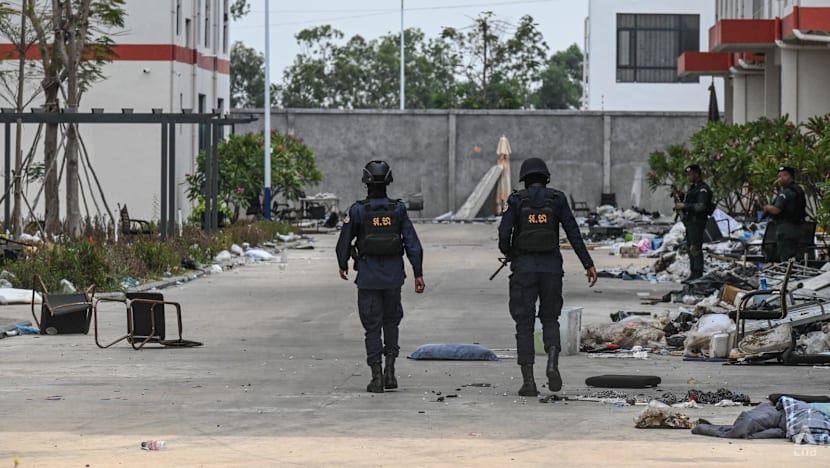
Faced with no alternative, Abdul fell into a world he deeply mistrusted, forced to scour online networks for potential victims for elaborate schemes designed to extract their money.
After one month inside, police raided and emptied the compound. Abdul had nothing to his name - he was never paid - but he was free.
“Ever since then, every single day has been a nightmare. Sleeping outside. You're not safe. You're in the country illegally. You have no visa. You have no food. You have nowhere to run to,” he said from a safe house in Phnom Penh. He is still trying to find a way home.
Abdul is like many lost in the Cambodian capital these days. The city is awash with wanderers, interlopers, the stranded and the dreary-eyed.

As government-directed raids have intensified on scamming compounds around the country, a stream of foreigners has fled Cambodia; the government estimates 300,000 people have left in recent months.
But those without the means to escape - usually money for flights and documents to resolve irregular immigration status - have found themselves stranded on the streets.
In early May, CNA witnessed dozens of Indonesians camped outside their nation’s embassy; some were sleeping on the street, desperate for food and information. They are waiting to be processed and sent home after leaving the scam and online gambling industry.
Stories of them being deceived into the work and being physically abused inside the compounds were common among the group. And there are many more like them, from all corners of the planet.
“We've got a massive humanitarian crisis on the streets of Phnom Penh. This is what happens when you allow hundreds of thousands of people to be moved into your country, and then be forced to do this work,” said Erin West, the founder and chief executive officer of Operation Shamrock, a non-profit that fights global scams.
“When you let them out, they have no assets, they have no identification and no means of getting home.”
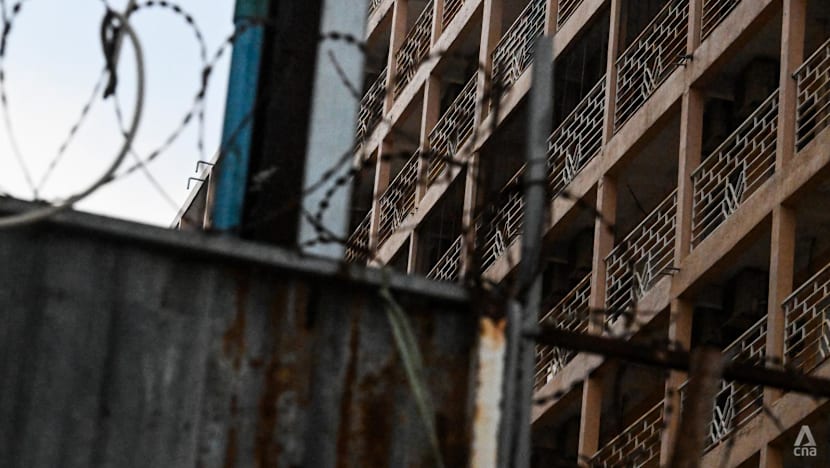
‘THE GLOBAL APEX FOR ONLINE SCAMS’
Cambodia has long played down the existence of scam compounds in the country, but in recent months has shifted stance, promising to eradicate an industry that by some estimates was generating billions of dollars a year.
Online fraud takes different forms. Many involve romance or investment scams, fake cryptocurrency schemes or gambling-related deception.
Workers are trained with scripts, fake identities and target lists. They then contact potential victims online, typically building trust over days or weeks before moving them towards a fake investment, gambling site, crypto platform or emergency payment.
Once the money is sent from victims, it is quickly moved through digital wallets, mule accounts and laundering networks, experts said.
Some workers are willing participants. But many others have been trafficked through fake job offers, their passports taken, been confined, beaten or forced to meet revenue targets.
Researchers estimate Cambodia’s scam industry may generate roughly US$12.5 billion to US$19 billion a year, a scale often described as equivalent to around 40 to 60 per cent of Cambodia’s gross domestic product (GDP).
The figures are difficult to verify because much of the money moves through cryptocurrency accounts, underground banking and offshore structures.

The country had all the ingredients for these crimes to flourish, experts said: the casino zones, weak oversight, border economies, old smuggling routes and politically connected landholders.
“The scammers will look at the weakest links. Look at countries with the most vulnerable countries that they can influence. They can buy their way. And it happened to be Myanmar, it happened to be Laos and it happened to be Cambodia,” said Ou Virak, president of Future Forum, an independent think-tank based in Phnom Penh.
During the COVID-19 pandemic, online gambling and digital fraud filled a vacuum left by collapsing casino tourism.
The industry then grew into one of the country’s most powerful illicit economies, largely driven by China-linked transnational criminal organisations, said Jason Tower, a senior expert for the Global Initiative Against Transnational Organised Crime, an international non-governmental organisation headquartered in Geneva.
Over the past five years, these groups have “transformed mainland Southeast Asia into the global apex for online scams”, he said.
“Southeast Asia is now really the only space in the world where you have massive industrial scale compounds in the hundreds, and massive scam cities that feature populations in excess of 30, 40 or 50,000 people that are engaged in online scams.
“It's also currently the only place where you can see mass numbers of individuals being trafficked into forced criminality and modern slavery inside these compounds.”
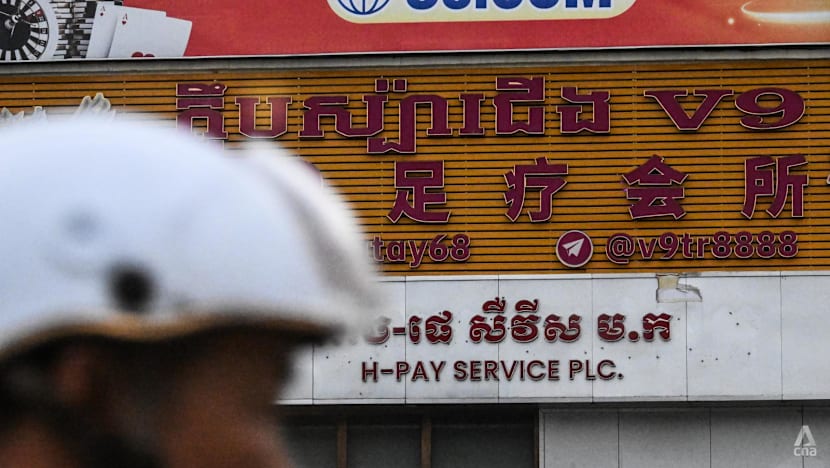
Globally, the money involved is now comparable to the world’s largest illicit drug markets.
And it is hurting people everywhere; according to the Global State of Scams Report 2025 by the Global Anti-Scam Alliance and Feedzai, consumers in 42 countries lost an estimated US$442 billion to scams over the past year.
The Cambodian government says it has been strongly targeting the criminal industry through raids, sanctions and legislation, a move analysts said comes amid rising scrutiny domestically and from countries like China, South Korea and the United States.
In April, Cambodia endorsed its first dedicated anti-scam law, which criminalises technology-based fraud, recruitment and support for scam centres, with penalties reaching life imprisonment in the most serious cases.
“To safeguard Cambodia’s dignity and honour, the country will not permit its territory to serve as a haven for scammers,” said Chhay Sinarith, senior minister and chair of Cambodia’s Commission for Combating Online Scams.
He refuted suggestions that the action was at the request of other countries. “Cambodia is taking this action on its own, not because of foreign pressure,” he said in an exclusive interview with CNA.
Sinarith confirmed that about 300 facilities had been targeted, including dozens of casinos, since last July. Approximately 1,500 individuals, including “mastermind and conspiracy members”, were in prison over their purported involvement, he added.
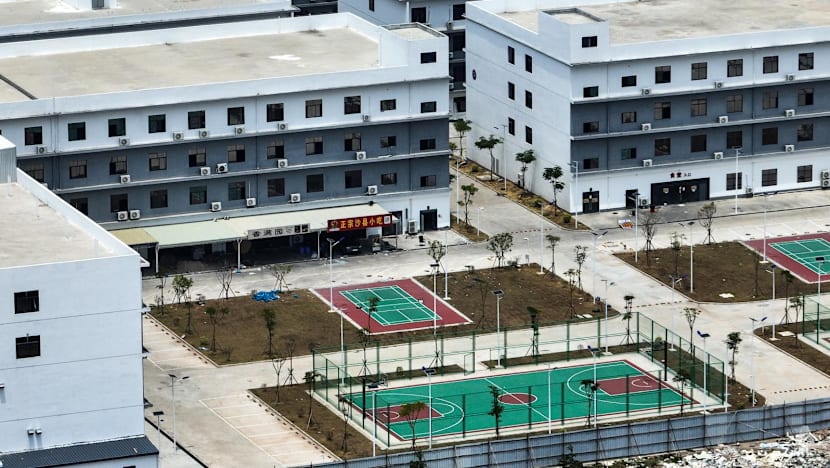
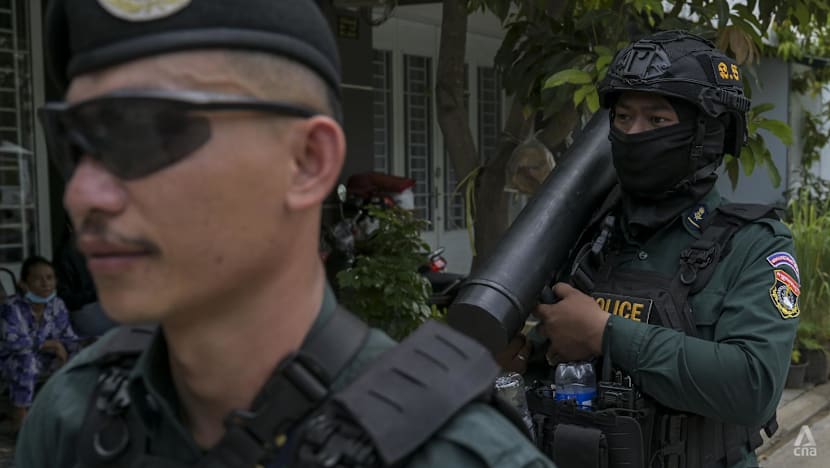
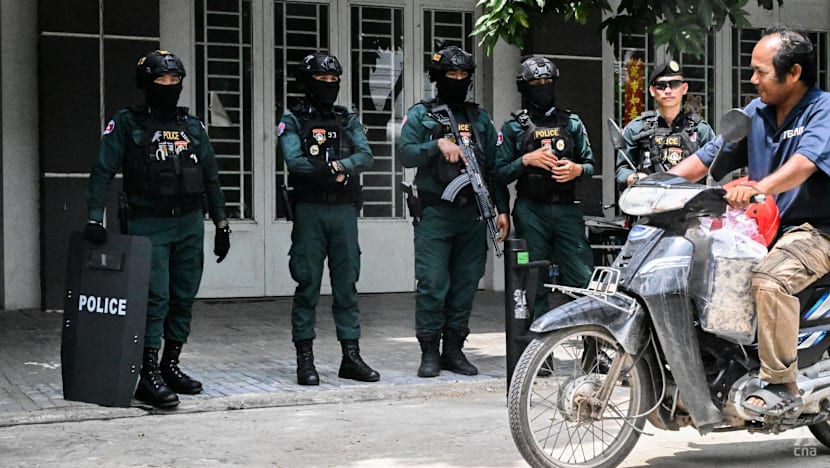
To illustrate their commitment, authorities offered CNA a rare opportunity to accompany cybercrime police units, city officials and high-ranking members of the judiciary on a raid of a residential area on the outskirts of Phnom Penh.
It followed apparent tipoffs from local residents that criminals were allegedly operating in the area, which from the outside appeared ordinary, with a local marketplace, phone shops, salons and clothing stalls in front.
Heavily-armed patrol teams swooped through the area, moving door-to-door searching for illegal activity and foreigners without visas.
At times they forced their way into houses and interrogated Chinese nationals living inside. At its conclusion, authorities said they had found nothing in the neighbourhood, except some potentially illegal cigarettes.
Regardless of the success of this particular operation, experts and observers say these types of anonymous locations are exactly where fears about the deepening roots of criminal syndicates are growing.
With pressure rising, scamming groups are shifting their activities to harder-to-find locations, often hidden within plain sight. And these syndicates are targeting new groups of individuals to take the place of their dwindling departing army of workers.
COOKING STOVES AND JOB ADS
Along the dark riverside, water from the Tonle Bassac river lapping gently against its concrete retaining walls, men play poker on their phones, lying in the thick humidity.
They are South Asians, from countries like India, Pakistan and Bangladesh - small groupings of alleged scammers still ensnared by an industry that has shifted to its new reality rather than disappear.
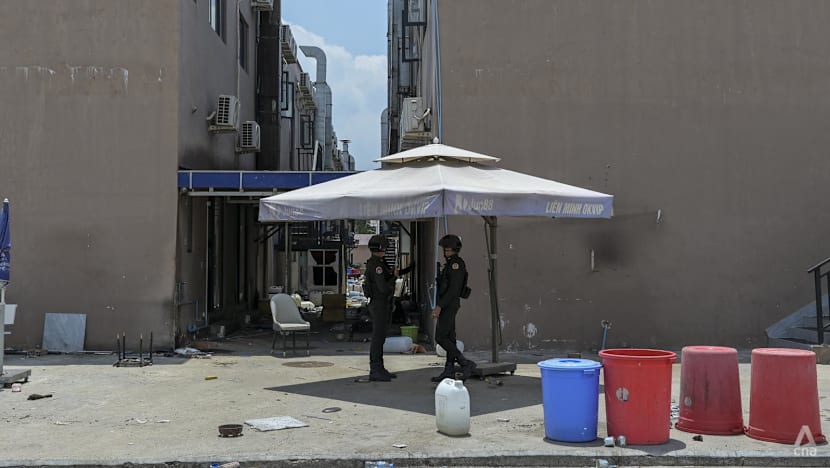
With massive scamming complexes being emptied out around the country, there is mounting evidence that syndicates are breaking up into smaller operations, concealed in apartment buildings and shophouses, especially in Phnom Penh.
“There are no good jobs here,” one man says. “Everyone is here for scams.”
The shadows are punched by the shining neon signs from banks that have been internationally sanctioned and the 24-hour Indian restaurants that now dominate the promenade.
A weary security guard watches over the back alleys from where men carry large boxes of takeaway food into labyrinthine apartments above. Chinese men with crew cuts and leg tattoos smoke cigarettes in the gutter.
Small supermarkets sell cooking stoves, suitcases and sex toys, curious offerings that serve the needs of their regular patrons.

Daily chatter these days is about the bodies falling from high rises, the fake gold mines raided in apartment buildings and the bakeries with scammers living upstairs. It is a new and highly challenging crime frontier to contend with, Virak said.
“Even if the intention to crack down is real, it's going to be much more complex. They might be diversifying. They might be laying low. They might be going smaller scale. They might decentralise,” he said.
“It's still the 80-20 issue, right? 20 per cent of the efforts can solve 80 per cent of this. But to eliminate the last 20 per cent, it's going to be a lot more difficult and require a lot more effort.”
Such concealment tactics could complicate efforts to deal a hammer blow to criminal groups, said Nathan Southern, the operations director of Eyewitness Project, an organisation investigating crime, conflicts and corruption in the region.
“If every condominium building, every restaurant and every shop front in Phnom Penh has a risk of three or four apartments inside there being run by smaller outfits, then we don't know where it is, we don't know the scale of it and we don't know the suffering that's happening inside it,” he said.
In the meantime, those left stranded on the streets remain highly vulnerable to being re-recruited into new scamming operations, which could be taking shape anywhere in the city.

Advertisements for scamming jobs continue to roll in on social media forums, some explicitly calling for individuals already inside Cambodia. Some promise to transport workers to compounds that are still active, others further afield, including Myanmar, Malaysia and countries in Africa.
The networks seek a diverse range of talent; from Portuguese, Hebrew and Japanese speakers, to work-from-home bloggers, models and sex workers. Job postings include explicit details about locations, income and benefits.
“There's a big shift towards other languages, and the countries that they are targeting can't keep up, so there's just lots of gaps to exploit,” said Lindsey Kennedy, research director at the Eyewitness Project.
The advertisements reveal not just the scale of the scam industry itself, but all of the feeder industries that support it, and how much of the economy of Cambodia has come to rely on it, she said, noting the fleets of drivers, food sellers and adjacent businesses located around scam hubs.
“And the entire economic order here would crumble if this actually was to stop overnight,” she said.
Kennedy argued that the only way the country can avoid immediately backsliding into over-reliance on the criminal industry is if something else plugs that hole economically.
That burden is likely to fall onto development partners and funders in external countries, especially Cambodia’s major foreign donor, China.
Beijing has publicly made its displeasure about the ongoing scamming known.
In January, China’s embassy in Cambodia labelled the disappearances of Chinese nationals into compounds as a “serious obstacle” to bilateral ties.
In April, Chinese Foreign Minister Wang Yi visited Phnom Penh and called for the industry to be “resolutely cracked down on and completely eradicated”.
Cambodia being seen as tough on scams is part of a strategic move to restore a battered national image, Southern said.
But right now, he argued that those optics were being prioritised over toppling the powerful people at the top of the criminal pyramid.
“Cambodia is really, really concerned with the label of ‘Scambodia’,” he said. “They don't want to be seen as a state that is just scamming the rest of the world."
International tourism numbers have dried up. Official figures show foreign arrivals fell nearly 17 per cent last year, and in the first quarter of this year they were down almost 45 per cent compared with the same period in 2025, according to the Ministry of Tourism.
“As long as that reputation of it being a scam paradise and a mafia state continues, then Cambodia will find it really difficult to be able to generate any significant legitimate income,” he said.
The problem might be overstated, said Seun Sam, a policy analyst from Royal Academy of Cambodia, because of the country’s deep and trusted international relationships.
“What the Cambodian government has been doing is very successful,” he said. “Sometimes the rumour is bigger than the reality.”
‘HOW CAN THAT BE REAL?’
While there are few doubts among international experts that Cambodia is sincerely working to crack down, larger concerns remain about whether the response is thorough enough to make a lasting impact on the regional scourge of scamming.
At the root of the problem is the deeply embedded nature of criminality in Cambodia and the wider region, said Jacob Sims, a visiting fellow at Harvard University's Asia Center and a senior adviser for Inca Digital, a threat intel company based in the US.
He said that a tougher response by the Cambodian government could implicate the more powerful people in the country. "Up to this point, with very, very few exceptions, none of the people with significant connections to the ruling party has actually faced justice in Cambodia,” Sims added.
In his interview, the senior Cambodian minister Sinarith said the government was in the process of doing exactly that.
He echoed recent comments from Cambodia’s former prime minister and current Senate president, Hun Sen, that the crackdown should target not only criminals, but also any law enforcement officers and public officials linked to scamming operations.
“More cases will be investigated. There is more to come,” he said.
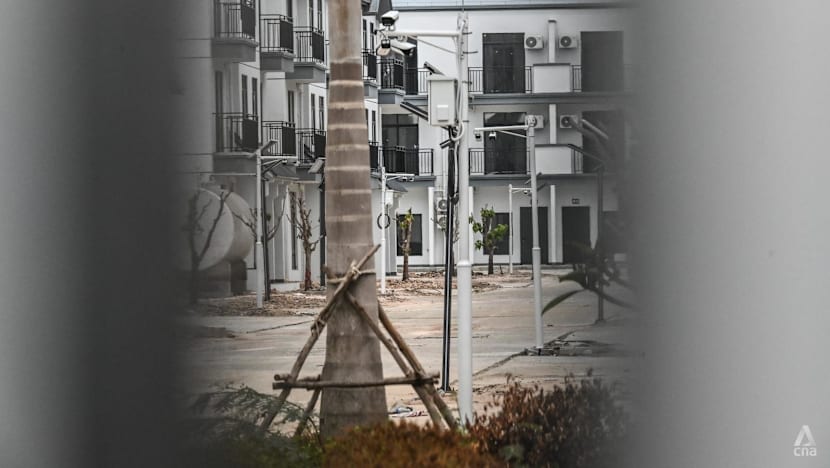
The allegation of elite protection for criminal activity is a sensitive issue. Cambodian officials have broadly rejected such findings.
Sam said it was the agenda of other countries to “strongly speak negatively” about the country’s reputation.
“How can that be real? It’s just a kind of political propaganda from other countries. Cambodia, we are a victim of these scams,” he said. “And if any local authorities are involved in the scam problems, they will be responsible for their activities,” he added.
Some influential and politically connected individuals have been embroiled already.
In April, the US sanctioned Cambodian senator Kok An, accusing him of using political influence to protect a scam-centre network. In 2024, businessman and senator Ly Yong Phat was also sanctioned over alleged forced-labour abuses linked to scam centres.
Chen Zhi, the Chinese-born Cambodian tycoon behind Prince Group and a former adviser to Cambodia’s top leaders, has been sanctioned by both the US and United Kingdom, indicted by American prosecutors and extradited by Cambodia to China.
“People before thought Chen would never be arrested, and that the Prince Group is the number one and it will exist forever,” said Huang Yang, a freelance Chinese journalist based in Cambodia.
“That really changed something here.”
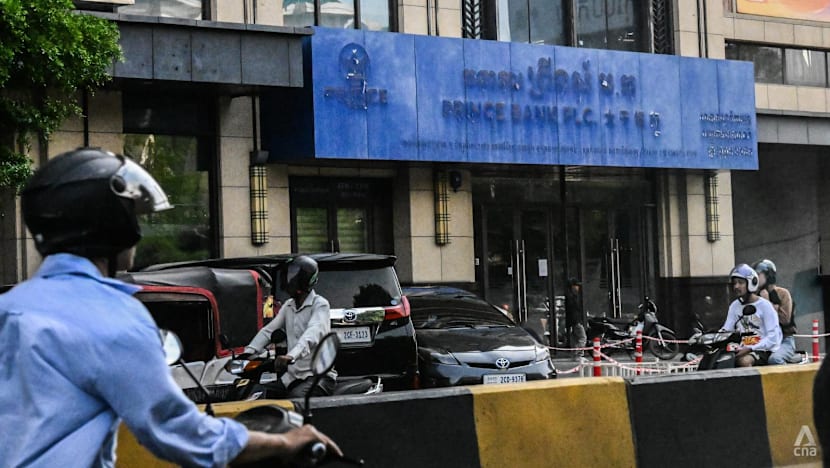
But disentangling grey business and the legal economy presents a major challenge, experts said.
“It’s all together. You cannot really tell the difference. So it's very hard to really tear all of them down,” said Yang.
The case of Prince Group is emblematic of the issue; it looked like a modern Cambodian conglomerate involved in real estate, banking, tourism, logistics, food and beverage and major urban developments.
In mid-May, authorities detained a total of 104 individuals from within a building in downtown Phnom Penh known as Prince Plaza, linked to Chen’s conglomerate.
Even though the Prince name had been scrubbed from the entrance to the apartment complex, and the property fell under international sanctions, cybercrime activity had allegedly continued inside.
“Based on preliminary forensics, the suspects utilised the locations to carry out technology-based fraud by luring people both inside and outside the country into fake investment schemes,” said the Commission for Combating Technology-Based Scams.
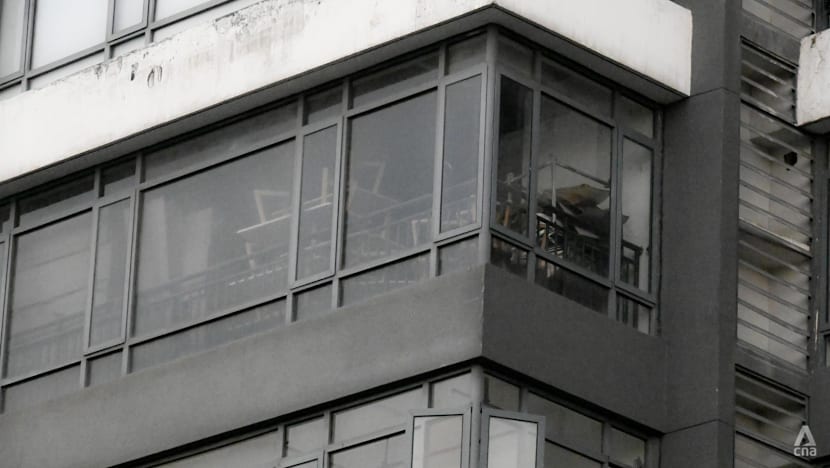
Another targeted business, Huione Group, demonstrated how an alleged major money-laundering node for cyber scams could operate while looking, from the outside, like ordinary digital finance.
It owned companies offering e-commerce, payment and cryptocurrency exchange services including Huione Pay, and was accused by the US government last year of laundering funds for transnational crime groups behind Southeast Asia-based scams.
In December, the Cambodian National Bank said it revoked Huione Pay’s operating licence and liquidated its assets, noting that the institution’s activities “may pose risks to the banking system in Cambodia as well as the public”.
Li Xiong, Huione’s former chairman, was extradited to China last month, with Chinese authorities alleging that he was central to a major transnational gambling and fraud syndicate.
Hun To, a cousin of Cambodian Prime Minister Hun Manet has said that he owned a 30 per cent stake in Huione, but denied having any controlling authority in the company.
There are questions about what will happen domestically if the vast sums of money being generated by scamming suddenly disappears from the economy, even if most of it is ordinarily being funnelled offshore anyway.
With a foreign workforce fleeing the country en masse, Cambodians might get pulled into the wake, Virak warned. People have gotten used to “easy money” and it threatens to derail the country’s moral compass for years to come, he said.
“These people are now trained. They know how to scam. Would they start something on their own? And the answer is, some of them might try,” he said.
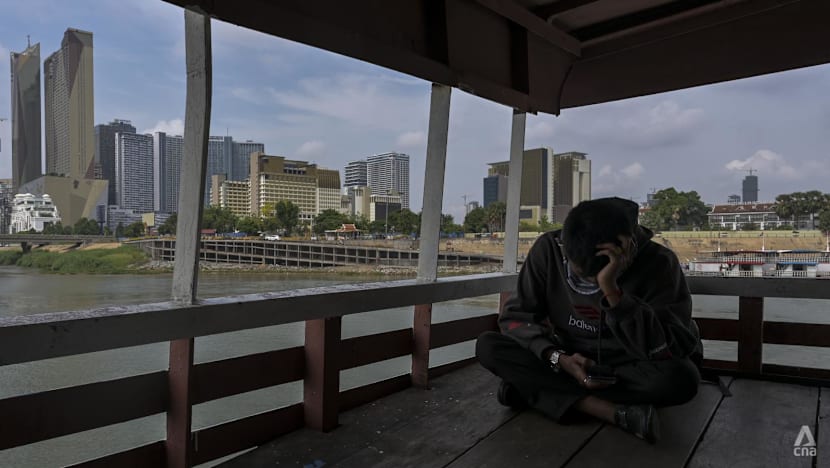
Moeun Tola, the executive director of the Center for Alliance of Labor and Human Rights (CENTRAL) in Phnom Penh, said his organisation was on alert for local scam recruitment.
“These people could easily fall into another trap, either in Cambodia or in another country,” he said.
But the damage does not stop with those trafficked into the scam industry. Ordinary Cambodians are also living with its consequences; the suspicion from outsiders, damage to tourism, visible corruption, foreign criminality in their cities and a sense that powerful institutions do not serve them.
Rithy (not his real name), a former police officer in Phnom Penh, has seen that from the inside. He said scam operations were running inside his own apartment building, with separate entrances, guarded floors and workers living under watch.
He also said he witnessed corrupt law enforcement officers protect scammers for years instead of stopping them. When he refused a major bribe to help move drugs, he became isolated inside the force. “It’s like you’re a fish in an ocean full of sharks,” he said.
For Rithy, Cambodia is not the victim in the way officials sometimes describe. Rather, it is the people who are losing everything.
“And if we don't change,” he said, “then we're going to have to live with this nightmare forever.”