How returning to school helped this social worker deepen his practice
Through applied learning, mentorship and a community of fellow adult learners, Mr Kevin See strengthened the way he serves families, leads teams and mentors future practitioners.

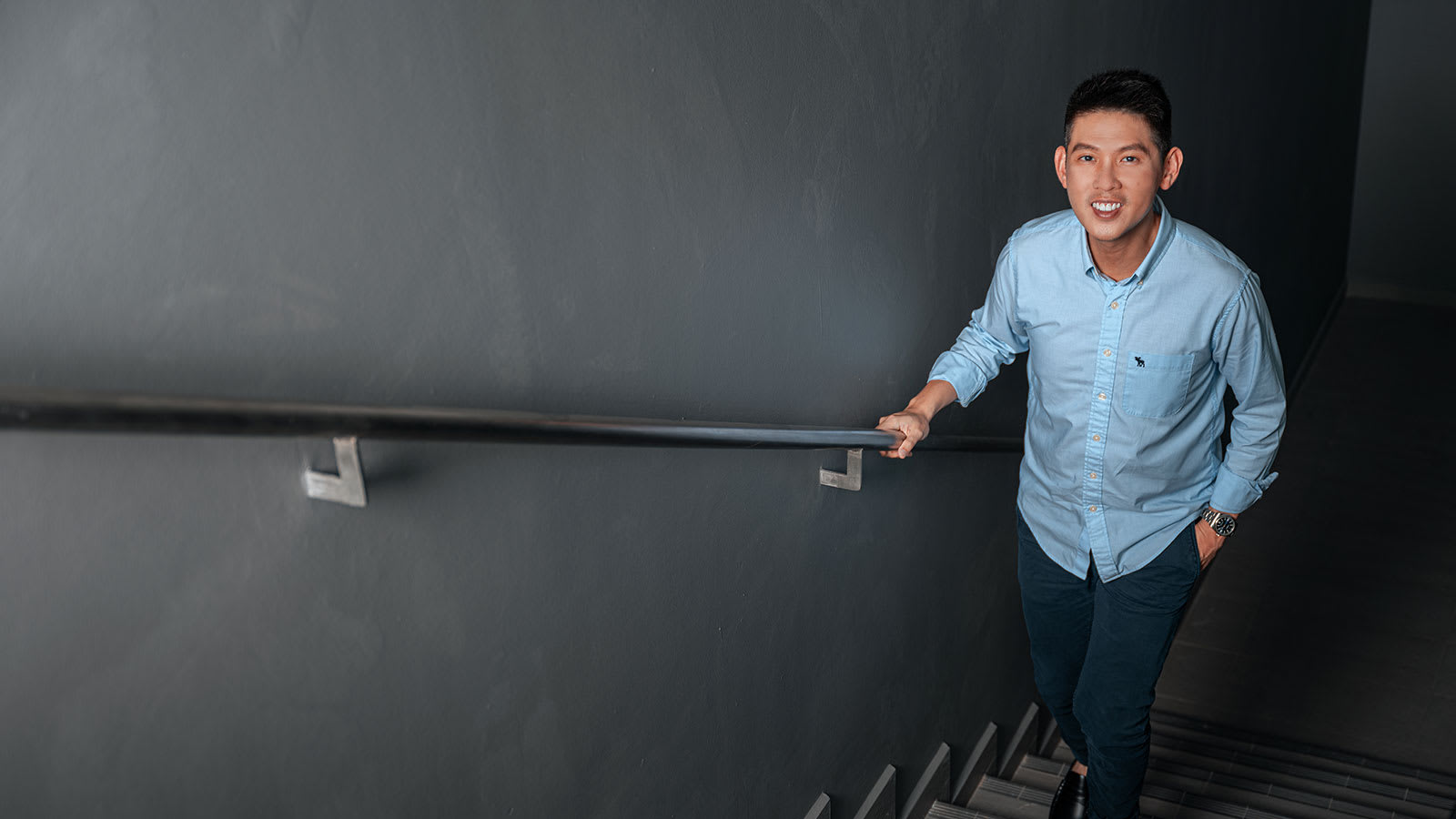
Mr Kevin See’s decision to pursue social work was shaped by his desire to better advocate for vulnerable children and families. (Photos: Singapore University of Social Sciences)

This audio is generated by an AI tool.


Presented by

During a meeting about a study corner used by children living in rental flats, Mr Kevin See found himself speaking up against plans to remove the space.
To him, the corner was more than just a place for tuition sessions. It was where young residents gathered when home felt too cramped and where volunteers built relationships with families over time.
Then someone in the room asked a question he still remembers: “Who are you? What’s your qualification?”
The exchange stayed with him. Mr See had been working closely with communities, but as the challenges facing families grew more complex, he began to see the limits of relying on experience alone. To advocate more effectively, he felt he needed to strengthen both his credentials and his understanding of the field.
In 2015, Mr See enrolled in the part-time Master of Social Work programme with the Singapore University of Social Sciences (SUSS), drawn by its emphasis on applied learning and the opportunity to continue working while studying.
Like many adult learners at SUSS, he wanted a programme that could fit around his professional responsibilities while staying connected to the realities of the sector. By remaining in frontline work while attending classes, he could apply what he learnt almost immediately to situations he encountered on the ground.
He said he was not looking for a conventional academic experience, but one tied closely to practice. “I didn’t need a university to teach me how to sound smart,” he said. “I needed an institution that offered grounded, hands-on learning and could teach me how to stay human while working in this demanding field.”
THE CLASSROOM HE DIDN’T EXPECT
Balancing work and studies was demanding. Weekdays were spent at work, evenings on assignments and readings, and Saturdays in full-day classes.
“When I began my master’s programme, I had barely two years of experience and that was mainly in community work,” he said. “I lacked practice wisdom, which meant I had to study doubly hard.”
But the classroom also became a source of encouragement. Many of his classmates were already working across the social service sector. Learning alongside them gave Mr See a broader view of the field – and a deeper appreciation of what commitment looked like in practice.
“The curriculum taught me social work, but my classmates taught me endurance,” reflected Mr See. “Whenever I felt overwhelmed, I would look around and realise that others were carrying far heavier responsibilities.”
His lecturers were also closely connected to the sector, bringing current cases and frontline realities into classroom discussions. Among them was Associate Professor Vincent Ng, then CEO of social service agency Allkin Singapore and now dean of SUSS’ School of Social Work and Social Development, who regularly checked in on students outside class.
Another lecturer, Dr Jai Prakash, also became an important mentor. When Mr See was considering a career move, Dr Jai offered guidance over coffee – a conversation that eventually led him to Montfort Care.

KEEPING THE WORK HUMAN
More than a decade after entering the social service sector, Mr See is now director of Integrated Family Service at Montfort Care, where he oversees teams supporting families and individuals facing complex challenges.
He said his years at SUSS helped him connect theory with frontline work, while giving him mentors and peers who continue to shape the way he approaches leadership and practice.
“Sometimes, you learn frameworks and models in class, but then you return to work and realise every family situation is different,” he said. “That back-and-forth between practice and reflection became very important for me.”
Beyond his work at Montfort Care, Mr See teaches as an associate lecturer and mentors younger practitioners entering the sector. He draws on his own experiences balancing frontline work with continuing education, as well as the support he received from lecturers and classmates.
“My goal is to provide the same level of investment and influence that my previous mentors so generously offered me,” he said.
Looking back, Mr See said returning to the classroom did not take him away from the work – it deepened the way he understood and approached it.
Ready to ground your passion with deeper learning? Find a programme that supports your aspirations at the Singapore University of Social Sciences.