Closing the gaps in the fight against hepatitis
Earlier testing and easier access to care could help prevent liver cancer and premature deaths.

Hepatitis patients such as Fiona (far left) and Lin (third from left) are sharing their experiences to raise awareness and encourage earlier testing and care. (Photos: Gilead Sciences)

This audio is generated by an AI tool.


Presented by

When 60-year-old Lin was taken to hospital with liver failure, he was shocked to discover he had hepatitis B.
For Fiona, 34, the diagnosis came much earlier. She found out she was a hepatitis B carrier at 15. Besides coping with early-stage liver cirrhosis, she struggled with the stigma surrounding the disease. At school, she kept the diagnosis to herself and withdrew socially.
While their experiences differ, both reflect a wider challenge across Asia, which carries a disproportionate share of the global hepatitis burden. Hepatitis B remains a major public health concern in Asia Pacific, which is home to more than two-thirds of the world’s 260 million people living with chronic hepatitis B. The region also accounts for nearly half of the global hepatitis C burden.
Hepatitis causes inflammation of the liver and, when left untreated, can lead to long-term damage. The World Health Organization’s 2026 Global Hepatitis Report said countries need to scale up prevention, diagnosis and treatment to meet its 2030 elimination targets.
WHEN INFECTIONS GO UNDETECTED

Hepatitis often remains under-detected because many people with hepatitis B or C have no symptoms for years, said Dr Janus Ong, a gastroenterologist, transplant hepatologist and associate professor at the University of the Philippines Manila.
“Even when patients are diagnosed, they may not seek treatment because they do not feel unwell,” he said. “That can be dangerous, because untreated hepatitis can progress silently over time to cirrhosis, liver failure and liver cancer.”
Dr Ong explained that the prevalence of hepatitis B in Asia Pacific is partly linked to historically high rates of mother-to-child transmission, before vaccination and prevention systems were fully established in many countries. Gaps in awareness, screening and access to treatment have allowed infections to persist across generations.

Stigma and misconceptions continue to make it difficult for people to speak openly about hepatitis and seek care. One common myth is that hepatitis only affects people with certain behaviours or lifestyles, said Dr Ong.
“Such misunderstandings, combined with stigma, can make people afraid to get tested or disclose their status. This delays diagnosis and treatment, and allows the disease to progress silently,” he added.
Public education and community-led initiatives can help make hepatitis easier to understand and talk about. Awareness efforts such as Behind the Silence, supported by Gilead Sciences and developed in collaboration with the World Hepatitis Alliance, encourage more open conversations about the disease – an important step towards getting more people tested and treated.
BRINGING CARE CLOSER TO PATIENTS
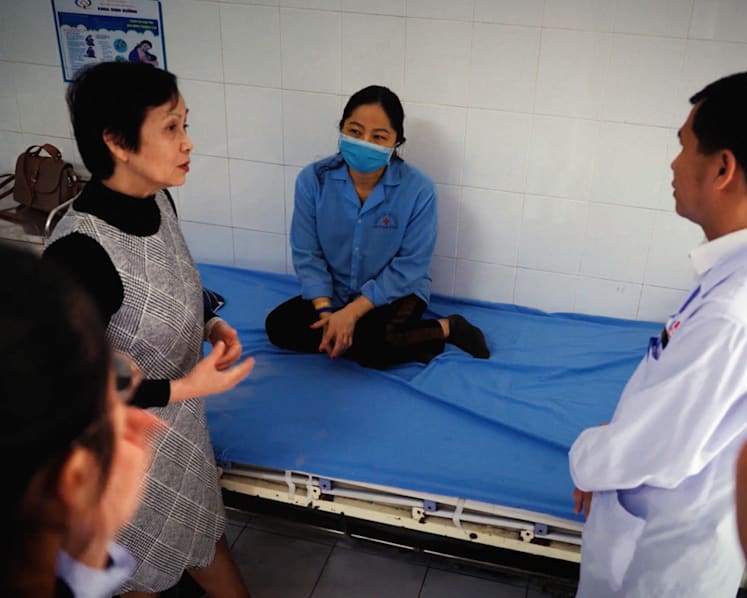
Integrating hepatitis screening and care into primary healthcare settings could help more patients be diagnosed earlier, linked to treatment sooner and receive care in a setting that feels less stigmatising, said Dr Ong. “It is also far more scalable and sustainable than relying mainly on tertiary hospitals or specialist centres.”
StITCH, or Strengthening the Integrated Treatment and Care for Hepatitis, is being implemented in Vietnam and the Philippines to test whether a decentralised, primary care-led model can make hepatitis services easier to access.
The programme brings screening, counselling, treatment initiation and follow-up services closer to communities, especially through primary care and district-level facilities. For patients, this can mean shorter travel times, lower out-of-pocket costs and a less intimidating care journey.
Early results have been encouraging, said Dr Ong, who leads the StITCH project in the Philippines, a collaboration between Gilead, Harvard Medical School and the University of the Philippines Manila. In the Philippines, more than 24,000 people were screened for hepatitis B. Most people who tested positive were linked to care, with many starting treatment. In Vietnam, more than 85,000 people were screened for hepatitis B and nearly 69,000 for hepatitis C.
CLOSING THE ACCESS GAP

Reaching more patients earlier also requires changes within health systems so that screening and linkage to care become part of routine practice.
Mr Derek Spencer, executive director of the Focus programme at Gilead Sciences, said the biggest barriers to early diagnosis of blood-borne viruses are often “structural rather than scientific”. Launched in 2010, Focus is a public health initiative that partners with healthcare institutions to address disparities in screening and care in communities that face high rates of late diagnosis, illness and death from blood-borne viruses.
The programme enables healthcare institutions to improve access by making screening part of routine care, in accordance with public health guidelines. This can include using electronic health records to prompt screening, and integrating testing, diagnosis and linkage to a first medical appointment into everyday clinical workflows, particularly for HIV, hepatitis B and hepatitis C in underserved communities.
As of December 2025, Focus partners across the United States, Spain and Portugal had performed more than 24 million blood-borne virus tests in communities with a high prevalence of disease.
“Many people have to visit different facilities before they are screened or linked to care. At each stage, some patients fall through the cracks,” said Mr Spencer. “By embedding screening into routine, everyday care settings, healthcare organisations can help make the process seamless.”
With 2030 approaching, Dr Ong said the priorities are clear: Diagnose more people sooner and move services closer to communities.
“Addressing hepatitis is achievable, but only if we act decisively and at scale,” he said. “The tools already exist, but they need to be made accessible through strong policy, financing and primary care delivery.”
Visit Behind the Silence to learn more about the experiences of people living with hepatitis in Asia and efforts to support World Health Organization’s 2030 elimination goal.
The individuals featured in this story are identified only as Lin and Fiona, based on information provided in videos supplied to CNA. Their full names were not provided.